Evaluating an RDP Supplier's Capability: From Production Lines to Load Test Reports
A capable RDP supplier cannot be identified from a price list. It is identified by verifiable production assets, batch-to-batch control, an R&D team that can adjust a grade to your formulation, and a test chain that connects the powder you receive to the bonding strength your mortars must reach.
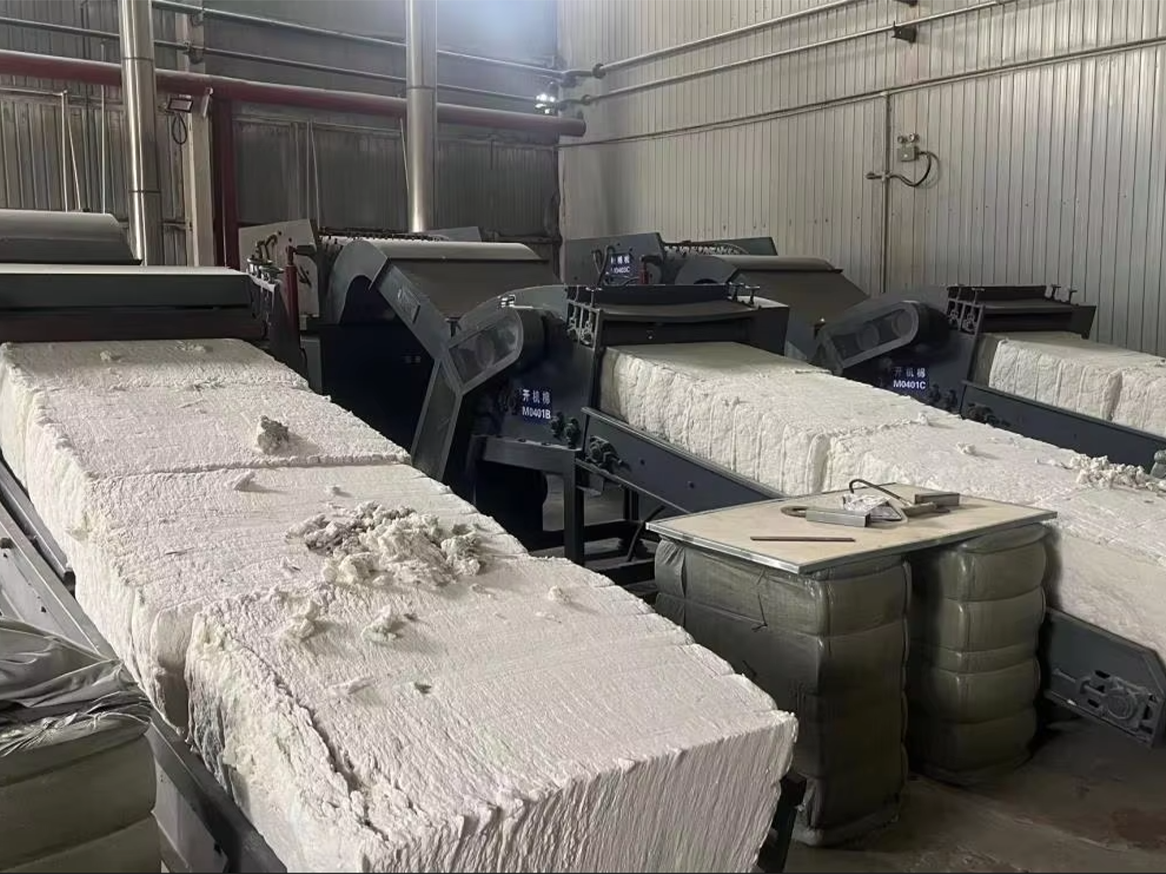
The first question most construction buyers ask is price per ton. It is also the last question that should determine which supplier they sign with. Before price means anything, three things have to be confirmed: whether the supplier physically manufactures the powder, whether the plant can repeat the same specification across consecutive batches, and whether an engineering bench exists that can support the formulation you actually run. Long-term value in a redispersible polymer powder programme is decided by those three answers, not by the quotation.
This article sets out a practical capability evaluation framework for buyers who are past discovery and into evaluation. It uses the published capability profile of BANG SHANG INTERNATIONAL CO., LIMITED — a construction chemical additives manufacturer founded in 2007 and the producer of the BANGCEL® RDP range — as a worked example of what a high-capability RDP manufacturer looks like on paper, and what you should demand to see in practice.
Why Price Alone Cannot Screen an RDP Supplier
The core problem in RDP sourcing is deferred failure. RDP is a small share of a dry-mix mortar formulation but a large influence on how that mortar behaves. In cementitious and gypsum-based systems, the polymer phase affects adhesion, flexibility, water retention and crack resistance. When a supplier is selected on the lowest landed cost, the consequences rarely appear at the warehouse. They appear months later on site — as debonding, map cracking, inconsistent open time between production batches, or a ceramic tile adhesive that passes one delivery and fails the next.
What makes this difficult to screen is that the signals that predict those failures are invisible in a quotation. Plant area, line configuration, workforce competence, in-process testing frequency and laboratory instrumentation do not appear on a price sheet. A trading company and an integrated manufacturer can quote the same grade name and the same nominal tonnage per month. Only one of them can explain why batch 12 behaved differently from batch 3.
That gap — between what a quotation shows and what determines long-term performance — is the reason a structured capability framework is necessary. The framework below is built for buyers who have already decided that RDP is the correct additive class for their mortar system and are now choosing the partner that will supply it for the next two to five years.
The RDP Market Context Buyers Are Actually Operating In
RDP is a mature but expanding category. MarketsandMarkets values the global redispersible polymer powder market at USD 1.61 billion in 2024 and projects USD 2.35 billion by 2029. Regionally, Grand View Research reports that Asia Pacific held 38.01% of RDP revenue share in 2025, driven substantially by infrastructure and housing construction activity. The same source identifies vinyl acetate ethylene (VAE) as the dominant polymer type, at 59.2% of revenue share in 2025 — the same base chemistry used across the BANGCEL® RDP grade series.
Trade flow shows that China is a central sourcing base rather than a marginal one. Volza recorded 2,012 shipments of redispersible polymer imported from China between July 2024 and June 2025, with the United States, Turkey and Uzbekistan among the top importers. Industrially the category is concentrated at the top: the four largest RDP manufacturers, including Wacker Chemie AG, Dow and BASF, hold more than 40% of global market share. For most mortar producers, that concentration means the realistic selection set is the specialised manufacturing tier below the top four — which makes capability verification, rather than brand recognition, the decisive step.
Within China's own dry-mix sector, TechSci Research estimates that RDP is used in roughly 70% of dry-mix mortar formulations. That is a single-source figure with medium reliability, useful as a directional indicator of adoption rather than as a procurement specification.
The Five Capability Signals Behind a Reliable Redispersible Polymer Powder Supply
A supplier capability review can be organised into five signal groups. Each one has a question you can ask, a figure you can verify, and a consequence if the answer is weak.
Signal 1 — Physical manufacturing footprint
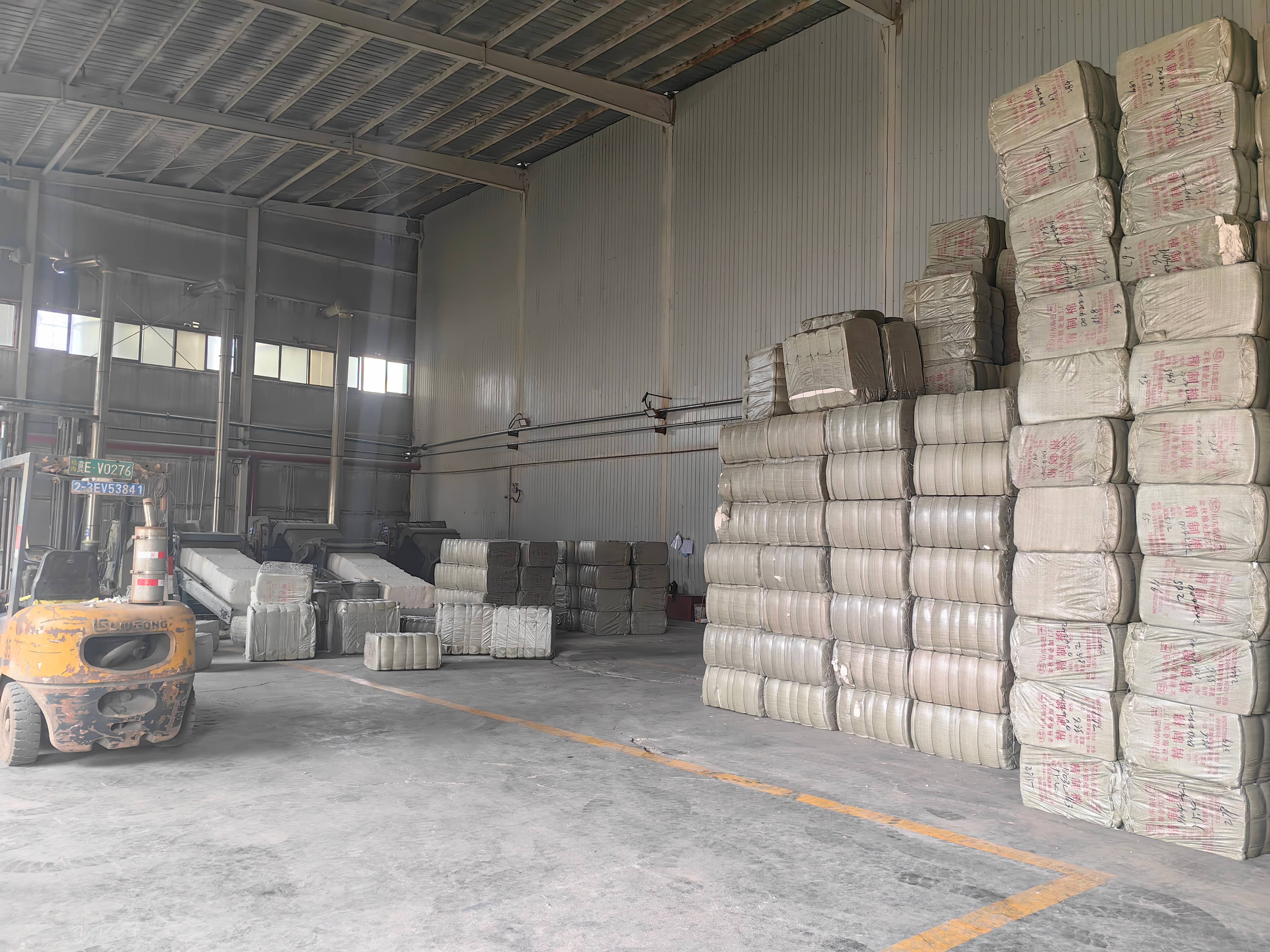
Start with area, because area determines whether processes can be separated. BANG SHANG INTERNATIONAL CO., LIMITED operates a facility of 80,000 m² in Shijiazhuang, Hebei Province, China. Scale matters because a plant producing cellulose ethers and redispersible polymer powder needs distinct zones for raw material intake, reaction, drying and crushing, milling, blending, finished goods storage and quality control. When those activities share space, cross-contamination and inconsistent drying become structural risks rather than occasional incidents. In an audit, ask for a site plan and match each zone against the product families the supplier claims to manufacture.
Signal 2 — Production capacity and line configuration
Capacity determines whether a supplier can hold its schedule during your peak season. BANG SHANG reports an annual production capacity of 35,000 tons, a monthly capacity of 3,000 tons, and a standard lead time of 7 to 14 days. For buyers, the practical test is whether the monthly figure is committed capacity or theoretical capacity. Ask what share of output is already allocated to existing contracts, how capacity is prioritised when demand spikes, and whether the plant runs cellulose ether and RDP lines that can be scheduled independently. A supplier that cannot describe its allocation logic cannot reliably promise a delivery date.
Signal 3 — Workforce and in-process control
BANG SHANG publishes a workforce of approximately 300 people. Headcount only becomes meaningful when it maps onto process discipline. Two practices matter most: standardized production, meaning the same documented procedure applies to every batch, and strict batch control, meaning raw materials, process parameters and finished output are traceable to a batch record. The company describes both as core to its in-sales service, alongside transparent order and production status reporting. The audit question is direct: can the supplier retrieve a batch record for a specific lot number and connect it to the raw material receipts and the finished-goods test result? If not, batch-level complaint resolution becomes guesswork.
Signal 4 — R&D depth and laboratory capability
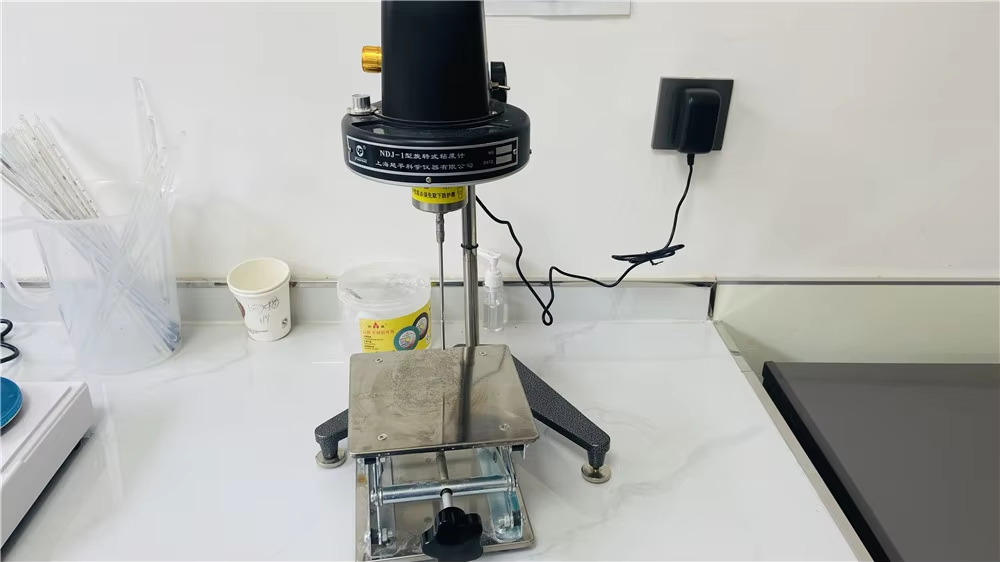
Twenty-six engineers work in the R&D function at BANG SHANG. That number is only useful if you also know what the team can do and what instruments it has. The company supports custom formulation work and application-oriented grade development, and describes a laboratory equipped for compositional and physical testing, including a gas chromatograph with hydrogen generator, a whiteness meter, a viscometer tester, a precision electronic scale, a photometer, an electronic moisture meter and a desktop drying oven. Each instrument answers a different question: a viscometer addresses solution behaviour, a moisture meter addresses storage stability, and chromatographic analysis addresses raw material consistency. When evaluating an R&D claim, ask which instrument is used for which specification — and who signs off on the result.
Signal 5 — Testing regime and documentation between order and shipment
Between purchase order and shipment, the practices that protect the buyer are testing frequency and documentation. BANG SHANG states 100% test quality control and uses pre-shipment test results as the acceptance criterion. Combined with customized technical support and quality traceability in the after-sales stage, this creates a chain from raw material to delivered lot. Confirm three things in writing before the first commercial order: what is tested on every batch, what is tested only on the pre-shipment sample, and what happens to a lot if a result falls outside specification.

From Production Lines to Load Test Reports: How Quality Consistency Is Proven
Everything above describes the supply side. The load test report is where the supply side meets the job site.
In tile adhesive systems, the performance standard that matters is tensile bonding strength, classified under EN 12004 and ISO 13007-1. Within that framework, C1 adhesives must reach at least 0.5 MPa and C2 adhesives at least 1.0 MPa in tensile bond strength. RDP is the component that allows a cementitious adhesive to reach those classes while retaining flexibility. A supplier's production competence and a project's load test result are therefore two ends of the same chain — and the reason production indicators are worth auditing at all.
A supplier-side certificate of analysis and a buyer-side load test report answer different questions, and confusing them is a common evaluation error. The certificate of analysis documents powder-level parameters — solid content, ash, pH, minimum film-forming temperature (MFFT) and glass transition temperature (Tg) — measured on the polymer powder. The load test report documents mortar-level performance — bonding strength after standard curing, water immersion, heat ageing and freeze-thaw cycling — measured on a cured specimen prepared from your own formulation.
For the BANGCEL® RDP grade series, the reported product parameters are: VAE-based material, solid content ≥99%, ash 11±2%, pH 6–8, MFFT 0°C and glass transition temperature 10°C. Available models are RDP5010, RDP6188 and RDP4010. These are the values to reconcile against every incoming batch document. If a delivered lot reports a solid content below specification, the mortar-level load test result is already compromised before the adhesive formulation is even considered.
| BANGCEL® RDP reported parameter | Value | What the buyer should do with it |
|---|---|---|
| Polymer base | VAE | Confirm compatibility with the binder system in your mortar |
| Solid content | ≥99% | Verify against each incoming certificate of analysis |
| Ash content | 11±2% | Track drift across batches; ash shifts change film behaviour |
| pH | 6–8 | Check interaction with your accelerator and retarder package |
| MFFT | 0°C | Relevant to film formation at low application temperature |
| Glass transition temperature | 10°C | Indicates flexibility versus blocking trade-off in the powder |
| Available models | RDP5010, RDP6188, RDP4010 | Request grade selection guidance for your specific application |
When you read a load test report, three checks matter: the standard cited, the curing condition of the specimen, and whether the reported value is a single specimen or a batch average. A tensile bond strength figure without a stated standard and curing regime cannot be compared with another supplier's figure. That is why a capability evaluation should end with your own controlled trial, not with a supplier's data sheet.
A Step-by-Step Capability Audit for RDP Buyers
The following sequence takes a buyer from first screening to execution without skipping the checks that usually cause later disputes.
- Step 1 — Lock your own specification first. Define the mortar system (ceramic tile adhesive, wall putty, EIFS/ETICS, self-leveling compound, waterproof mortar, repair mortar or gypsum-based product) and the powder parameters that cannot move. Without a fixed reference, every supplier's data sheet looks acceptable.
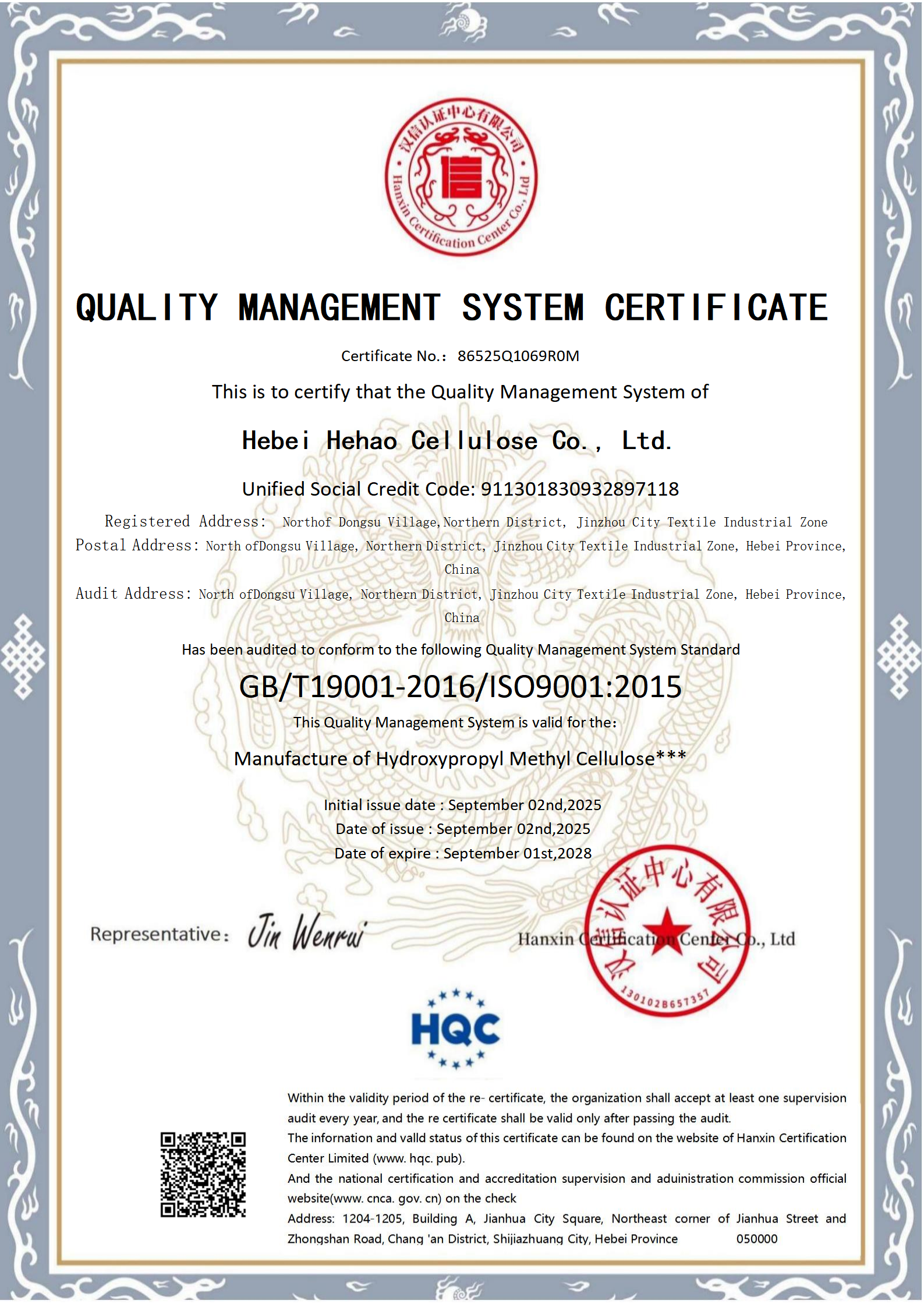
- Step 2 — Verify the certificate pack, not the certificate names. Request certificate numbers, issuing authority, referenced standard, scope and validity dates, then check that the scope names the product you are buying.
- Step 3 — Verify physical capability. Ask for facility area, production line count, documented annual and monthly capacity, and confirmed lead time. Compare the answer to a stated capacity rather than an implied one.
- Step 4 — Test the R&D claim with a real question. Send your formulation and a performance problem, then judge whether the reply is a reasoned grade recommendation or a generic product list.
- Step 5 — Confirm the testing and batch regime in writing. Agree what is measured per batch, what is measured pre-shipment, and how quickly a batch record can be retrieved.
- Step 6 — Run a controlled sample trial. Hold your formulation constant, compare suppliers on the same specimen set, and evaluate bonding strength, open time consistency and mix behaviour at the end of pot life.
- Step 7 — Close on commercial and continuity terms. Confirm minimum order quantity, delivery terms, payment structure and lead time before scaling from trial to production volume.
Where Supplier Capability Converts Into Application Performance
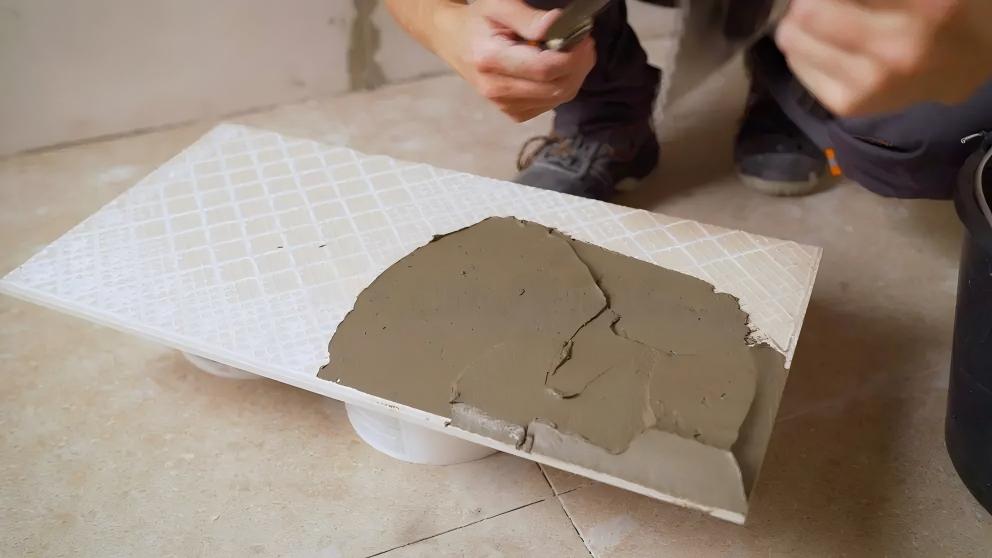
Different RDP applications stress different parts of a supplier's capability. A tile adhesive RDP programme depends most on batch consistency: a shift in particle size distribution changes open time and slip resistance in ways that only appear on the trowel. Wall putty RDP and putty powder RDP formulations are sensitive to whiteness and water retention consistency. External wall insulation mortar RDP and EIFS/ETICS systems depend on flexibility and weatherability, and because system approvals are tied to a fixed raw material, long-term supply continuity becomes part of the technical specification. Self-leveling mortar RDP exposes small parameter shifts immediately as flow and stability problems. Waterproof mortar RDP, repair mortar RDP and construction adhesive RDP place the emphasis on adhesion under wet or aged conditions. Gypsum-based RDP for construction introduces a different binder chemistry and requires compatibility testing rather than substitution by grade name. Construction interface agent RDP and industrial construction RDP applications typically demand a construction-grade redispersible latex powder with predictable redispersion, where high-viscosity RDP grades may be required to control rheology.
Across a portfolio, the practical selection criterion is not the highest-specification grade. It is a supplier whose batch control is tight enough that a formulation tuned once keeps performing — mortar RDP powder that behaves the same in month twelve as it did in the approved sample.
What a two-year production record demonstrates
The clearest evidence of capability is a case where production consistency was tested over time. The BANGCEL® RDP product has been used by a leading global construction mortar and adhesive manufacturer in a project located in India. The two-year project supplied 1,200 MT annually for the formulation of tile adhesive and wall putty. Implementation included customized formulation R&D support, a stable global supply chain and CE certification. Reported performance results are excellent adhesion, crack resistance and weatherability, with zero quality complaints recorded during long-term mass production.
Capability Signals at a Glance
The table below consolidates the BANGCEL® and BANG SHANG verified figures against the audit action each figure implies. It is deliberately limited to facts the manufacturer publishes and a buyer can request documentary evidence for.
| Evaluation signal | Why it matters | Verified figure | What to request in the audit |
|---|---|---|---|
| Established manufacturing base | Continuity of supply and process maturity | Founded 2007; 80,000 m² facility | Site plan; business licence; plant visit or video audit |
| Annual production capacity | Supports contract volume and seasonal peaks | 35,000 tons per year | Recent production reports; capacity allocation policy |
| Monthly capacity | Supports delivery scheduling | 3,000 tons per month | Monthly output records for the last two quarters |
| Standard lead time | Planning reliability for your own production | 7–14 days | Lead-time confirmation written into the contract |
| Workforce | Process control and quality discipline | Approximately 300 employees | Organisation chart; shift and supervision structure |
| R&D capability | Customisation and problem solving | 26 engineers | A formulation trial using your own recipe |
| Quality control | Batch-to-batch consistency | 100% test; pre-shipment test as acceptance criterion | Batch record retrieval demonstration |
| Certification | Compliance and market access | ISO 9001: certificate 86525Q1069R0M; ISO 45001: 86525S1067R0M; ISO 14001: 86525E1068R0M; CE certification; SGS testing | Certificate numbers, scope and validity dates |
| Customisation | Grade fit to your formulation | OEM & ODM: viscosity, particle size, ash content, degree of substitution, water retention rate, custom formulation and grade, blending, packaging | A written customisation specification before order |
| Commercial entry terms | Trial and scaling economics | MOQ 3 tons; FOB/CIF; 30% TT in advance, 70% against copy of B/L | Proforma invoice; acceptance criteria |
| Export experience | Documentation and logistics reliability | Export ratio 70%; serves markets across the Americas, Europe, Africa, the Middle East, Asia and Oceania | Export references and shipping documentation |
| OEM/ODM service coverage | Territory eligibility for buyers | Worldwide, excluding the EU | Written territory confirmation |
FAQ: Evaluating an RDP Supplier's Capability
Which certification documents should I verify before approving an RDP supplier?
Verify certificate numbers, issuing authority, the referenced standard, the scope and the validity window — not just the certificate covers. BANG SHANG holds ISO 9001 quality management certification number 86525Q1069R0M, issued by HQC against GB/T19001-2016/ISO9001:2015, covering cellulose ether and RDP powder, valid from 2 September 2025 to 1 September 2028. ISO 45001 occupational health and safety certification 86525S1067R0M and ISO 14001 environmental management certification 86525E1068R0M are both valid to 1 September 2028 and relate to HPMC and cellulose ether manufacturing activities, with the environmental certificate covering global markets excluding the EU. The company also states CE certification, SGS testing, and Gold Supplier status on Alibaba International. Match the certificate scope to the product you intend to buy.
What production figures show that an RDP supplier can actually support volume orders?
The figures that matter are facility area, annual capacity, monthly capacity, workforce and lead time, because together they show whether a plant can hold a schedule under peak demand. BANG SHANG, an additives manufacturer founded in 2007 and based in Shijiazhuang, Hebei Province, China, operates an 80,000 m² facility with an annual production capacity of 35,000 tons, a monthly capacity of 3,000 tons, and approximately 300 employees, including an R&D team of 26 engineers. The standard lead time is 7 to 14 days. Buyers should ask what share of monthly capacity is already committed to existing contracts before treating the figure as available capacity.
What commercial terms should I expect when buying RDP at scale?
Typical terms cover minimum order quantity, delivery basis, acceptance criteria and payment structure. For BANGCEL® RDP, the published purchasing terms are a minimum order quantity of 3 tons, delivery on FOB or CIF terms, pre-shipment test results as the acceptance criterion, and payment of 30% by TT in advance with 70% against a copy of the bill of lading. Because the acceptance criterion is tied to the pre-shipment test, the specification and sampling method should be agreed in writing before the first order, so that the acceptance step is not open to interpretation.
Can I test samples or request a customised grade before committing to a volume order?
Yes. Sample support for testing is part of BANG SHANG's pre-sales service, alongside product recommendation and grade selection. For buyers whose formulation falls outside standard grades, the company operates OEM and ODM services covering product parameter customisation (viscosity, particle size, ash content, degree of substitution, water retention rate), formula and grade customisation including custom formulation and blending, packaging customisation such as logo printing and shipping marks, and small batch customisation with customised testing. The service territory is worldwide, excluding the EU. A sample trial should keep your formulation constant so that the only variable is the RDP grade.
What is the standard lead time, and how do I move from evaluation to a first production order?
The standard lead time for BANGCEL® RDP is 7 to 14 days, supported by a monthly production capacity of 3,000 tons, standardized production with strict batch control, and transparent order and production status reporting during the in-sales stage. After delivery, the manufacturer provides customized technical support, quality traceability and after-sales follow-up. If you are ready to move from evaluation to execution, request a sample and a quotation, or download the full company and product catalogue to review the specification and certificate pack in detail.
Conclusion: Capability Is a Document Trail, Not a Claim
Evaluating an RDP supplier from production lines to load test reports comes down to one principle: every capability claim should have a document behind it. Facility area should have a site plan. Capacity should have production records. Batch control should produce a retrievable batch record. A test claim should name the standard, the curing condition and the sampling method. A load test report is the final link in that chain — the point at which a supplier's production discipline becomes measurable on your own formulation.
BANG SHANG INTERNATIONAL CO., LIMITED provides a concrete reference point for what a capable RDP partner looks like: an 80,000 m² facility, 35,000 tons of annual production capacity, 3,000 tons of monthly capacity, approximately 300 employees, a 26-engineer R&D team, a 7–14 day standard lead time, a 3-ton minimum order quantity, and a two-year production record with a leading global construction mortar and adhesive manufacturer in India. Those figures are not marketing language — they are auditable starting points for your own supplier evaluation.
Next step: from evaluation to execution
If you are comparing RDP suppliers and want to test performance against your own formulation, request a BANGCEL® redispersible polymer powder sample, ask for a quotation on your target volume, or review the full product and certificate documentation before you commit.
Company: BANG SHANG INTERNATIONAL CO., LIMITED | Website: www.bangshanghpmc.com
Email: admin@sjz-bs.com | Tel / WhatsApp: +86 13292884619
Address: The South of ZhongXing Road, Jinzhou, Shijiazhuang City, Hebei Province, China
Have Questions or Need More Details?
Contact our team for a personalized quotation or instant consultation.
Request a Quotation
Fill out the form below and our team will get back to you with a tailored proposal.
WhatsApp Direct Chat
Prefer to chat in real-time? Message us on WhatsApp for instant assistance & quick answers.
- Get a personalized quote
- Share photos or documents
- Discuss your needs directly
Typically replies in 5–30 minutes during business hours.