RDP in Cement-Based vs Gypsum-Based Mortars: A Comparison Guide for Buyers
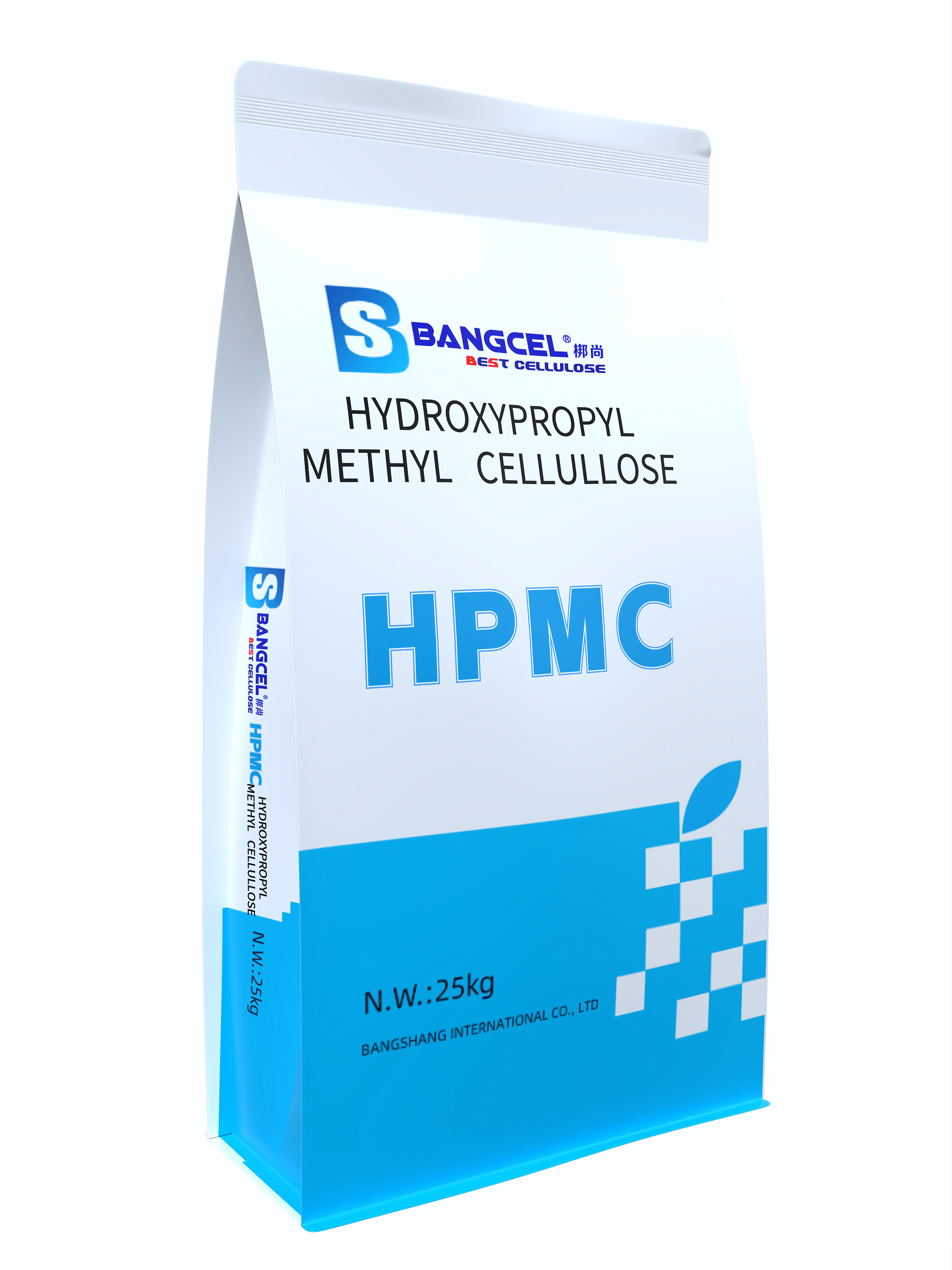
BANGCEL® RDP grades are supplied for both cement-based and gypsum-based dry-mix mortar systems, with viscosity, particle size, ash content and water retention set against the buyer's own formulation.
Redispersible polymer powder (RDP) is a spray-dried polymer — most commonly based on vinyl acetate ethylene (VAE) or a related copolymer — that redisperses in the mixing water of a dry-mix mortar and forms a polymer film as the mortar sets. It is one of the few additives that changes both how a mortar behaves while it is fresh and how it performs after hardening.
The short answer for buyers: there is no universally better RDP for cement-based and gypsum-based mortars, because the two matrices ask the polymer to do different work. In cement-based systems, RDP is selected mainly for tensile adhesion, flexibility, reduced cracking and water resistance inside an alkaline, hydraulic binder. In gypsum-based systems, the selection shifts toward compatibility with a near-neutral, fast-setting calcium sulfate matrix that is generally more moisture-sensitive and often contains retarders or light fillers. Viscosity, particle size, ash content, and the cellulose-ether parameters used alongside the powder — degree of substitution and water retention rate — all have to be set for the matrix in question.
This comparison guide is written for mortar manufacturers, dry-mix formulators, importers and technical buyers who already know they need RDP and now need to decide which type, which specification, and which supplier can hold that specification over repeated production runs.
Problem Definition: Why One Grade Rarely Fits Both Matrices
RDP is added to dry-mix mortars to do a small number of jobs: improve adhesion to the substrate, increase flexibility, reduce cracking, and improve cohesion and workability of the fresh mix. Which of those jobs dominates — and how easily the polymer can deliver it — depends on the binder system the powder lands in.
Cement-based mortars are hydraulic systems. Cement reacts with water, and the pore solution is typically strongly alkaline. Gypsum-based systems set through the crystallisation of calcium sulfate dihydrate in an environment that is generally closer to neutral and that frequently contains retarders, plasticizers or light fillers. A polymer that films well in one system may form a weaker or less continuous film in the other. The symptoms reported by formulators are usually recognisable:
- Tensile adhesion below the class the formulation is supposed to meet — for tile adhesives, EN 12004 and ISO 13007-1 define C1 at a minimum of 0.5 MPa and C2 at a minimum of 1.0 MPa;
- Early debonding or hollow spots when the substrate draws moisture away faster than the polymer can film;
- Fine cracking in wall putty and skim coats as the matrix shrinks;
- Weak water resistance in wet-service areas;
- Batch-to-batch variation on the production line, even though the laboratory sample behaved acceptably.
The root cause is usually a specification mismatch rather than a defective powder. The grade was selected on price, or carried over from a neighbouring formulation, without checking how it behaves in the actual binder, filler package and mixing water of the plant.
Industry Background: Demand, Supply Structure and Standards
Published market figures for RDP should be read as directional, because definitions differ between research houses. MarketsandMarkets valued the global redispersible polymer powder market at USD 1.61 billion in 2024 and projected USD 2.35 billion by 2029. Grand View Research reported that Asia Pacific held a 38.01% revenue share in 2025, driven largely by infrastructure activity in China, and that vinyl acetate ethylene (VAE) accounted for 59.2% of revenue share by polymer type in the same year.
Those numbers sit alongside much wider estimates. Published 2024–2025 values for the same category range from around USD 118.7 million (Grand View Research, 2025) to USD 31.77 billion (Market Research Report 2032, 2024), depending on whether the definition covers RDP only, redispersible latex powder, or a broader polymer additive basket. For a buyer, the practical takeaway is not the headline size of the market but its structure: the top four RDP manufacturers, including Wacker Chemie AG, Dow and BASF, hold more than 40% of global market share, while a long tail of regional producers supplies the rest.
Trade flow data shows how actively that long tail is used. Between July 2024 and June 2025, 2,012 shipments of redispersible polymer were imported worldwide from China, with the United States, Turkey and Uzbekistan among the top importers (Volza). One third-party estimate places RDP in approximately 70% of dry-mix mortar formulations in China's construction industry (TechSci Research); this is best treated as a directional indicator of adoption rather than a precise ratio.
Two standards frames matter when RDP is evaluated. Tile adhesives are classified under EN 12004 and ISO 13007-1, where RDP is essential for reaching the C1 and C2 tensile bonding classes. Gypsum-based products are typically specified through the manufacturer's own performance data, local building codes and the substrate the product is applied to, rather than through one single global class — which makes supplier-side technical documentation more important, not less.
Detailed Solution: Matching RDP Specification to the Matrix
How RDP behaves in cement-based mortars
In a cement-based mortar, the polymer has to survive an alkaline pore solution, compete with the cement hydration reaction for water, and still form a continuous film through the capillary structure of the hardened paste. Because cement systems are generally more tolerant of wet service conditions than gypsum, the performance targets placed on RDP in this matrix usually centre on:
- Tensile adhesion to dense, low-absorbency substrates such as ceramic tiles, concrete and insulated board facings;
- Flexibility, which allows the hardened mortar to accommodate movement and thermal cycling without cracking;
- Cohesion and reduced shrinkage cracking in renders, putty and repair mortars;
- Water resistance in waterproofing and wet-area systems.
Cement-based mortars are also where the interaction between RDP and the cellulose ether becomes most visible. Higher viscosity and higher water retention in the cellulose ether keep more water in the fresh mortar, which gives the polymer more time to film — but it also changes workability, open time and sag resistance. Overdosing RDP is not automatically safer: air entrainment, water demand and setting behaviour all move, and compatibility with defoamers and accelerators has to be re-checked.
How RDP behaves in gypsum-based mortars
In a gypsum-based system the binder sets by calcium sulfate hydration in an environment that is generally closer to neutral, and the set typically happens faster than in a cement system. That changes what the polymer must do and what it must tolerate:
- Adhesion and cohesion across the gypsum crystal matrix, so the set plaster or putty bonds to the substrate and does not turn brittle;
- Workability and surface quality, because gypsum products are often applied as thin skim coats where finish matters as much as strength;
- Compatibility with retarders, plasticizers, starches and light fillers, which are common in gypsum formulations and can interfere with polymer film formation;
- Moisture behaviour — RDP supports water resistance, but in moisture-sensitive gypsum systems it does not replace dedicated water-repellent measures or correct detailing.
For gypsum-based wall putty, plasters and skim coats, the practical requirement is a grade whose film formation is compatible with a fast-setting, near-neutral matrix, and whose dosage is validated in the customer's own filler package rather than copied from a cement-based tile adhesive recipe.
The specification levers a buyer actually controls
The BANGCEL® RDP range — grades RDP5010, RDP6188 and RDP4010, based on VAE — is stated with an ash content of 11±2%, pH of 6–8, minimum film-forming temperature (MFFT) of 0 °C, solid content of at least 99%, and a glass transition temperature of 10 °C. Those parameters, together with the customisation levers below, are what a buyer is really negotiating:
- Viscosity. Specified on the redispersed polymer, viscosity describes how the powder affects the rheology of the fresh mix — workability, water demand and sag resistance in vertical applications. It is the first lever to move when a formulation is too stiff, too runny, or when open time has to be extended.
- Particle size. Particle size generally governs how quickly the powder redisperses and how evenly the polymer distributes through the mix. A change here can affect mixing time in the plant, dust behaviour during dosing, and the uniformity of film formation across the mortar.
- Ash content. Ash is non-film-forming residue in the powder, so two products with the same price per ton are not necessarily the same value per ton of active polymer. The stated ash for the BANGCEL® RDP range is 11±2%, which gives buyers a concrete figure to compare against alternative offers.
- MFFT and glass transition temperature. With an MFFT of 0 °C, the stated BANGCEL® RDP grades are designed to form a film at normal ambient application temperatures. Glass transition temperature, stated at 10 °C, describes where the polymer moves between harder and more flexible behaviour — the balance that decides whether a mortar is stiff and crack-prone or soft and deformable.
- Degree of substitution (DS/MS) and water retention rate. These are cellulose-ether parameters, and they belong in the same RDP purchase decision because water retention decides how much water remains available for the polymer to film after the substrate starts pulling moisture out of the mortar. This is why changing an HPMC or MHEC grade can invalidate an RDP selection that previously worked.
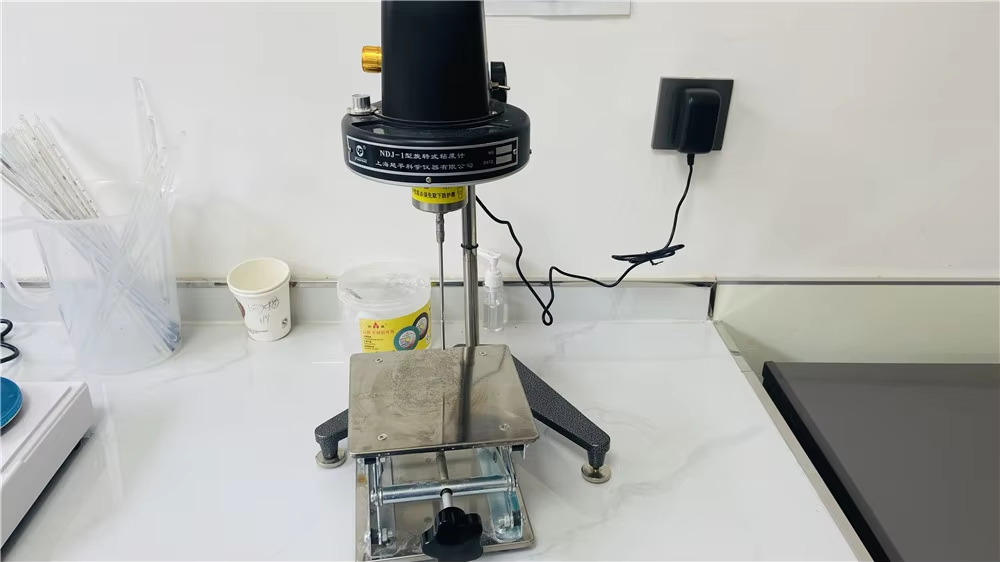
Viscosity control in the laboratory underpins the specification levers discussed with each buyer — for the polymer and for the cellulose ether it runs with.
What BANGCEL® supplies for both matrix types
BANGCEL® is the construction-additive brand of BANG SHANG INTERNATIONAL CO.,LIMITED, a manufacturer founded in 2007 that operates an 80,000 m² facility with 300 employees, including a 26-engineer R&D team. Its product lines cover HPMC, MHEC, RDP, HEC, CMC, HPS, PVA and PP fiber, with an export ratio of around 70% and customers across the Americas, Africa, the Middle East, Russia, Ukraine, South and Southeast Asia, and Oceania — worldwide, excluding the EU. Annual capacity is stated at 30,000 tons of cellulose ethers and 20,000 tons of RDP.
For buyers comparing matrices, the relevant capability is not only the powder itself but the willingness to adjust it. OEM and ODM programmes cover parameter customisation (viscosity, particle size, ash content, degree of substitution, water retention rate), formula and grade customisation (custom formulation, custom grade, blending and compounding), packaging customisation (logo printing, packaging specification, shipping mark, custom label) and service customisation (OEM, ODM, small batch customisation, customised testing). Technical adjustments are made against the customer's own formulations, raw materials and application conditions — the same approach applies whether the target is a cement-based tile adhesive or a gypsum-based product, both of which are named among the applications the company tailors for.
| BANGCEL® RDP supply facts | Stated details |
|---|---|
| Product grades | RDP5010, RDP6188, RDP4010 |
| Polymer base | Vinyl acetate ethylene (VAE) |
| Stated specifications | Ash 11±2%; pH 6–8; MFFT 0 °C; solid content ≥99%; glass transition temperature 10 °C |
| System certification | GB/T 19001-2016 / ISO 9001:2015 (cert. 86525Q1069R0M, HQC, 2025-09-02 to 2028-09-01, scope: cellulose ether, RDP powder); GB/T 45001-2020 / ISO 45001:2018 (86525S1067R0M); GB/T 24001-2016 / ISO 14001:2015 (86525E1068R0M, global excluding the EU) |
| Customisation levers | Viscosity, particle size, ash content, degree of substitution (DS/MS), water retention rate, custom formulation and grade, blending and compounding |
| Order parameters | MOQ 3 tons; lead time 7–14 days; 100% testing; small batch customisation available |
| After-sales | Customised technical support, quality traceability, stable long-term supply, priority service for authorised distributors |
Step-by-Step Breakdown: Qualifying an RDP Grade for a Specific Matrix
Step 1 — Fix the matrix and the service environment first
Decide explicitly whether the product is cement-based or gypsum-based, then add the conditions that change the polymer's job: interior or exterior, permanently wet or dry, absorbent or non-absorbent substrate, thin skim coat or thicker render. A gypsum skim coat and a cement-based EIFS base coat can share a supplier but not a specification.
Step 2 — Convert the performance target into testable numbers
For tile adhesives, EN 12004 and ISO 13007-1 give the reference points: C1 requires at least 0.5 MPa and C2 at least 1.0 MPa tensile bonding strength. For wall putty, plasters, EIFS and gypsum products, define internal acceptance values for adhesion, flexibility, crack resistance and water resistance before speaking to suppliers, so that samples can be judged against something objective.
Step 3 — Choose the film-forming profile before the price
Compare MFFT, glass transition temperature, solid content and ash content as a set. Because ash is non-film-forming residue, the meaningful comparison is active polymer delivered per ton of mortar, not price per ton of powder. High solid content strengthens the case for a grade in thin-film applications where every kilogram has to work.
Step 4 — Set the cellulose ether in the same decision
Viscosity, degree of substitution and water retention rate of the HPMC or MHEC in the formulation decide how much water remains available for the RDP film to form. Treating the polymer and the cellulose ether as one decision — ideally sourced from the same supplier — removes a common source of unexplained adhesion failures.
Step 5 — Validate in your own plant, with your own raw materials
Pre-sales support should include product recommendation and grade selection, technical consultation, and sample support for testing. The decisive test is a side-by-side trial in your own binder, filler package and mixing water, at production mixing shear — not a laboratory reference recipe. Where the result is close but not yet on target, technical adjustment against the customer's formulation, raw materials and application conditions is the correct next step rather than an immediate change of supplier.
Step 6 — Lock the supply parameters and re-qualify on change
Once a grade is approved, fix the order parameters in writing: MOQ, lead time, batch control, testing regime and quality traceability. Standard lead time is 7–14 days with a 3-ton MOQ on customised grades. Re-qualify whenever the filler package, cellulose ether or mixing water changes, because each of those changes alters the water balance the polymer depends on.
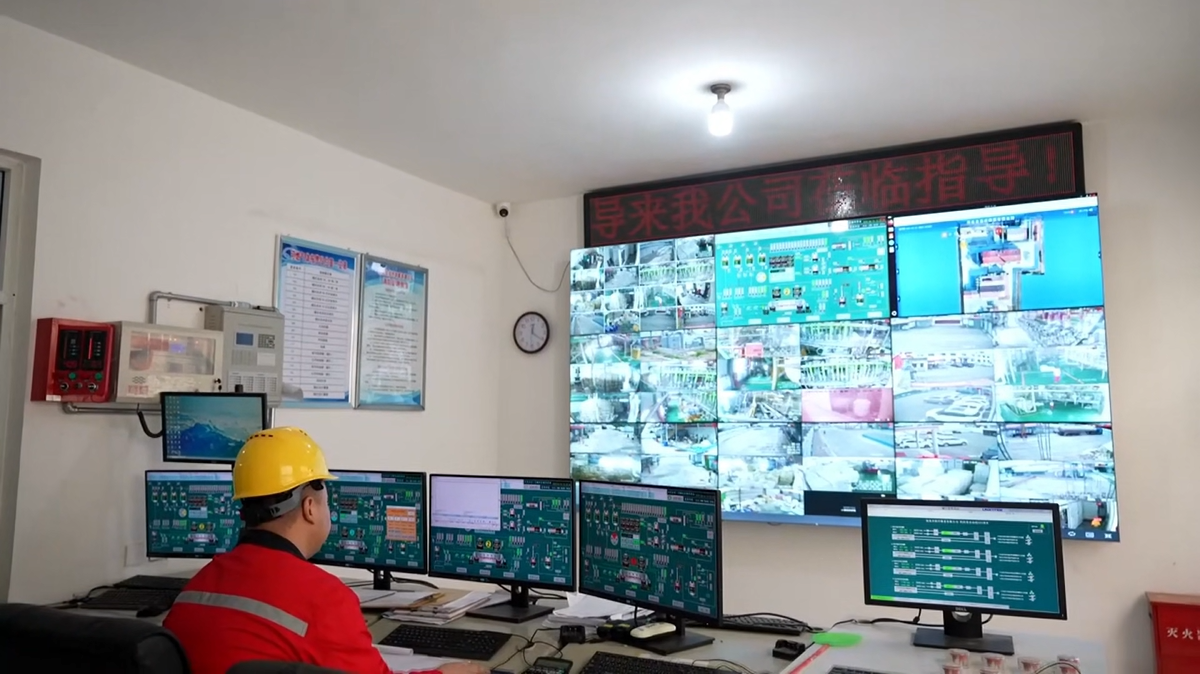
Consistent batch control matters more than a single good sample: RDP selection only holds when production repeats the approved specification.
Use Cases: Application-Oriented RDP Requirements
The same matrix logic plays out differently by application. The table below summarises what changes between common mortar types when RDP is specified, and which levers the supplier should be asked to confirm.
| Application | Matrix | Main performance target | What to confirm with the supplier |
|---|---|---|---|
| Ceramic tile adhesive | Cement-based | C1 or C2 tensile adhesion under EN 12004 / ISO 13007-1, plus flexibility and open time | Grade suitable for the target class, particle size and viscosity, compatibility with the chosen HPMC |
| Wall putty | Cement-based or gypsum-based | Adhesion to substrate, crack resistance, surface finish, water retention during application | Film-forming profile for the binder used, dosage validated in the customer's filler package |
| EIFS / ETICS base coat | Cement-based | Flexibility, adhesion to insulation board, weatherability, water resistance | Grade with the flexibility and durability profile required, plus consistent batch supply |
| Self-leveling mortar | Cement-based | Flow, cohesion without segregation, low cracking during drying | Compatibility with the flow aids in the formulation and a grade that does not distort rheology |
| Gypsum-based plasters, skim coats and putty | Gypsum-based | Adhesion and cohesion in a near-neutral matrix, workability, reduced brittleness | Retarder compatibility and film formation in a fast-setting system; dosage set for gypsum, not copied from cement |
| Repair and waterproof mortar | Cement-based | Adhesion to existing substrates, water resistance, reduced cracking | Water retention and polymer content that support curing under real site conditions |
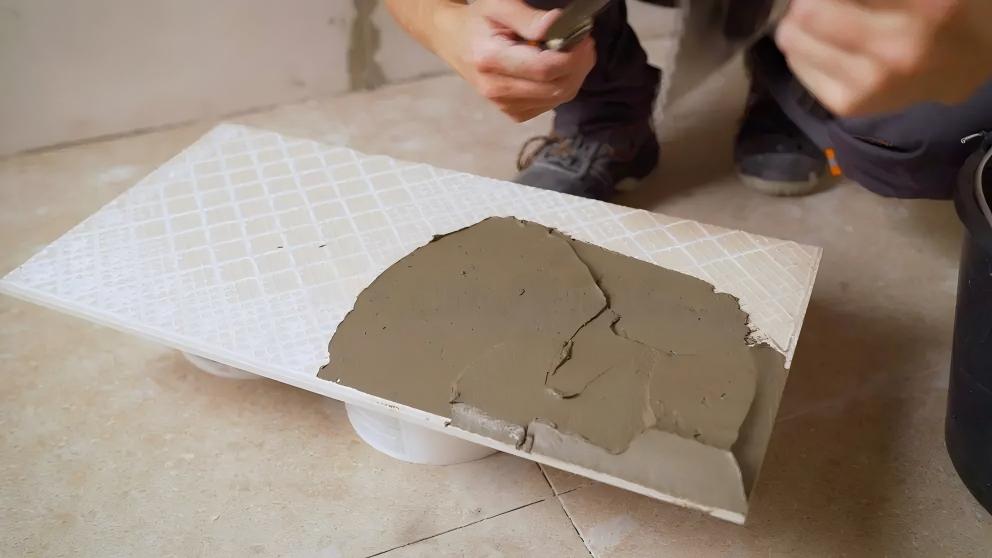
Tile adhesives are the application where RDP selection is most directly tied to a standards-based number: C1 at 0.5 MPa, C2 at 1.0 MPa.
Tile adhesive is the clearest case for specification discipline. Because the bonding classes are defined in EN 12004 and ISO 13007-1, a formulation that misses C1 or C2 fails an objective threshold, and the cause can usually be traced to polymer film formation, water retention or substrate absorption rather than to the cement itself.
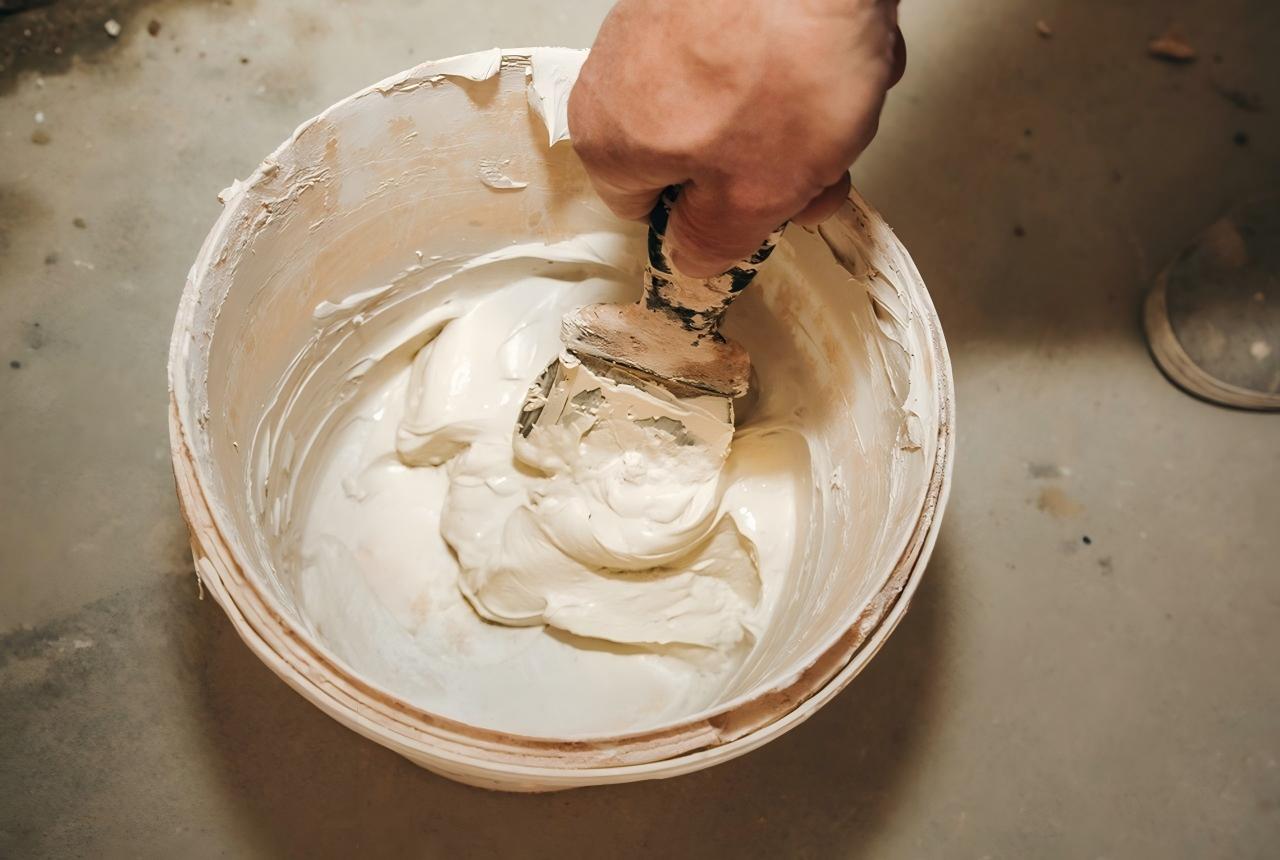
Wall putty is where the cement-based and gypsum-based branches diverge most for the same buyer, because the binder, the filler package and the tolerance for moisture are not the same.
EIFS and ETICS base coats put a different emphasis on the same powder: flexibility and weatherability over the service life of the facade matter more than short-term handling, which makes batch consistency and long-term supply a technical requirement rather than a commercial preference. Self-leveling mortars, by contrast, are the application where RDP is judged mostly on what it does not disturb — flow and cohesion must remain intact while the polymer does its work on the hardened properties.
Field evidence from a two-year supply relationship illustrates how these variables come together. A leading global construction mortar and adhesive manufacturer based in India has taken a steady 1,200 MT annual supply for the formulation of tile adhesive and wall putty. The reported results in that application are adhesion, crack resistance and weatherability, with customer feedback recording zero quality complaints during long-term mass production, supported by customised formulation R&D support, a stable global supply chain and CE-certified materials.
Comparison Table: Cement-Based vs Gypsum-Based Mortar with RDP
The table below sets out the differences that matter to a buyer, independent of brand. It compares the two matrices, not two products, because the matrix is what determines which RDP specification is appropriate.
| Comparison dimension | Cement-based mortar | Gypsum-based mortar |
|---|---|---|
| Binder reaction | Cement hydration in the presence of water (hydraulic) | Calcium sulfate hydration and crystallisation |
| Typical pH environment | Generally alkaline | Generally closer to neutral |
| Primary function expected of RDP | Tensile adhesion, flexibility, reduced shrinkage cracking, water resistance | Adhesion and cohesion in the gypsum matrix, workability, reduced brittleness |
| Moisture behaviour | Generally more tolerant of wet service conditions | Generally more moisture-sensitive; RDP supports but does not replace water-repellent measures |
| Main compatibility risks | Cellulose ether choice, accelerators, defoamers, water demand | Retarders, plasticizers, starches and light fillers interfering with film formation |
| Specification levers to fix first | Viscosity, particle size, ash content, MFFT, cellulose ether water retention | Same levers, weighted toward compatibility and workability in a fast-setting system |
| Typical applications | Tile adhesive, wall putty, EIFS / ETICS, self-leveling and waterproof mortar, repair mortar | Gypsum-based plasters, skim coats and wall putty systems |
| Reference standard | EN 12004 / ISO 13007-1 for tile adhesives (C1 ≥0.5 MPa, C2 ≥1.0 MPa) | Usually project or manufacturer specification, since no single global class applies |
Decision rule. Choose the matrix first, then the film-forming profile, then the accessory parameters, and only then compare price per ton. In practice, most RDP failures that reach a supplier as a complaint originate from a specification carried across from the other matrix — a gypsum-grade choice used in a tile adhesive, or a cement-oriented dosage applied to a gypsum skim coat.
FAQ
Which certifications cover BANGCEL® RDP grades used in cement-based and gypsum-based mortars?
The BANGCEL® RDP grades RDP5010, RDP6188 and RDP4010 are covered by a quality management system certificate issued by HQC to GB/T 19001-2016 / ISO 9001:2015, certificate number 86525Q1069R0M, issued on 2 September 2025 and valid until 1 September 2028, with the stated scope of cellulose ether and RDP powder. The manufacturer also holds GB/T 45001-2020 / ISO 45001:2018 certification (86525S1067R0M) and GB/T 24001-2016 / ISO 14001:2015 certification (86525E1068R0M), and states that its products have passed CE certification and SGS testing. Environmental management coverage and export markets are stated as global, excluding the EU. For application-level compliance — for example a specific EN 12004 tile adhesive class — the mortar producer remains responsible for testing the finished formulation, and the supplier should provide the grade-specific documentation required in that market.
Can RDP be customised for a gypsum-based formulation, not only cement-based systems?
Yes. The OEM and ODM programmes cover parameter customisation (viscosity, particle size, ash content, degree of substitution DS/MS, water retention rate), formula and grade customisation (custom formulation, custom grade, blending and compounding), packaging customisation (logo printing, packaging specification, shipping mark, custom label) and service customisation (OEM, ODM, small batch customisation, customised testing). Gypsum-based products are named among the applications the company tailors for, alongside tile adhesives, wall putty, EIFS and self-leveling mortar. Adjustments are made against the customer's own formulation, raw materials and application conditions, with support from a 26-engineer R&D team.
What is the minimum order quantity, and how is the commercial offer structured?
The MOQ is 3 tons, and small batch customisation is available for buyers validating a new grade before scaling. As an original manufacturer, the company's stated commercial basis is stable quality, competitive pricing, professional technical support and reliable long-term supply. Annual output capacity is 30,000 tons of cellulose ethers and 20,000 tons of RDP, so commercial terms are normally discussed against the full additive basket — RDP together with the HPMC or MHEC it runs with — rather than against RDP in isolation.
Can samples be tested in our own formulation before a production order?
Yes. Pre-sales service includes product recommendation and grade selection, technical consultation, and sample support for testing. The most reliable comparison method is a side-by-side trial in your own binder, filler package and mixing water, at production mixing shear, with the RDP-only variable changed. Production is backed by 100% testing and customised testing options, and technical adjustment against the customer's formulation and raw materials is available when a sample is close to target but not yet on specification.
What is the lead time, and how is supply continuity handled?
Standard lead time is 7–14 days, with a 3-ton MOQ for customised grades, 100% testing and quality traceability across batches. After-sales service covers customised technical support, formula adjustment and stable long-term supply, with priority service for authorised distributors. The pattern is visible in an existing relationship with a leading global construction mortar and adhesive manufacturer in India, which has taken a steady 1,200 MT annual supply over two years for tile adhesive and wall putty formulation, with reported adhesion, crack resistance and weatherability and zero quality complaints recorded in long-term mass production. To move from comparison to decision, request a grade recommendation and a formulation-specific sample at admin@sjz-bs.com, or download the product brochure for the full grade and specification list.
Conclusion: Decide by Matrix, Then by Specification
Cement-based and gypsum-based mortars do not compete for the same RDP. Cement systems reward a polymer that films reliably in an alkaline hydraulic matrix and delivers tensile adhesion, flexibility and water resistance. Gypsum systems reward a polymer that is compatible with a near-neutral, fast-setting matrix containing retarders or light fillers, and that improves adhesion, cohesion and workability without making the set product brittle. The specification levers — viscosity, particle size, ash content, MFFT, glass transition temperature, and the cellulose-ether parameters of degree of substitution and water retention — are the same in both cases, but their weighting is not.
For buyers, the sequence that avoids most failures is straightforward: fix the matrix and service environment, translate the performance target into testable numbers such as the EN 12004 / ISO 13007-1 C1 and C2 classes for tile adhesives, select the film-forming profile before comparing price, treat the cellulose ether as part of the same decision, validate with a sample in your own plant, and lock the supply parameters in writing.
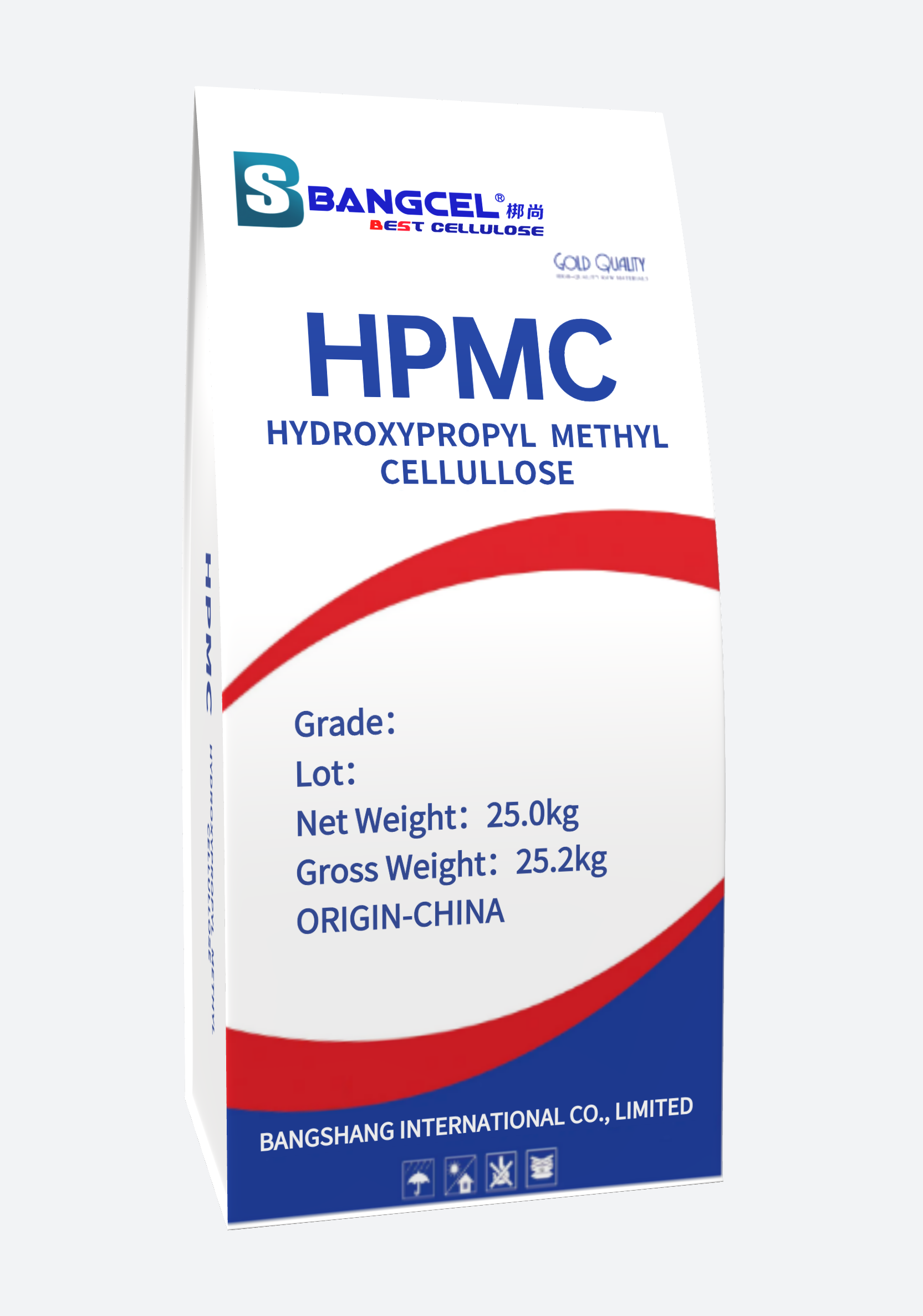
Custom packaging, labels and shipping marks are part of the OEM/ODM scope, alongside the powder specification itself.
Next step. Send your current formulation and target performance values — binder type, filler package, cellulose ether grade and required standard — and BANGCEL® will recommend a grade, provide a sample for testing, and confirm MOQ and lead time. Download the brochure: BANGCEL® product brochure (PDF). Contact: Alex, admin@sjz-bs.com, Tel / WhatsApp +86 13292884619, The South of ZhongXing Road, Jinzhou, Shijiazhuang City, Hebei Province, China. Website: www.bangshanghpmc.com.
Have Questions or Need More Details?
Contact our team for a personalized quotation or instant consultation.
Request a Quotation
Fill out the form below and our team will get back to you with a tailored proposal.
WhatsApp Direct Chat
Prefer to chat in real-time? Message us on WhatsApp for instant assistance & quick answers.
- Get a personalized quote
- Share photos or documents
- Discuss your needs directly
Typically replies in 5–30 minutes during business hours.