RDP Application Guide: Scenario Fit for Tile Adhesives, Wall Putty, EIFS & Self-Leveling Mortar
RDP Application Guide: Scenario Fit for Tile Adhesives, Wall Putty, EIFS & Self-Leveling Mortar
RDP scenario fit is decided by four adjustable grade levers — viscosity and water retention, substitution degree, particle size, and application-oriented customization — not by picking the cheapest powder on a price list. The same redispersible polymer powder asks the polymer film to do different jobs in a thin-bed tile adhesive, a wall putty, an EIFS/ETICS base coat or a self-leveling compound: bond and deform, fill and sand, flex and weather, or flow and level without segregation. This guide maps those levers onto the main construction and decoration scenarios so that a buyer can convert “which RDP?” into a specification that can be sampled, tested and repeated at production scale.
BANGCEL® is the redispersible polymer powder brand of BANG SHANG INTERNATIONAL CO.,LIMITED, a China-based manufacturer and global supplier of construction chemical additives founded in 2007. The company operates an 80,000 m² manufacturing site with 300 employees, a 26-engineer R&D team and an annual RDP capacity of 20,000 tons, and supports OEM/ODM grade development against customer formulations, raw materials and application conditions.
Problem Definition: Why One RDP Grade Rarely Fits Every Scenario
Buyers usually arrive at this decision with a working formulation and a performance gap. The gap may be tile debonding after heat ageing, a putty surface that powders under sanding, an EIFS base coat that cracks at the mesh, or a self-leveling floor that shows bleeding and segregation. In most cases the root cause is not “bad RDP” but a mismatch between the grade’s behaviour and the system it was dosed into.
Four differences between systems drive that mismatch:
- Binder chemistry. Cement-based, gypsum-based and aluminate-containing systems set at different pH levels and release water at different rates, so the polymer must redisperse and film-form inside a different chemical environment.
- Water demand and rheology package. A tile adhesive carries cellulose ether and often starch ether for slip resistance and open time; a self-leveling mortar carries superplasticizer and stabilizers. The same polymer grade will interact differently with each package.
- Film formation and flexibility. A BANGCEL® RDP grade with a minimum film-forming temperature (MFFT) of 0 °C and a glass transition temperature of 10 °C is designed to form a film at normal jobsite temperatures, but the flexibility that helps an EIFS base coat can be excessive where a hard, sandable surface is needed.
- Application thickness and substrate movement. Thin-bed adhesive, 2–3 mm putty layers and thick self-leveling pours place different strain on the polymer bridge between mineral particles.
Industry Background: Where RDP Demand Sits
Grand View Research values the global redispersible polymer powder market at USD 800.7 million in 2025 and projects USD 1,519.6 million by 2033. Within that market, VAE-based powder accounted for 59.2% of revenue in 2025, and tile adhesives consumed an estimated 38% to 40% of global RDP — making thin-bed and ceramic tile adhesive the single largest application block that most buyers evaluate first.
The supply side spans very different scales. Dairen Chemical Corporation reports annual RDP capacity of 94,000 metric tons, while BANGCEL® operates 20,000 tons of annual RDP capacity alongside 30,000 tons of cellulose ethers. For a buyer in the evaluation stage, capacity is context rather than a decision: what matters is whether a supplier can hold a grade constant across batches and adjust it when the formulation changes.
Published supplier documentation converges on the same application map. Manufacturer technical data for construction RDP lists thin-bed mortar, self-leveling mortar, wall troweling compounds and tile adhesive as typical uses, and Celanese describes its ELOTEX redispersible polymer powders as improving adhesion, cohesion and deformability in cement-based and paste tile adhesives, suited to one-component systems and ceramic tile installation. Grade families also differ in polymer base: Shandong Charing lists VAC/E and VAC/E/Si systems with manufacturer-reported solids content of at least 99% and bulk density of 450–550 g/L. That spread is why an application guide, not a single data sheet, is the practical starting point.
Detailed Solution: The Four Grade Levers That Decide Scenario Fit
BANGCEL® positions RDP customization around four adjustable parameters. Each one changes a different property of the wet mix or the hardened mortar, and each one should be moved for a specific reason.
1. Viscosity and water retention
Viscosity and water retention govern how long the mix stays workable, how much water the substrate can steal, and whether the mortar holds its shape on a vertical surface. In tile adhesives this lever controls open time and slip; in putty it controls trowelling and sanding; in self-leveling mortar it controls whether the mix keeps flowing or stiffens prematurely. Adjust this lever first whenever the complaint is about workability, not strength.
2. Substitution degree
The substitution degree on the protective-colloid side of the grade changes the powder’s water affinity and how it interacts with the cellulose ether already in the formulation. A formulation that already carries a high-viscosity cellulose ether rarely needs an RDP grade that competes for the same water; a lean formulation often does. This is the lever that separates two grades with otherwise similar solids content and ash value.
3. Particle size
Particle size affects redispersion speed, dusting during dry-mix handling, bulk density and the uniformity of the polymer film between mineral particles. Finer powder redisperses quickly and suits thin applications such as putty and coatings; coarser distributions handle better in bulk dry-mix plants and reduce dust. Particle size is also a packaging and dosing consideration, not only a performance one.
4. Application-oriented customization
Beyond single parameters, BANGCEL® supports custom formulation and grade development, blending and compounding, and small-batch customization with customized testing. Technical adjustments are made against the customer’s own formulation, raw materials and application conditions — which is the only reliable basis for a grade recommendation, because two plants producing the same nominal tile adhesive from different sand gradings and cement sources will not respond identically to the same powder.
Scenario-by-Scenario Fit: Which Lever to Turn First
Thin-bed and ceramic tile adhesives
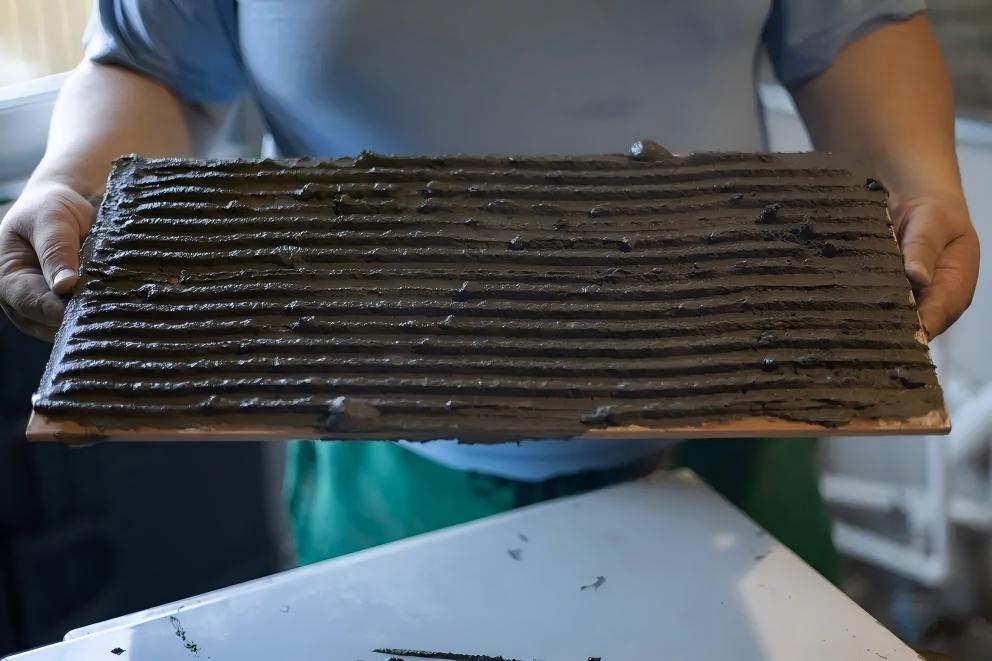
Tile adhesive is the highest-volume RDP application and the most sensitive to balanced performance: tensile adhesion, shear strength, deformability, open time and slip resistance must hold together after water, heat and freeze-thaw conditioning. Turn the water retention and viscosity lever first, then set flexibility. Over-flexible grades raise cost without improving adhesion; under-flexible grades debond when the substrate moves. Verify with tensile adhesion after conditioning, plus open time and slip on the substrate you actually build on, against the classification standard your market applies (for example EN 12004).
Wall putty and wall troweling compounds
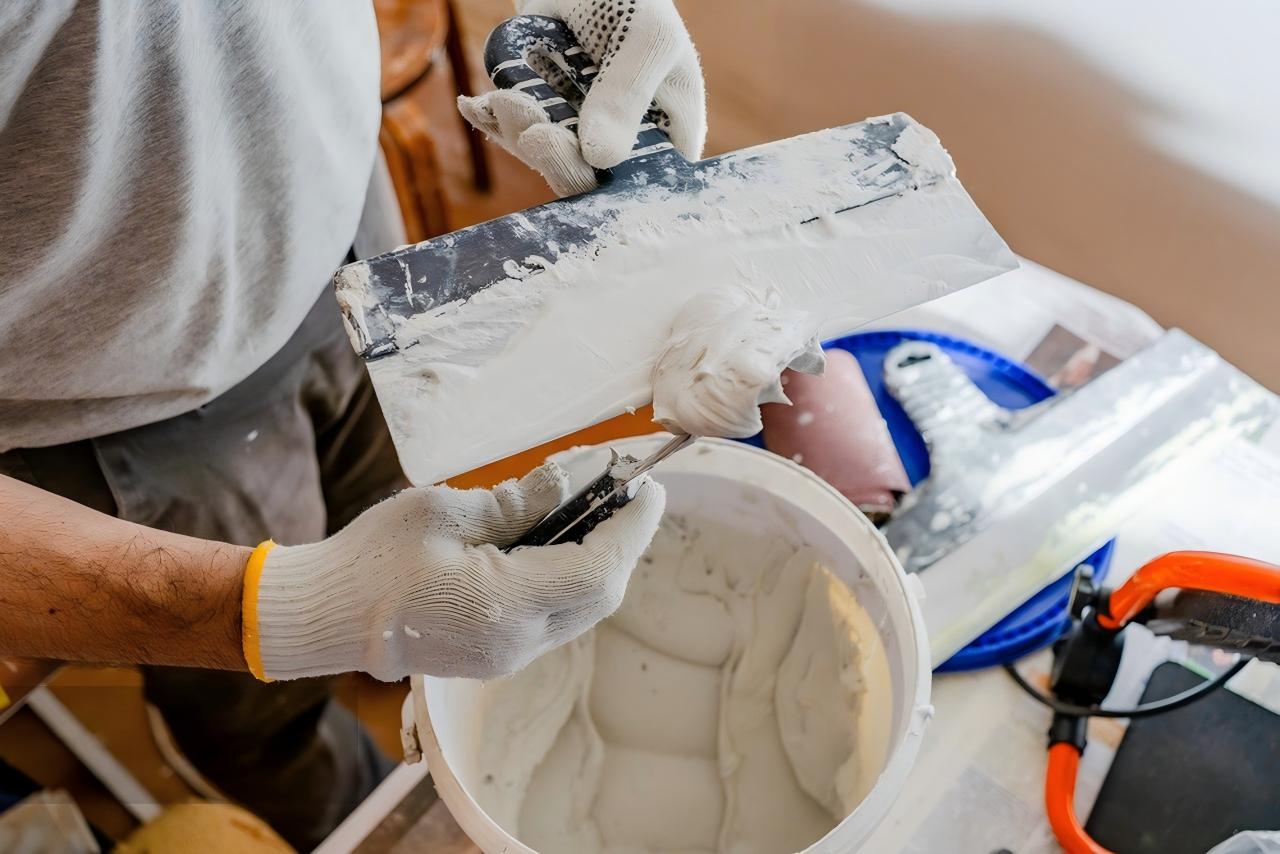
Putty demands a different balance: adhesion to the substrate, crack resistance, water resistance and — critically — sandability without powdering. Because putty is applied in thin layers and sanded, redispersion quality and film uniformity matter more than raw dosage. Adjust particle size and substitution degree before increasing polymer level; a grade that disperses cleanly usually solves powdering at a lower loading than a coarse grade dosed heavily. Verify by sanding, by adhesion pull-off and by checking for hairline cracking after drying.
EIFS and ETICS systems
External wall insulation systems place the polymer under permanent thermal and moisture cycling. The base coat must bond to insulation board, embed the reinforcement mesh and remain flexible enough to absorb movement without cracking, while the finish must resist water absorption. Flexibility and water resistance are the priority levers here, which usually means a higher polymer contribution than a tile adhesive — a decision to confirm by impact resistance, tensile bond strength and water absorption testing rather than by datasheet comparison alone.
Gypsum-based products
Gypsum systems set through hydration rather than alkaline cement chemistry, and they release water differently during drying. A grade tuned for cement-based mortars can retard or disrupt setting in a gypsum putty or gypsum-based adhesive. Select for compatibility with the gypsum system, confirm redispersion at the pH of the mix, and verify bond strength and cracking behaviour on the actual substrate. This is the scenario where a custom application-oriented grade most often outperforms a standard construction grade.
Self-leveling mortar
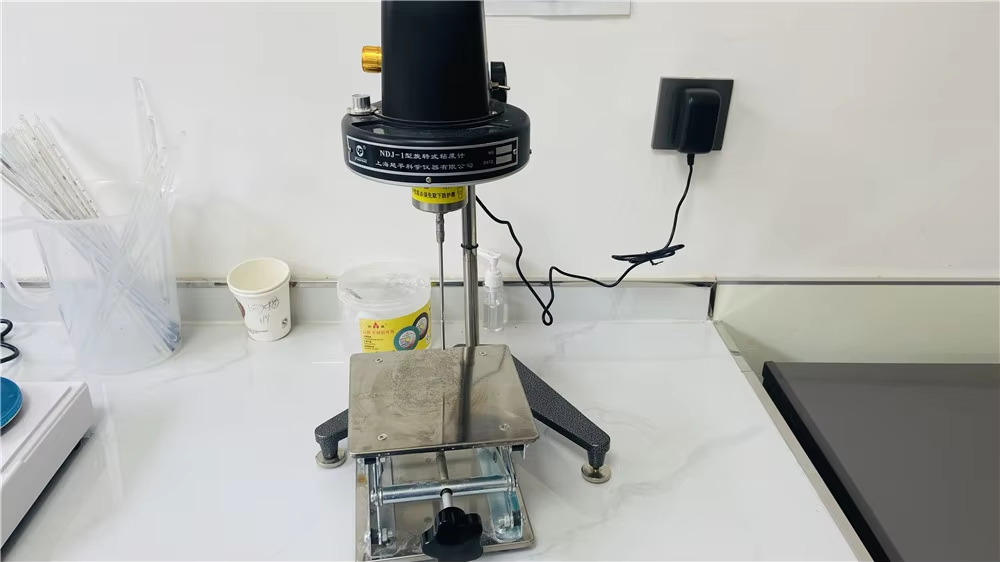
Self-leveling compounds need flow without segregation, controlled shrinkage and enough walking time for the applicator. The polymer must not thicken the mix or compete with the superplasticizer and stabilizer package. Particle size and viscosity contribution are the levers to move first; flexibility is secondary unless the floor is subject to movement or is laid thin over a weak substrate. Verify spread and flow, flexural and compressive strength development, and surface defects such as bleeding or pinholes.
Cement-based mortars, waterproof and repair mortars
Plastering, waterproofing and repair mortars share a demand for adhesion and crack bridging under restrained shrinkage. Repair mortars add a bond requirement to old, often damp concrete; waterproof mortars add resistance to water penetration under pressure. Water resistance and flexibility are the priority levers, with dosage set by the exposure class. Verify adhesion to the prepared substrate, crack bridging and water penetration rather than relying on a general-purpose grade.
Water-based coatings and construction interface agents
In coatings and interface agents (bonding agents), the powder forms a continuous film rather than a bridge between mineral particles. Film formation at low temperature, adhesion promotion and compatibility with the emulsion system become the deciding factors, and MFFT and viscosity are the levers that matter. Verify adhesion promotion on the target substrate and film integrity after drying.
Step-by-Step: Turning Scenario Requirements into a Tested RDP Specification
- Define the substrate and service class. Record substrate type, absorption, expected movement, interior or exterior exposure, and whether the element is load-bearing. This single step eliminates most wrong-grade trials.
- Fix the mineral skeleton. Cement type and dosage, filler grading, gypsum or aluminate content, and the cellulose ether package all interact with the polymer. Do not change two variables at once.
- Set measurable targets. Convert the application complaint into a test: tensile adhesion after water and heat ageing, slip, open time, impact resistance, water absorption, flow, or sanding behaviour.
- Choose one lever to move. Use the scenario mapping above to decide whether viscosity and water retention, substitution degree, particle size or flexibility is the first variable. One lever per trial.
- Sample and benchmark in your own laboratory. BANGCEL® pre-sales support covers product recommendation and grade selection, technical consultation and formulation guidance, and sample support for testing, so the trial runs on your formulation rather than a generic one.
- Scale from trial to production. A trial order starts at an MOQ of 3 tons, which is enough to run a full laboratory and pilot batch before committing to line production. Commercial supply is supported by a monthly RDP capacity of 3,000 tons.
- Lock the specification and traceability. Record grade, key parameters, dosage and acceptance tests. BANGCEL® applies 100% testing with strict batch control, so a validated grade can be reordered and matched against the original trial.
Use Cases: How Scenario Fit Is Proven in Production
A leading global construction mortar and adhesive manufacturer in India moved from trial samples to a steady supply of 1,200 metric tons per year of BANGCEL® RDP for tile adhesive and wall putty formulations. Over a two-year supply period the formulated products demonstrated adhesion, crack resistance and weatherability, and customer feedback recorded zero quality complaints during long-term mass production. The supporting elements were customized formulation R&D support, CE-certified supply and a stable global supply chain — the same three inputs that determine whether a scenario-fit grade survives contact with production.
Two evaluation patterns recur when buyers test this way. In EIFS projects, the trial typically starts from the base coat rather than the finish, because mesh embedding and impact resistance expose a grade mismatch faster than surface appearance. In self-leveling projects, the trial usually starts from flow and segregation behaviour, because a polymer that thickens the mix will fail the applicator before it fails a strength test. Neither pattern requires a special grade catalogue; both require the supplier to adjust parameters against the buyer’s own formulation and raw materials.
Scenario Fit Comparison Table
The table below ranks evaluation priority for a buyer trialling RDP across construction and decoration scenarios. Priority 1 reflects the documented 38%–40% share of global RDP consumption held by tile adhesives in 2025; the remaining order is an editorial evaluation sequence based on formulation sensitivity and trial cost, not a market-size ranking.
| Priority | Scenario | Primary performance demand | Lever to adjust first | What to verify in trial |
|---|---|---|---|---|
| 1 | Thin-bed / ceramic tile adhesive | Adhesion, deformability, open time, slip resistance | Viscosity and water retention, then flexibility | Tensile adhesion after water / heat / freeze-thaw conditioning |
| 2 | Wall putty and troweling compound | Adhesion, crack resistance, sandability | Particle size and substitution degree | Sanding behaviour, pull-off adhesion, hairline cracking |
| 3 | EIFS / ETICS base coat and finish | Flexibility, impact resistance, water resistance | Flexibility and water resistance | Impact, tensile bond, water absorption, thermal cycling |
| 4 | Self-leveling mortar | Flow, no segregation, low shrinkage | Particle size and viscosity contribution | Spread and flow, strength development, surface defects |
| 5 | Gypsum-based products | Setting compatibility, bond, crack resistance | Grade compatibility with gypsum chemistry | Setting behaviour, bond strength, drying cracks |
| 6 | Waterproof and repair mortar | Adhesion, crack bridging, water penetration resistance | Water resistance and flexibility | Bond to prepared substrate, crack bridging, water penetration |
| 7 | Water-based coatings / interface agent | Film formation, adhesion promotion | MFFT and viscosity | Film integrity after drying, adhesion on target substrate |
Frequently Asked Questions
Does BANGCEL® RDP meet CE and SGS requirements, and which certificates cover RDP powder?
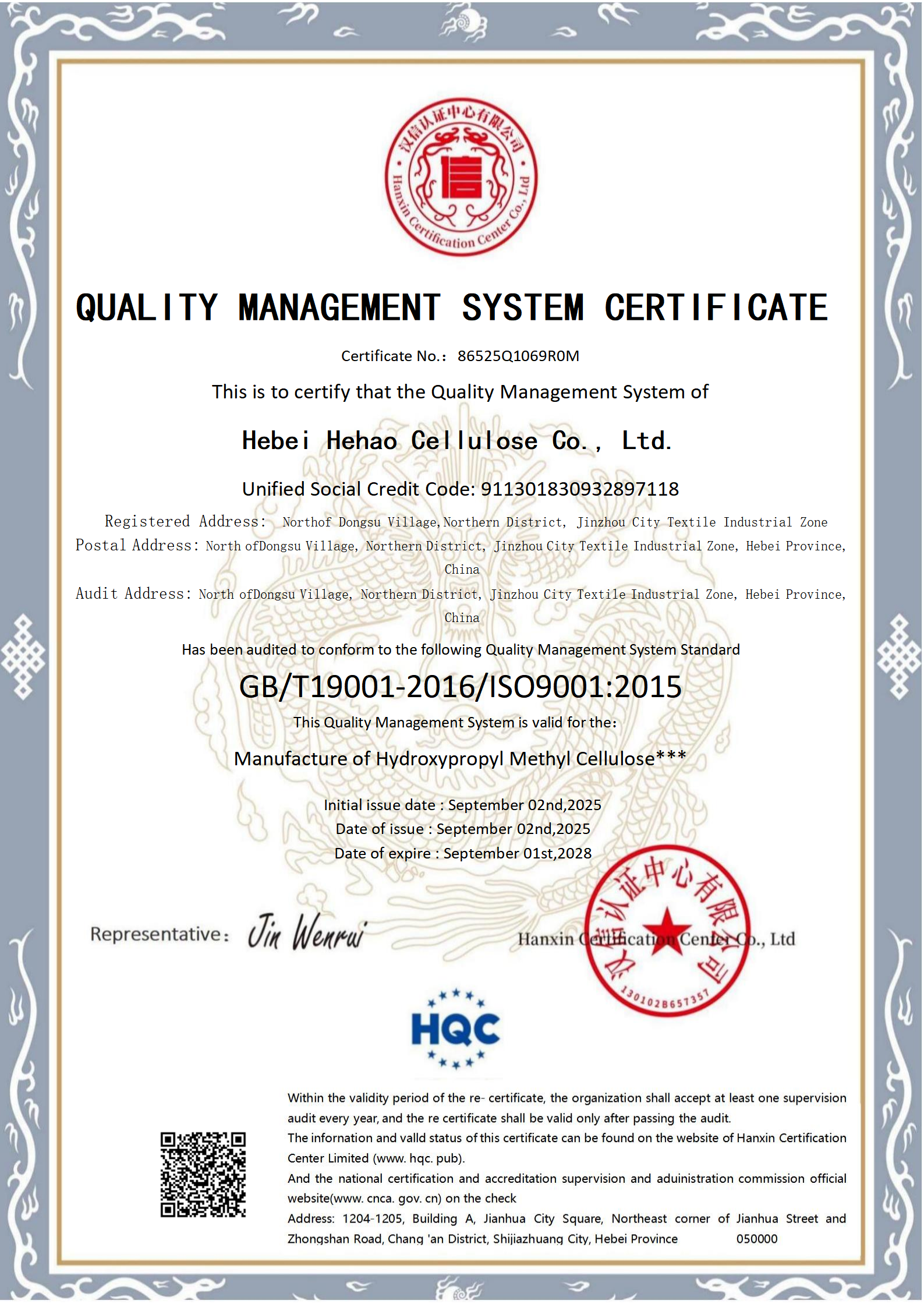
BANGCEL® RDP is produced under CE certification and has passed SGS testing. The quality management system certificate 86525Q1069R0M, issued by HQC to GB/T 19001-2016 / ISO 9001:2015, names cellulose ether and RDP powder in its scope and is valid from 2 September 2025 to 1 September 2028. Two further certificates from the same body cover related management activities within the same validity window: 86525S1067R0M to GB/T 45001-2020 / ISO 45001:2018 and 86525E1068R0M to GB/T 24001-2016 / ISO 14001:2015, both scoped to HPMC / cellulose ether manufacturing.
Can the RDP grade be customized to a specific mortar formulation?
Yes. BANGCEL® provides OEM/ODM services with customization of viscosity, particle size, ash content, degree of substitution and water retention rate, plus custom formulation and grade development, blending and compounding, and packaging customization including logo, specification, shipping mark and label. Adjustments are made against the customer’s formulation, raw materials and application conditions, supported by a 26-engineer R&D team and 100% testing. Standard reference parameters for RDP5010, RDP6188 and RDP4010 are a VAE base, solid content ≥99%, ash 11±2, pH 6–8, MFFT 0 °C and glass transition temperature 10 °C.
What is the minimum order quantity, and how should a buyer budget a scenario trial?
The MOQ is 3 tons, and small-batch customization is available, which allows a full laboratory and pilot batch before line production. Budgeting should follow cost-in-use rather than price per ton of powder: RDP is dosed in small proportion relative to the mineral binder and filler, so the grade and dosage that meet the application test at the lowest workable level determine the real cost per ton of finished mortar. The monthly RDP capacity of 3,000 tons means a validated grade can be scaled without changing source.
How does the sample process work before a grade is approved?
Pre-sales service includes product recommendation and grade selection, technical consultation and formulation guidance, and sample support for testing. To make a sample meaningful, provide the current formulation, the raw material specifications (cement, filler, gypsum or aluminate source), the cellulose ether package and the application conditions. Technical adjustments are then made against those inputs, and the sample is tested against the acceptance criteria defined for the scenario.
What is the lead time for an RDP order?
Lead time is 7–14 days, supported by an annual RDP capacity of 20,000 tons and a monthly capacity of 3,000 tons under 100% testing and strict batch control. For buyers moving from trial to repeat supply, the next step is to send the trial formulation and target test values for a grade recommendation and a quotation — contact Alex at admin@sjz-bs.com or +86 13292884619.
Conclusion: Fit the Grade, Then Fix the Specification
Scenario fit is a sequence, not a single product choice. Tile adhesives are decided by water retention and flexibility; wall putty by particle size and substitution degree; EIFS by flexibility and water resistance; self-leveling mortar by flow behaviour; gypsum systems by chemical compatibility. Once the lever is identified, the grade can be adjusted against a real formulation, sampled at 3 tons, tested against defined acceptance criteria and then locked for repeat supply.
BANG SHANG INTERNATIONAL CO.,LIMITED has manufactured construction chemical additives since 2007, exporting around 70% of output, and supports this sequence with OEM/ODM customization, a 26-engineer R&D team, CE certification, SGS testing and pre-sales sample and technical consultation. Buyers who define the scenario before comparing powders get a specification that survives production; buyers who compare powders first usually repeat the trial.
Request a Scenario-Fit Sample or Quotation
Send your formulation, raw material specifications and target test values, and the BANGCEL® technical team will recommend a grade and prepare a sample for your own laboratory trial. MOQ 3 tons · lead time 7–14 days · OEM/ODM and custom grade development supported.
Contact: Alex · admin@sjz-bs.com · +86 13292884619 (WhatsApp available) · Jinzhou, Shijiazhuang City, Hebei Province, China
Website: www.bangshanghpmc.com · Product brochure: Download the BANGCEL® catalogue (PDF)
Have Questions or Need More Details?
Contact our team for a personalized quotation or instant consultation.
Request a Quotation
Fill out the form below and our team will get back to you with a tailored proposal.
WhatsApp Direct Chat
Prefer to chat in real-time? Message us on WhatsApp for instant assistance & quick answers.
- Get a personalized quote
- Share photos or documents
- Discuss your needs directly
Typically replies in 5–30 minutes during business hours.