Technical Guide to HPMC Viscosity and Purity: Key Parameters for Construction
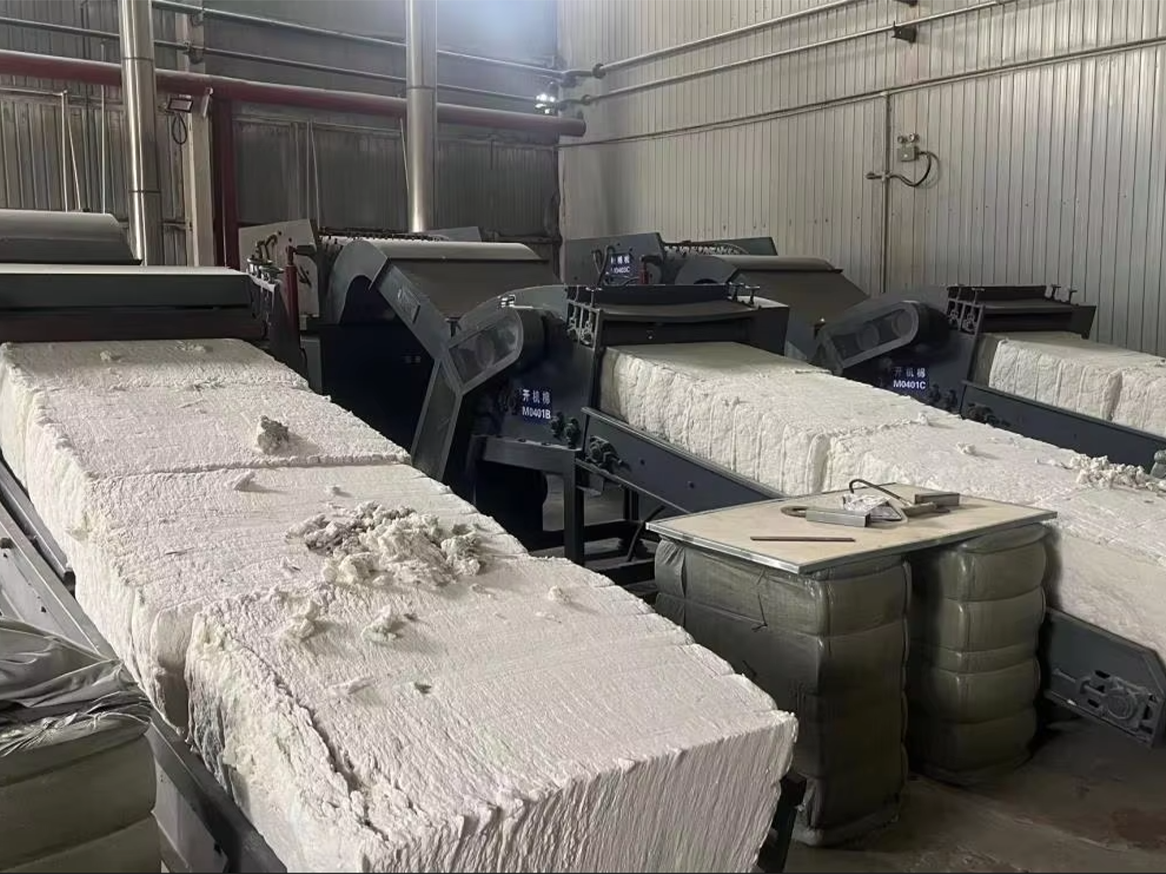
Cover: raw material workshop at the BANGCEL® cellulose ether production base, where feedstock is staged and controlled before etherification.
Viscosity and purity are the two HPMC parameters that decide whether a construction grade behaves the way a formulation assumes. BANGCEL® construction-grade hydroxypropyl methyl cellulose is produced within a viscosity range of 200–200,000 mPa·s, a methoxyl content of 24–30%, a hydroxypropyl content of 4–12%, an ash content below 5%, a moisture content below 5% and a pH of 6–8, with 100% testing applied to every batch before delivery. Buyers who evaluate HPMC on price per kilogram alone usually discover the difference between those facts later — as weak water retention, sagging tile adhesive, unstable open time, or powder that cakes in the silo. This guide explains what each parameter controls, why the control limits sit where they do, and how a buyer can verify viscosity, moisture, ash and substitution before the order is placed.
Problem Definition: Why Viscosity and Purity Decide Mortar Performance
In dry-mix construction systems, HPMC performs two functions at the same time: it retains water inside the fresh mortar so cement or gypsum can hydrate properly, and it thickens the mix so the applied material stays where the trowel put it. Both functions depend on the molecular structure of the cellulose ether and on how much non-functional material is present in the bag. A viscosity that drifts between batches forces the production line to re-tune its dosing. A purity level that is not controlled — visible mainly through ash content and moisture — means part of what the buyer pays for contributes nothing to performance.
The failure modes are recognizable on site. Tile adhesive with insufficient water retention dries too early and loses bond strength around the tile edges. Putty and skim coats that lose viscosity sag on vertical surfaces or drag under the trowel. Self-leveling compounds stop flowing and lose their leveling ability. Machine-applied plaster stiffens in the hose before the wall is finished. In most cases the complaint arrives as a mortar problem, while the root cause sits in an HPMC parameter that was never specified, never tested, or never tied to the delivered batch.
That is why the practical definition of quality for a construction-grade HPMC is narrower than general marketing language suggests. It is the ability to deliver the same viscosity, the same water retention behaviour and the same purity level, batch after batch, supported by documentation that lets the buyer confirm it independently.
Industry Background: Parameter Documentation Became the Real Differentiator
The scale of the construction segment explains why parameter discipline has become a procurement topic rather than a purely technical one. The global construction-grade HPMC market was valued at USD 1.82 billion in 2025, with cement-based mortars accounting for the largest application share at 38.4% (Dataintelo). Construction applications have held a revenue share above 45% of the overall HPMC market in recent years, driven by HPMC's role as a water-retention agent and thickener (Grand View Research), and industrial-grade HPMC — the category that includes construction and detergent types — represented 47% of total global HPMC demand in 2024 (Industry Research). Production and consumption remain concentrated in Asia Pacific, which holds approximately 47.3% of the global construction-grade market (Dataintelo).
Supply is concentrated at the top as well. Dow Chemical, Ashland and Shin-Etsu are identified as the Tier 1 global leaders, collectively controlling more than 50% of the HPMC market (Infinity Market Research). For buyers who cannot or do not wish to source exclusively from those suppliers, the practical question becomes how a non-Tier-1 manufacturer proves that its parameter control is comparable at the level that matters for dry-mix formulations — which is exactly where batch-level testing data and traceability carry more weight than brand familiarity.
A second driver is documentation. Industrial-grade cellulose ethers such as HPMC are expected to meet ISO 14025:2006 for environmental declarations (EPD) in competitive global tenders (EPD International). That expectation pushes buyers toward suppliers who can connect a certificate to an actual production batch. One caution when building an internal business case: published HPMC market size estimates vary widely depending on whether pharmaceutical and food grades are included in the scope, so the figure should always be read together with its definition.
The Parameters That Matter: Viscosity, Moisture, Ash, pH and Substitution
A full cellulose ether specification contains many line items, but for construction and decoration use five of them decide whether a grade is usable: viscosity, moisture content, ash content, pH, and the substitution degree that explains why two grades with the same viscosity can still behave differently.
Viscosity: the 200–200,000 mPa·s working range
Viscosity is the first parameter formulators use to separate grades. BANGCEL® supplies construction HPMC across 200–200,000 mPa·s, with named grades such as HPMC100000, HPMC150000 and HPMC200000 covering the higher end of that range. The number itself is not a quality ranking. A low-viscosity grade is not inferior to a 200,000 mPa·s grade, and a high-viscosity grade is not automatically better in every formulation. Viscosity determines how strongly the polymer thickens the mixing water and how much of it is needed to reach a target consistency. A grade above the requirement can make a mix stiff and difficult to trowel; a grade below it can leave the mix thin, fast-draining and prone to sagging. The technical requirement is stability inside the declared band, not the highest available number.
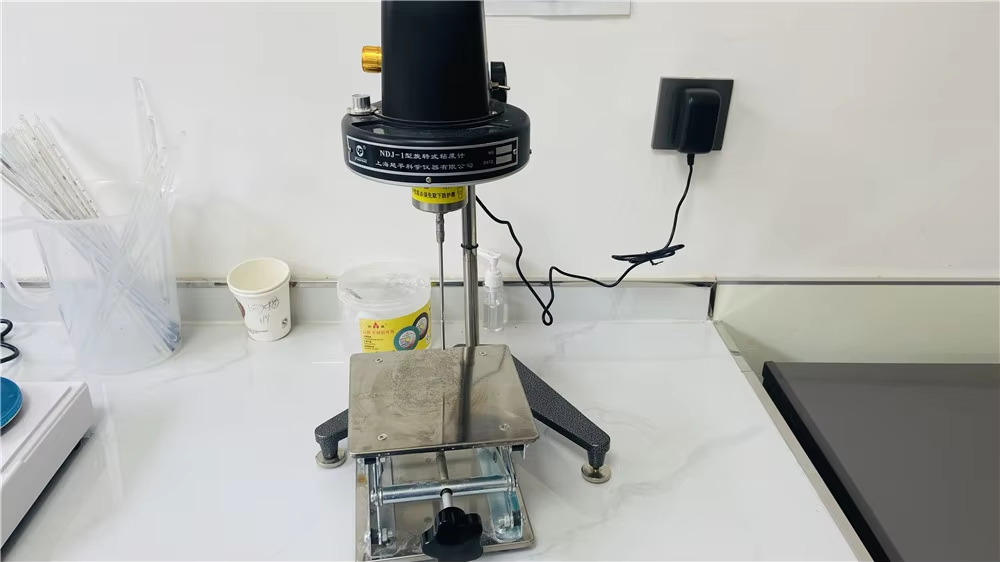
In-house viscometer tester: viscosity is measured on production batches before release, not only on periodic samples.
Moisture content: below 5% keeps powder free-flowing
Moisture is the least discussed parameter in sales conversations and one of the most disruptive in a dry-mix plant. BANGCEL® HPMC is specified at less than 5% moisture. Moisture above the working limit causes caking and bridging in silos and feeders, makes dosing by weight unreliable, and shortens shelf life under humid storage. Because water is not an active component, higher moisture content also quietly reduces the effective polymer content per kilogram. Buyers operating automated batching should treat the moisture figure on a batch certificate as a process-relevant number rather than a formality: it directly affects the accuracy of every dose the line dispenses.
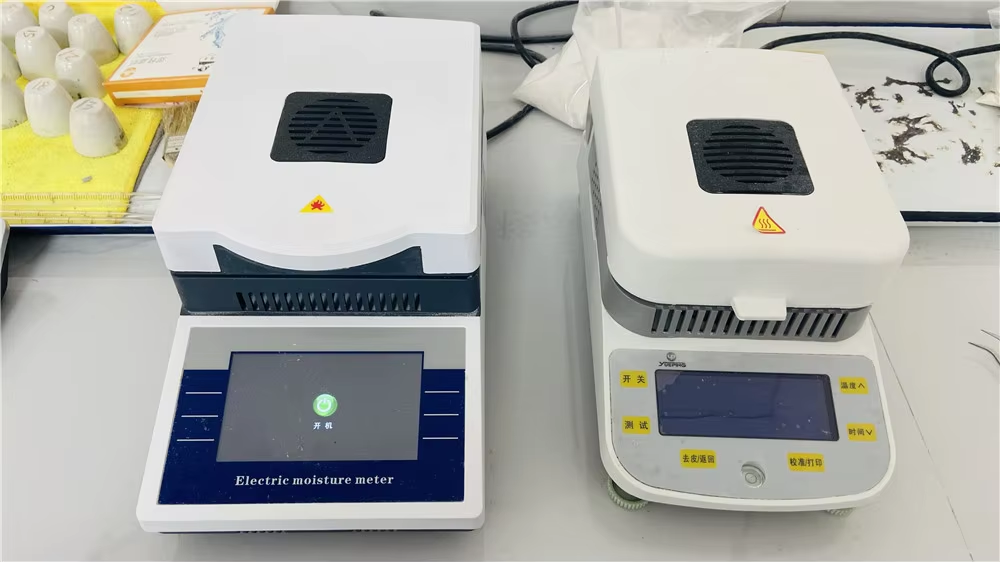
Electronic moisture meter: moisture content is a purity-adjacent parameter that changes dosing accuracy and shelf life.
Ash content: the clearest purity signal in a quotation
Ash content is the residue left after combustion, and in a cellulose ether it represents inorganic material that contributes nothing to water retention or thickening. BANGCEL® specifies ash content below 5%. When a grade is offered at an unusually low price, ash is one of the first parameters to check, because inorganic filler or residual salts raise ash content and dilute the active polymer. The consequence in practice is a double loss: the buyer pays for material that does not perform, and the plant must increase the dosage to recover water retention — which also shifts open time, set behaviour and cost per square meter of finished work. Ash content is therefore the single most useful purity indicator when comparing quotations of the same nominal viscosity.
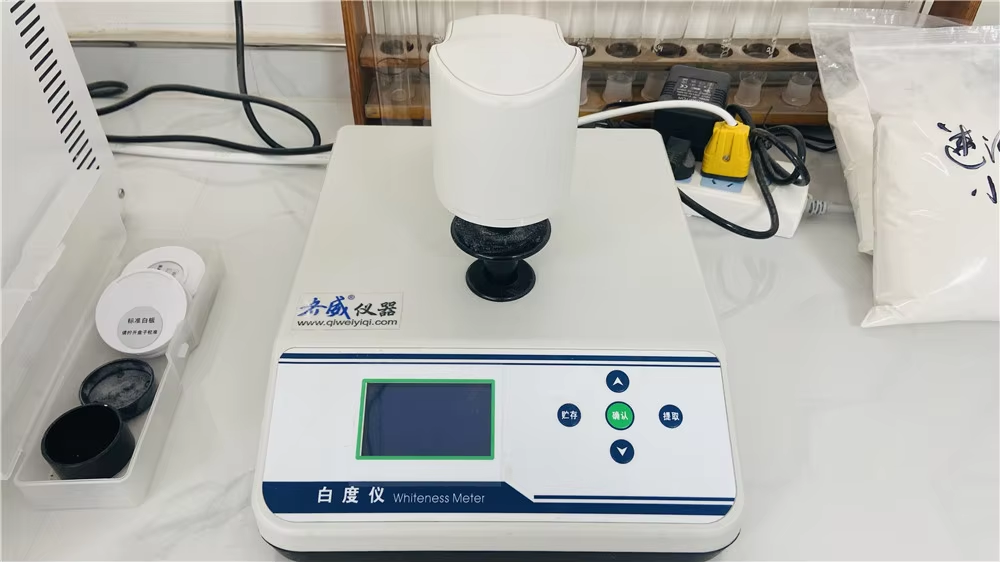
Whiteness meter: appearance checks support the purity picture alongside ash and moisture results.
pH and substitution degree: the parameters behind water retention
Two further parameters determine how the polymer behaves inside a cementitious or gypsum system. pH is specified at 6–8, which keeps the additive compatible with the alkaline environment of cement-based mortars and with gypsum formulations. The substitution degree — methoxyl content of 24–30% and hydroxypropyl content of 4–12% — governs solubility, water retention and thermal gelation behaviour. These ranges are also the parameters most often customized: BANGCEL® OEM/ODM programmes support adjustment of viscosity, particle size, ash content, degree of substitution and water retention rate, so a grade can be aligned to a specific formulation instead of the formulation being forced to fit a standard grade.
Batch-level testing is what makes the ranges real
Declared ranges only matter if the delivered batch sits inside them. BANGCEL® applies 100% testing to production batches before delivery, using an in-house laboratory equipped with a viscometer tester, electronic moisture meter, whiteness meter, photometer, precision electronic scale, a gas chromatograph with hydrogen generator, and a desktop drying oven. Testing at batch level rather than on periodic samples is what allows a viscosity or ash figure on a certificate of analysis to be tied to the material actually shipped.
How BANGCEL® Controls These Parameters in Production
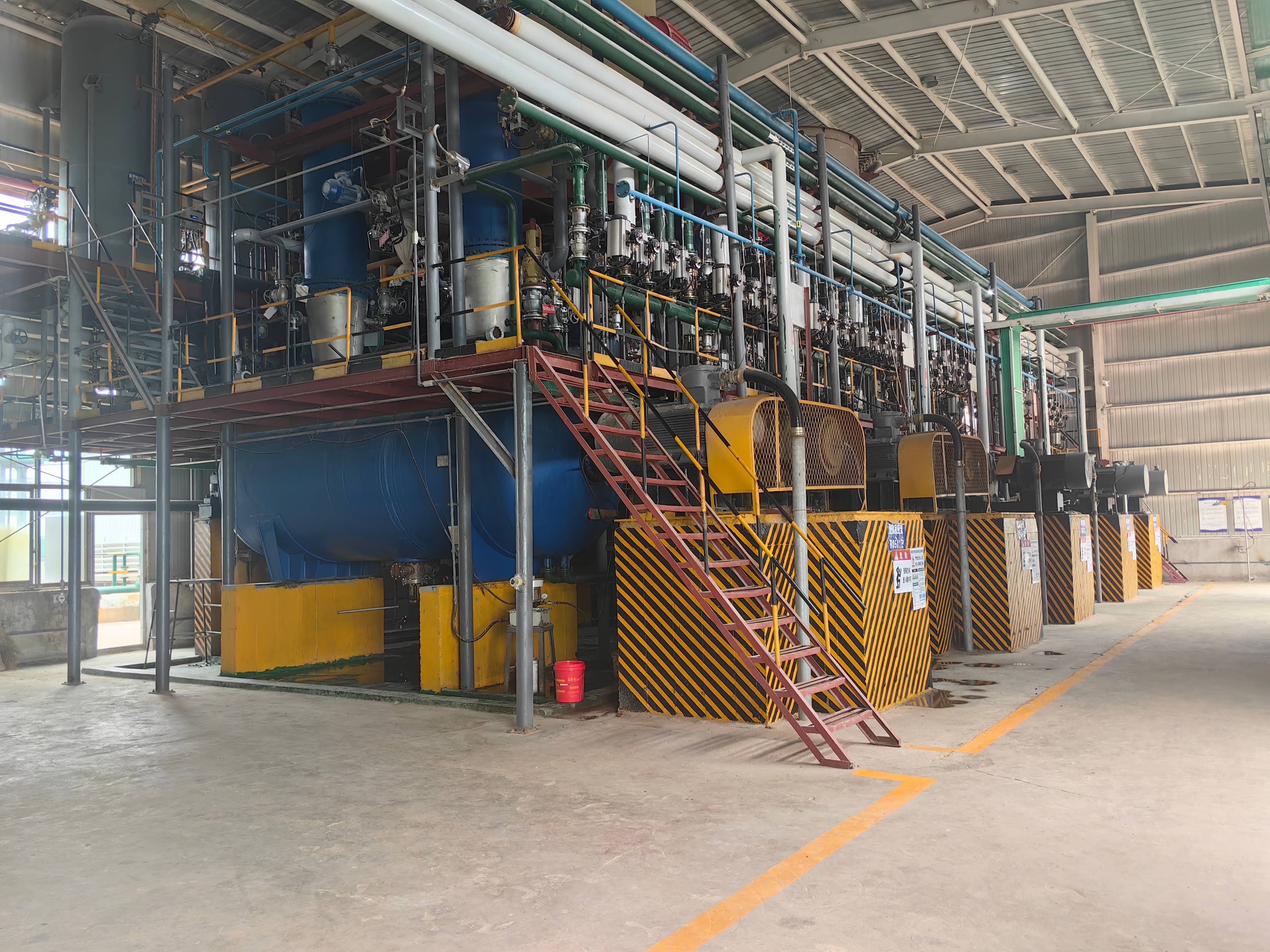
Etherification reaction: substitution degree is set at the reaction stage, which is why it is controlled as a production parameter rather than corrected later.
BANGCEL® is the HPMC brand of BANG SHANG INTERNATIONAL CO., LIMITED, a manufacturer and global supplier of construction chemical additives founded in 2007, operating an 80,000 m² production site with approximately 300 employees, a 26-person R&D team and an export share of roughly 70% across markets in the Americas, Europe, Africa, the Middle East, Asia and Oceania. The portfolio includes HPMC, MHEC, HEC, CMC, RDP, HPS, PVA and PP fiber for tile adhesives, wall putty, cement-based mortars, EIFS/ETICS systems, self-leveling compounds, dry-mix mortar systems, water-based coatings and detergent formulations.
Quality management is certified to ISO 9001:2015 (GB/T19001-2016/ISO9001:2015) under certificate 86525Q1069R0M issued by HQC, covering cellulose ether and RDP powder, valid from 2 September 2025 to 1 September 2028. Occupational health and safety management is certified to ISO 45001:2018 (certificate 86525S1067R0M) and environmental management to ISO 14001:2015 (certificate 86525E1068R0M, global scope excluding the EU), both with the same validity period. The company states that its products have passed CE certification and SGS testing, and it is a Gold Supplier on Alibaba International.
For a buyer, the operational facts that shape risk are the ones attached to delivery: monthly capacity of 3,000 tons of cellulose ether, a minimum order quantity of 3 tons, a standard lead time of 7–14 days, 100% testing, and customized technical support with quality traceability after delivery. The 7–14 day lead time is deliberately linked to testing, because batch testing is completed before shipment rather than after a complaint. The same production base also supplies grades for detergent and cleaning formulations, where different performance targets apply; this guide addresses construction and decoration requirements.
Step-by-Step Breakdown: How Buyers Verify Viscosity, Purity and Ash Before Ordering
- Define the application before the grade. Tile adhesive, ceramic tile adhesive, construction putty, plastering mortar, gypsum-based products, self-leveling mortar, external wall insulation systems and water-based coatings place different demands on water retention and rheology. Write down the required consistency, open time and application method first; the viscosity band follows from those requirements.
- Request the technical data sheet and confirm the ranges. Check viscosity (200–200,000 mPa·s), methoxyl group (24–30%), hydroxypropyl group (4–12%), ash content (below 5%), moisture (below 5%) and pH (6–8) on the current document rather than on a website summary or an old quotation.
- Ask for a certificate of analysis tied to a batch number. The CoA should reference a specific production lot, not a generic specification sheet. If the batch number cannot be matched to the packaging or shipping documents, the document proves nothing about the material in your warehouse.
- Confirm how and where testing is performed. Ask which instruments are used for viscosity and moisture, whether the supplier tests 100% of batches, and at what point in the process. A supplier that tests every batch answers with a procedure rather than with an assurance.
- Run your own trial on a sample. Laboratory numbers predict behaviour only up to the point where your sand, cement, filler and mixing equipment take over. Sample support for testing is available, and customized testing can be arranged for non-standard requirements.
- Cross-read ash content against price level. Two quotations at the same viscosity with materially different prices usually differ in ash content, active content, or both. Request the ash figure in writing and compare it before negotiating on price.
- Lock traceability, lead time and MOQ into the purchase order. Confirm the 3-ton minimum order quantity, the 7–14 day lead time, batch traceability, packaging specification and after-sales technical support in the contract. Quality traceability is what makes a later claim resolvable.
Use Cases: Where Parameter Control Shows Up on Site
Parameter control becomes visible at different points depending on the application:
- Tile adhesive and ceramic tile adhesive: water retention keeps cement hydrating under the tile, while a stable viscosity band governs anti-sag behaviour on vertical surfaces.
- Wall putty and construction putty powder: because these formulations already contain high filler loads, ash control in the HPMC has a direct effect on how much active polymer reaches the mix.
- Plastering mortar and gypsum-based products: water retention and pH compatibility determine how the mix holds water before and during set.
- Self-leveling mortar: consistent viscosity and low moisture support stable flow behaviour and reliable dosing at the batching line.
- External wall insulation (EIFS/ETICS) and water-based coatings: thickening and water retention must remain reproducible across seasons and storage conditions.
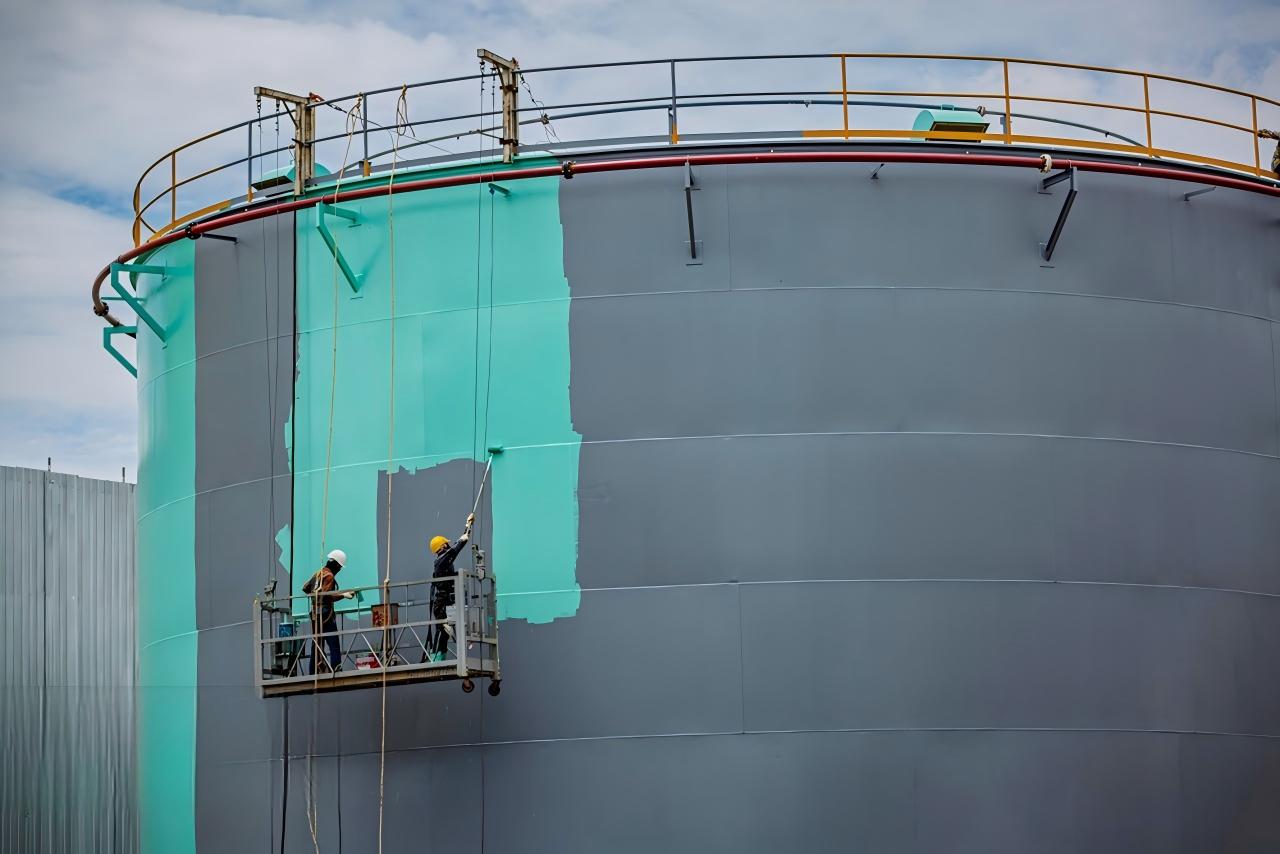
Application reference: a construction chemicals manufacturer in India uses BANGCEL® HPMC in dry-mix mortar production and water-based paint, reporting excellent water retention over a two-year supply relationship.
A documented example of how these parameters are judged in practice comes from a construction chemicals manufacturer in India that ordered 20 MT of HPMC for dry mix mortar production and water-based paint. Over a two-year supply relationship, the reported result was excellent water retention, with the decisive factors identified as high purity and stable viscosity. The case illustrates the pattern described above: the buyer did not select on viscosity alone, but on the combination of purity (ash and moisture control) and batch-to-batch viscosity stability.
Comparison Table: Parameters, Verification and Market Context
The three tables below summarise the parameter limits, the evidence a buyer should request, and the external market context for construction-grade HPMC.
Table 1 — Parameter control matrix for BANGCEL® construction-grade HPMC
| Parameter | BANGCEL® tested range | Function in a dry-mix system | Risk when out of range |
|---|---|---|---|
| Viscosity | 200–200,000 mPa·s (grades include HPMC100000, HPMC150000, HPMC200000) | Thickens mixing water; sets consistency and anti-sag behaviour | Dosing changes between batches; sagging or over-stiff mixes |
| Methoxyl group | 24–30% | Solubility and thermal gelation behaviour | Water retention and open time become less predictable |
| Hydroxypropyl group | 4–12% | Hydrophilic balance and compatibility with cement or gypsum systems | Reduced water retention; uneven set behaviour |
| Ash content | Below 5% | Indicates non-functional inorganic residue | Diluted active content; higher dose needed for the same performance |
| Moisture | Below 5% | Free-flowing powder and accurate weighing | Caking and bridging in silos; dosing errors; shorter shelf life |
| pH | 6–8 | Compatibility with cement and gypsum mixes | Interaction with setting chemistry becomes less predictable |
Table 2 — Verification matrix: what to request and what each document proves
| Verification step | Document or evidence | What it confirms |
|---|---|---|
| Specification review | Technical data sheet | Declared viscosity, ash, moisture, pH and substitution ranges |
| Batch confirmation | Certificate of analysis with lot number | That the shipped material matches the declared specification |
| Testing discussion | Instrument list and 100% batch testing statement | That parameters are measured rather than assumed |
| Sample validation | Trial result from the buyer's own formulation | Real behaviour with local sand, cement and mixing equipment |
| Delivery traceability | Packaging and shipping documents carrying the batch number | End-to-end traceability for claims and audits |
Table 3 — Third-party market context for construction-grade HPMC
| Indicator | Value | Year | Source |
|---|---|---|---|
| Construction-grade HPMC market size | USD 1.82 billion | 2025 | Dataintelo |
| Cement-based mortar application share | 38.4% | 2025 | Dataintelo |
| Construction share of overall HPMC revenue | Over 45% | 2024 | Grand View Research |
| Industrial-grade HPMC share of demand | 47% | 2024 | Industry Research |
| Asia Pacific share of construction-grade market | Approximately 47.3% | 2025 | Dataintelo |
| Tier 1 supplier share (Dow Chemical, Ashland, Shin-Etsu) | More than 50% | 2024 | Infinity Market Research |
| Environmental declaration requirement in tenders | ISO 14025:2006 | 2025 | EPD International |
FAQ: HPMC Viscosity, Purity and Verification
Which certifications cover HPMC viscosity, purity and ash content control?
Quality management at BANG SHANG INTERNATIONAL CO., LIMITED is certified to ISO 9001:2015 (GB/T19001-2016/ISO9001:2015) under certificate 86525Q1069R0M issued by HQC, covering cellulose ether and RDP powder production and valid from 2 September 2025 to 1 September 2028. The same site holds ISO 45001:2018 certification (certificate 86525S1067R0M) and ISO 14001:2015 certification (certificate 86525E1068R0M, global scope excluding the EU), both valid until 1 September 2028. The company states that its products have passed CE certification and SGS testing. For tenders that require environmental declarations, industrial-grade cellulose ethers are expected to meet ISO 14025:2006 (EPD International), so buyers should confirm whether an EPD is required before the specification is fixed.
Can viscosity, ash content and substitution degree be customized for a specific formulation?
Yes. BANGCEL® operates an OEM/ODM programme covering product parameter customization (viscosity, particle size, ash content, degree of substitution, water retention rate), formula and grade customization, packaging customization and customized testing. Adjustments are made against the customer's formulation, raw materials and application conditions, with sample support and technical consultation available before production. Monthly cellulose ether capacity is 3,000 tons, the standard minimum order quantity is 3 tons, and 100% testing is applied to batches before delivery.
How do viscosity and purity affect the real cost of a mortar or putty?
Cost per kilogram of HPMC is a weak indicator on its own. A grade with lower ash content carries more active polymer per kilogram, so a smaller dose can reach the same water retention; a heavily filled grade usually needs a higher dose to compensate, which changes water demand, open time and the cost per square meter of finished work. Viscosity selection works the same way: a grade above the formulation requirement can stiffen the mix and increase mixing effort, while a grade below it costs performance rather than money. Comparing quotations on ash content, viscosity band and batch testing documentation gives a more reliable cost picture than comparing prices at the same nominal viscosity.
How can buyers verify a batch before committing to a full order?
Verification normally follows three steps: review the technical data sheet for the declared ranges, request a certificate of analysis tied to a specific batch number, and run a trial with a sample in your own formulation and equipment. BANGCEL® provides sample support for testing and offers customized testing for non-standard requirements, and batch documentation is available so a viscosity or ash figure can be matched to the shipped lot. Buyers who define a trial protocol before requesting the sample receive the most useful result, because performance depends on local sand, cement and mixing conditions.
What lead time should be planned, and why does batch testing affect it?
Standard lead time for BANGCEL® cellulose ether orders is 7–14 days, with a minimum order quantity of 3 tons and monthly capacity of 3,000 tons. That lead time assumes 100% batch testing is completed before shipment rather than after delivery, which is why the testing step sits inside the delivery window. Buyers scheduling a project should confirm the required viscosity grade and packaging specification early, then request a delivery plan together with the batch records so incoming material can be released quickly. Samples, quotations and delivery planning can be requested through admin@sjz-bs.com or WhatsApp +86 13292884619.
Conclusion: Buy HPMC on Verified Parameters, Not on a Price List
Viscosity and purity are not marketing attributes; they are measured properties with defined limits. For construction and decoration buyers, the workable rule is to specify the viscosity band against the application, confirm ash content below 5% and moisture below 5% in writing, require batch-level test documentation rather than a general specification, and validate the grade with a sample before scaling the order. Suppliers that test 100% of batches can support every one of those steps with records instead of assurances — which is what makes a parameter-based evaluation decision repeatable across projects, not just for the first delivery.
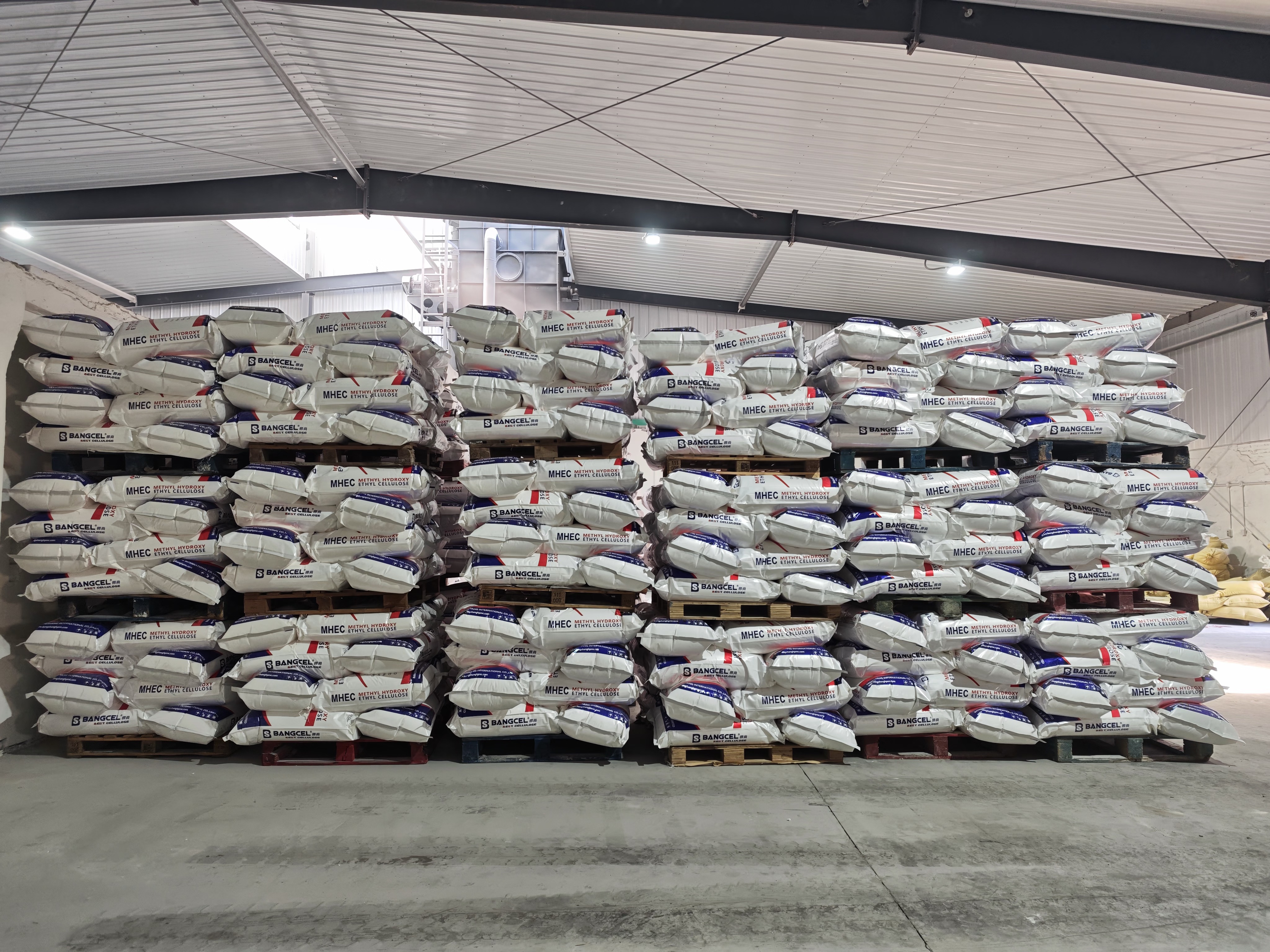
Every batch leaves the warehouse with test records; warehousing and dispatch follow the same batch traceability as production.
Next step: request a sample matched to your formulation, or ask for a quotation with the declared viscosity, ash and moisture values for the grade you need. The BANGCEL® product brochure, including the full HPMC parameter range and available grades such as HPMC100000, HPMC150000 and HPMC200000, can be downloaded here: BANGCEL® product brochure (PDF).
BANG SHANG INTERNATIONAL CO., LIMITED — website: www.bangshanghpmc.com | Email: admin@sjz-bs.com | Tel / WhatsApp: +86 13292884619 | Address: The South of ZhongXing Road, Jinzhou, Shijiazhuang City, Hebei Province, China.
Have Questions or Need More Details?
Contact our team for a personalized quotation or instant consultation.
Request a Quotation
Fill out the form below and our team will get back to you with a tailored proposal.
WhatsApp Direct Chat
Prefer to chat in real-time? Message us on WhatsApp for instant assistance & quick answers.
- Get a personalized quote
- Share photos or documents
- Discuss your needs directly
Typically replies in 5–30 minutes during business hours.