Working With BANGCEL® RDP: Partnership, Support and After-Sales Explained
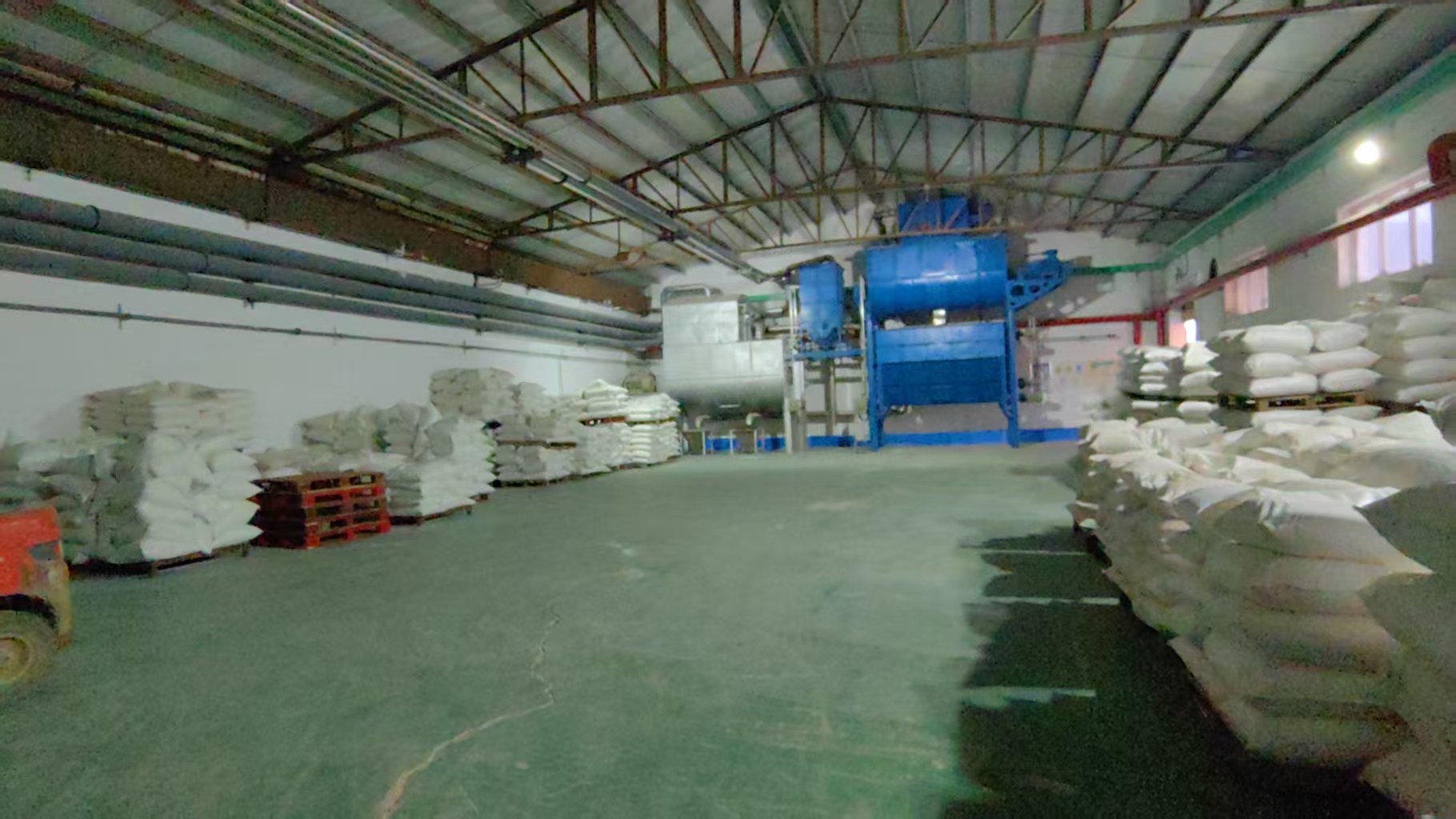
Warehousing capacity behind BANGCEL® long-term RDP supply commitments.
Working with BANGCEL® RDP runs through three documented service stages: pre-sales grade selection, technical consultation and sample support; in-sales production with stable capacity, strict batch control and transparent order status; and after-sales technical support, formula adjustment and priority supply for long-term partners. This guide sets out what each stage covers, the commercial terms behind it, and the answers construction chemical buyers ask for most often before a first order.
BANGCEL® is the construction additives brand of BANG SHANG INTERNATIONAL CO.,LIMITED, a manufacturer and global supplier of cellulose ethers and redispersible polymer powder based in Shijiazhuang City, Hebei Province, China. Founded in 2007, the company operates an 80,000 m² production site with approximately 300 employees and a 26-person R&D team. Exports account for 70% of output, with documented markets across North America, Latin America, Africa, the Middle East, Central and South Asia, Southeast Asia and Oceania.
The Post-Quotation Gap in RDP Sourcing
A specification sheet describes what an RDP grade is designed to do. It does not describe what happens in month fourteen of a supply relationship, when a raw material lot shifts, a mixing line is re-tuned, or an order has to move faster than planned. For dry-mix mortar producers, those moments decide whether the production line stays stable or turns into a reformulation project.
Redispersible polymer powder is formulation-critical rather than interchangeable. Polymer dosage interacts with cement chemistry, filler grading, cellulose ether selection and water demand, so a change of powder can shift adhesion, open time, slip resistance and crack resistance at the same time. The cost of an unsupported switch rarely appears in the price per ton; it appears in failed trial batches, delayed deliveries and requalification work.
The evaluation problem is therefore two-part. Buyers must confirm that a grade meets the application's performance target, and they must confirm that the supplier can hold that performance across batches, respond technically when a formulation drifts, and keep supplying when demand rises. The sections below document how BANGCEL® structures those commitments using the company's own published service and capacity facts.
Industry Background: Concentration, Standards and Switching Cost
The global redispersible polymer powder market was valued at USD 1.61 billion in 2024 and is projected to reach USD 2.35 billion by 2029, according to MarketsandMarkets. Grand View Research reports that Asia Pacific held a 38.01% revenue share in 2025, driven largely by infrastructure projects in the region, and that VAE-based chemistry accounts for 59.2% of RDP revenue globally — the polymer base used in BANGCEL® RDP.
Supply is concentrated at the top. The four largest RDP manufacturers, including Wacker Chemie AG, Dow and BASF, hold more than 40% of the global market, according to an industry analysis covering 2025–2032. That concentration shapes how buyers compare options: global brands set the reference performance level, while producers outside that group differentiate on responsiveness, customization and service depth.
Chinese production is now a mainstream part of global supply. Volza recorded 2,012 shipments of redispersible polymer imported from China between July 2024 and June 2025, with the United States, Turkey and Uzbekistan among the largest import markets. For a buyer, the practical question has shifted from whether a manufacturer can supply RDP at all to which manufacturer can supply it consistently, with traceable batches and usable technical support.
Standards raise the cost of getting this wrong. Tile adhesives are classified under EN 12004 and ISO 13007-1, where C1 requires a tensile adhesion strength of at least 0.5 MPa and C2 at least 1.0 MPa. Published market-size estimates for RDP vary widely between research houses because definitions differ, so buyers should treat any single figure as directional and verify performance at the sample stage.
What BANGCEL® RDP Covers Across the Cooperation Lifecycle
The service model is deliberately staged, because the questions a formulation chemist asks before a trial are different from the questions a purchasing team asks during a repeat order.
Pre-Sales: Product Recommendation, Grade Selection and Samples
Pre-sales covers product recommendation, grade selection, technical consultation and formulation guidance, together with sample support for testing. In practice, a mortar producer supplies the target application — a ceramic tile adhesive, a wall putty, or an EIFS/ETICS base coat, for example — along with the current formulation and the performance target. The supplier then recommends a starting grade and dosage window and discusses adjustments against the customer's own formulations, raw materials and application conditions.
BANGCEL® RDP is a VAE-based powder with a solid content of at least 99%, a pH of 6–8, ash content of 11±2%, a minimum film-forming temperature (MFFT) of 0°C and a glass transition temperature of 10°C. Available models include RDP5010, RDP6188 and RDP4010. Those parameters matter during selection rather than after delivery: MFFT defines the temperature window in which a polymer film forms properly, and the glass transition temperature indicates whether the binder behaves as flexible or rigid in the cured mortar.
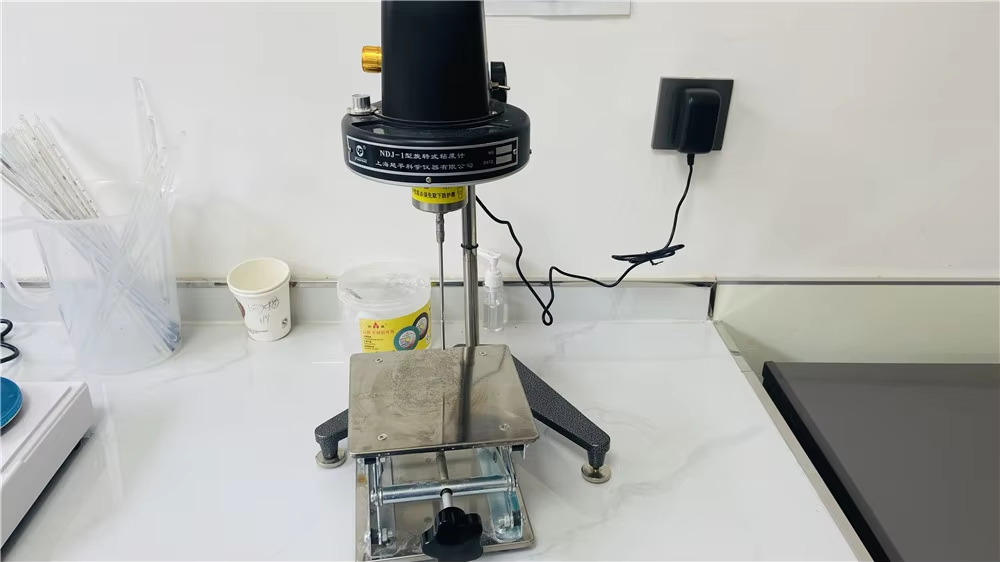
Laboratory testing supports grade selection and sample validation before a first production order.
In-Sales: Capacity, Batch Control and Order Transparency
In-sales is where a supplier's claims are tested. BANGCEL®'s documented production capacity is 30,000 tons of cellulose ethers and 20,000 tons of RDP annually, with a monthly capacity of 3,000 tons, a standard lead time of 7–14 days and a minimum order quantity of 3 tons. Production is standardized with strict batch control, and 100% of output is tested rather than sampled.
Order transparency is part of the commitment: order and production status are shared with the customer, and pre-shipment testing forms the acceptance basis before goods leave the plant. Delivery is arranged on FOB or CIF terms, with payment structured as 30% TT in advance and 70% against a copy of the bill of lading — terms that let a buyer verify quality before releasing the balance.
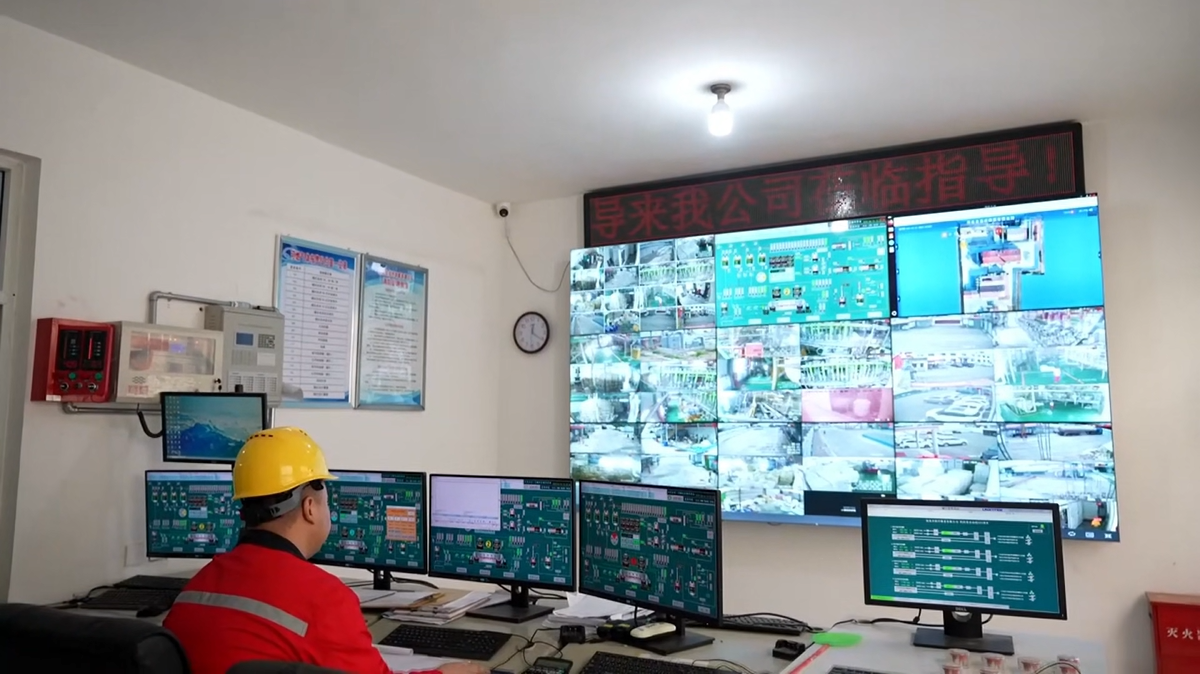
Centralized production control underpins standardized, batch-controlled output.
After-Sales: Technical Support, Formula Adjustment and Supply Priority
After-sales support is defined as continuous technical support with formula adjustment, backed by quality traceability and an efficient after-sales process. Because RDP performance depends on the full mortar formulation, that support continues after delivery: when a customer changes filler, when water demand shifts, or when a local cement source changes, the RDP dosage and the accompanying cellulose ether grade may need to move together.
Long-term supply is handled as a priority commitment rather than a standard queue position, and authorized distributors receive additional support. For buyers in the Evaluation-to-Execution stage, that combination — continuous technical support, formula adjustment and priority allocation for established partners — is precisely the part of an offer that a spot purchase does not include.
Step-by-Step: How an Order Runs From First Contact to Repeat Supply
- Requirement briefing and grade selection. The buyer shares the application (tile adhesive, wall putty, EIFS/ETICS, gypsum-based or self-leveling system), the performance target, the current formulation and any constraints. BANGCEL® responds with a product recommendation and a starting grade.
- Technical consultation and formulation guidance. Dosage ranges and interactions with cellulose ethers or other additives are discussed before any sample is sent, so the trial tests a realistic formulation rather than a generic mix.
- Sample support and validation. Samples are supplied for testing, with customized testing available. The buyer validates adhesion, workability and crack resistance in its own laboratory and, where relevant, on site.
- OEM/ODM configuration and order placement. If the standard grade is not the closest fit, viscosity, substitution degree, particle size, ash content and water retention rate can be customized, along with application-oriented grades, packaging and labeling. The order is then placed at the 3-ton minimum order quantity on the agreed payment terms.
- Production, batch control and status reporting. Production runs against the confirmed specification with strict batch control and 100% testing. Order and production status are reported transparently through the lead time, which is typically 7–14 days.
- Pre-shipment test, delivery and ongoing support. Acceptance is based on the pre-shipment test; shipment follows on FOB or CIF terms. After delivery, technical support and formula adjustment continue, and repeat supply runs at priority for long-term partners.
Use Cases: Where This Support Model Shows Up
The clearest documented example is a two-year engagement with a leading global construction mortar and adhesive manufacturer at a project in India. BANGCEL® RDP supplied 1,200 MT per year on a steady basis for the formulation of tile adhesive and wall putty. The project included customized formulation R&D support, a stable global supply chain and CE certification, and the reported results were excellent adhesion, crack resistance and weatherability, with zero quality complaints recorded during long-term mass production.
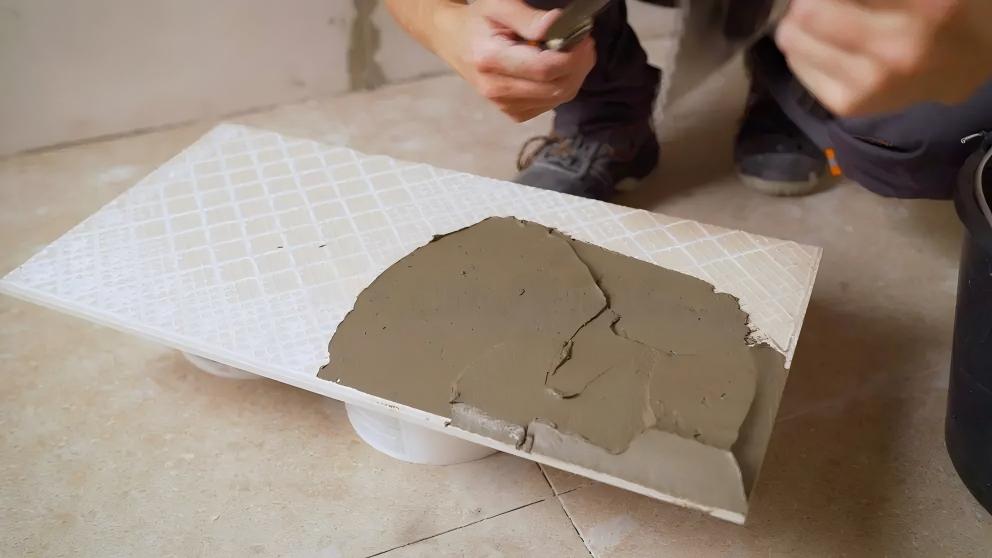
Tile adhesive and wall putty production formed the basis of a documented two-year, 1,200 MT-per-year supply case in India.
Application fit follows the same logic across the dry-mix mortar category. In general dry-mix practice, RDP is used in ceramic tile adhesives, wall putty and putty powder systems, external wall insulation (EIFS/ETICS) mortars, plastering and repair mortars, self-leveling compounds, waterproofing mortars and gypsum-based products. Within that landscape, BANGCEL®'s documented customization covers tile adhesives, wall putty, EIFS, gypsum-based products, self-leveling mortar, and water-based coatings and detergent formulations.
When the requirement is phrased as high-viscosity or crack-resistant performance, the practical route is not to choose a grade from a leaflet. It is to define the failure mode being solved — sagging on a vertical substrate, debonding after thermal cycling, or shrinkage cracking in a thin layer — and then let the grade selection and sample stage prove it against the buyer's own formulation.
Service Commitments and Commercial Terms at a Glance
| Cooperation stage | Documented BANGCEL® commitment | What it means for the buyer |
|---|---|---|
| Pre-sales | Product recommendation and grade selection; technical consultation and formulation guidance; sample support for testing | Grades are matched to the application and validated in the buyer's own formulation before an order |
| In-sales | 30,000 tons of cellulose ethers and 20,000 tons of RDP annually; 3,000 tons monthly capacity; strict batch control; 100% testing; transparent order and production status | Repeat orders can be planned against documented capacity rather than availability estimates |
| After-sales | Continuous technical support and formula adjustment; stable long-term supply and priority service; additional support for authorized distributors | Formulation drift and demand peaks are handled inside the relationship rather than renegotiated each time |
| Commercial and verification item | Documented detail |
|---|---|
| Minimum order quantity | 3 tons |
| Standard lead time | 7–14 days |
| Payment terms | 30% TT in advance, 70% against a copy of the bill of lading |
| Delivery terms | FOB / CIF |
| Acceptance | Pre-shipment test |
| Quality control | 100% testing of production output |
| Customization scope | Viscosity, particle size, ash content, degree of substitution (DS/MS), water retention rate; custom formulation and grade; blending and compounding; packaging, labeling and shipping marks; small batch customization and customized testing |
| Quality management certification | GB/T19001-2016 / ISO 9001:2015, issued by HQC, certificate 86525Q1069R0M, issue date 2025-09-02, expiry 2028-09-01, scope: cellulose ether and RDP powder |
| Additional management systems | GB/T45001-2020 / ISO 45001:2018 (certificate 86525S1067R0M); GB/T24001-2016 / ISO 14001:2015 (certificate 86525E1068R0M, market: global excluding the EU) |
| Export coverage | OEM/ODM and small batch customization supplied worldwide, excluding the EU |
FAQ: Partnership, Customization and After-Sales Questions
Is BANGCEL® RDP CE certified and SGS tested?
Yes. Products are manufactured under strict quality control and have passed CE certification and SGS testing. The factory quality management system is certified to GB/T19001-2016 / ISO 9001:2015 by HQC under certificate number 86525Q1069R0M, issued on 2025-09-02 and valid until 2028-09-01, with a scope covering cellulose ether and RDP powder. The same site holds GB/T45001-2020 / ISO 45001:2018 (certificate 86525S1067R0M) and GB/T24001-2016 / ISO 14001:2015 (certificate 86525E1068R0M, market: global excluding the EU). Buyers should request the certificate copies that match their own compliance files, since CE marking and SGS test documents are separate from management-system certificates.
What can be customized on an OEM or ODM RDP order?
BANGCEL® supports OEM and ODM services with customization of viscosity, substitution degree, particle size, ash content and water retention rate, plus custom formulations, custom grades, and blending or compounding services. Packaging can be adapted with custom logo printing, packaging specification, shipping marks and custom labels. Production services include OEM, ODM and small batch customization with customized testing. Grades can be oriented toward specific applications — tile adhesive, wall putty, EIFS, gypsum-based products, self-leveling mortar, and water-based coatings and detergent formulations — with technical adjustments made against the customer's formulations, raw materials and application conditions.
What are the minimum order quantity, payment and delivery terms?
The documented minimum order quantity is 3 tons, with a standard lead time of 7–14 days. Payment terms are 30% TT in advance and 70% against a copy of the bill of lading, and delivery is arranged on FOB or CIF terms. Acceptance is based on a pre-shipment test, and 100% of production output is tested. Because custom grades, packaging and testing requirements change the production plan, final commercial terms are confirmed per order rather than published as a single price list.
Can I test a sample before committing to a production order?
Yes — sample support for testing is part of the pre-sales service. Samples are used to validate a grade in the buyer's own formulation rather than in a generic mix, and customized testing is available where standard tests do not reflect the application. The practical sequence is a requirement briefing, a recommended grade and dosage window, technical consultation on formulation, and then sample validation before the first 3-ton order.
Does BANGCEL® export to my market, and how does long-term support work?
Documented export markets include Canada, the United States, Mexico, Brazil, Chile, Colombia, Peru, Russia, Ukraine, Türkiye, Egypt, South Africa, Saudi Arabia, the United Arab Emirates, India, Singapore, Japan, South Korea, Vietnam, Australia and New Zealand, among others, and export accounts for 70% of company output. OEM/ODM and small batch customization are supplied worldwide excluding the EU. After the first order, support continues through continuous technical support and formula adjustment, with stable long-term supply and priority service for established partners and additional support for authorized distributors. For samples, quotes or an OEM/ODM discussion, contact Alex at admin@sjz-bs.com or +86 13292884619 (WhatsApp on the same number).
Conclusion: What a Verifiable RDP Partnership Looks Like
A workable RDP relationship can be described in facts rather than adjectives: which grades exist, how selection and sampling work, how much capacity stands behind a repeat order, how batches are controlled, and who answers the technical question six months after delivery. BANGCEL® documents all of those points — VAE-based powder with an MFFT of 0°C and a glass transition temperature of 10°C, models RDP5010, RDP6188 and RDP4010, annual capacity of 20,000 tons of RDP and 30,000 tons of cellulose ethers, a 3-ton MOQ, a 7–14 day lead time, CE certification and SGS testing, and a two-year supply case with a global mortar and adhesive manufacturer in India at 1,200 MT per year.
For buyers moving from evaluation to execution, the next practical step is to test the recommended grade against the actual formulation while confirming certificates, packaging and commercial terms in parallel.
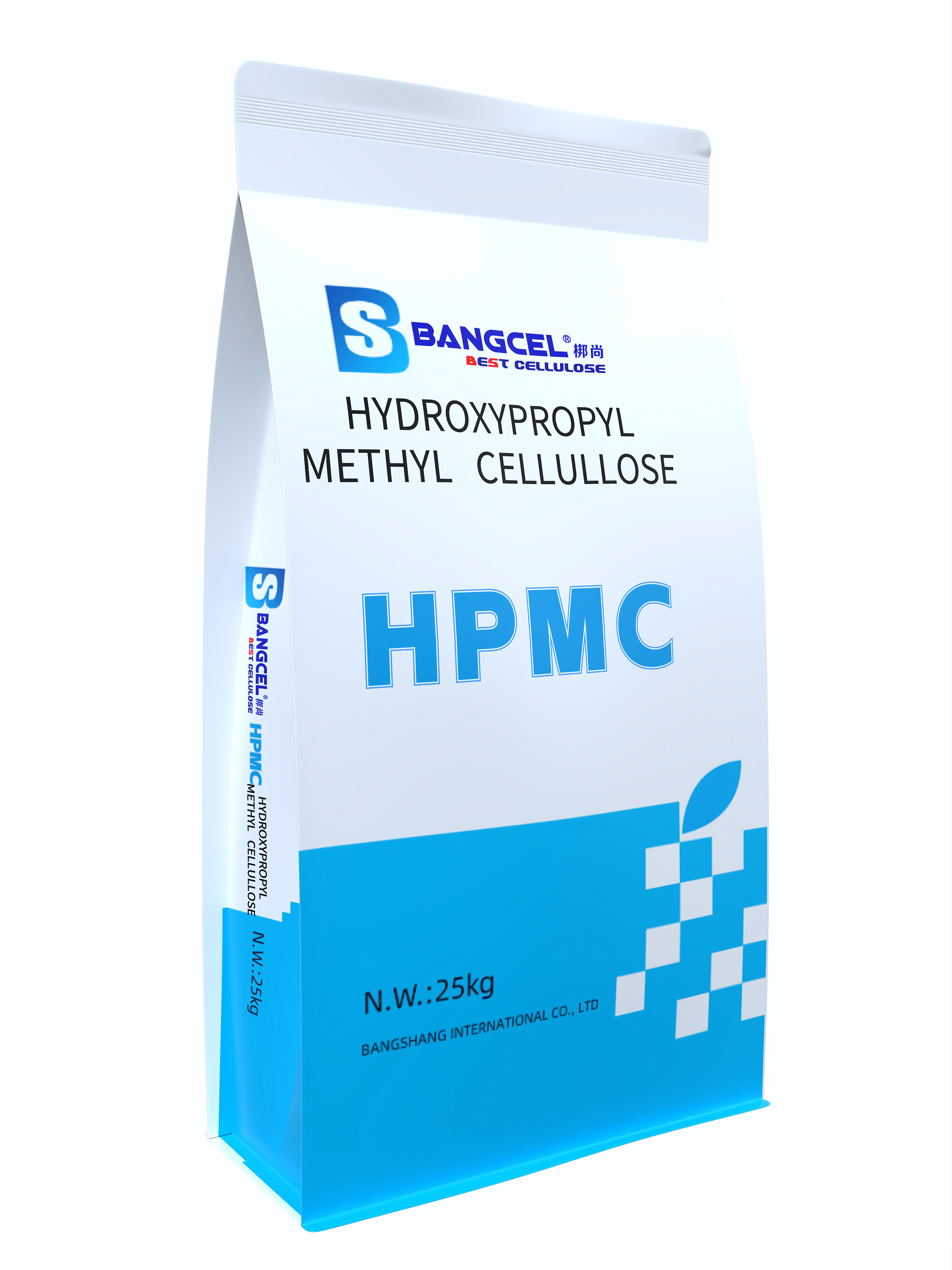
Packaging, labels and shipping marks can be configured for OEM and ODM orders.
Next Step: Sample, Quote and Documentation
Request an RDP sample for your own formulation, ask for a grade recommendation for tile adhesive, wall putty, EIFS/ETICS, gypsum-based or self-leveling systems, or request OEM/ODM and packaging options. The full product and service overview is available in the BANGCEL® product brochure (PDF).
Contact: Alex — admin@sjz-bs.com — +86 13292884619 (WhatsApp available). Website: www.bangshanghpmc.com
Have Questions or Need More Details?
Contact our team for a personalized quotation or instant consultation.
Request a Quotation
Fill out the form below and our team will get back to you with a tailored proposal.
WhatsApp Direct Chat
Prefer to chat in real-time? Message us on WhatsApp for instant assistance & quick answers.
- Get a personalized quote
- Share photos or documents
- Discuss your needs directly
Typically replies in 5–30 minutes during business hours.