HPMC Partnership FAQ for Construction: Custom Grades & After-Sales Support
HPMC Partnership FAQ for Construction: Custom Grades & After-Sales Support
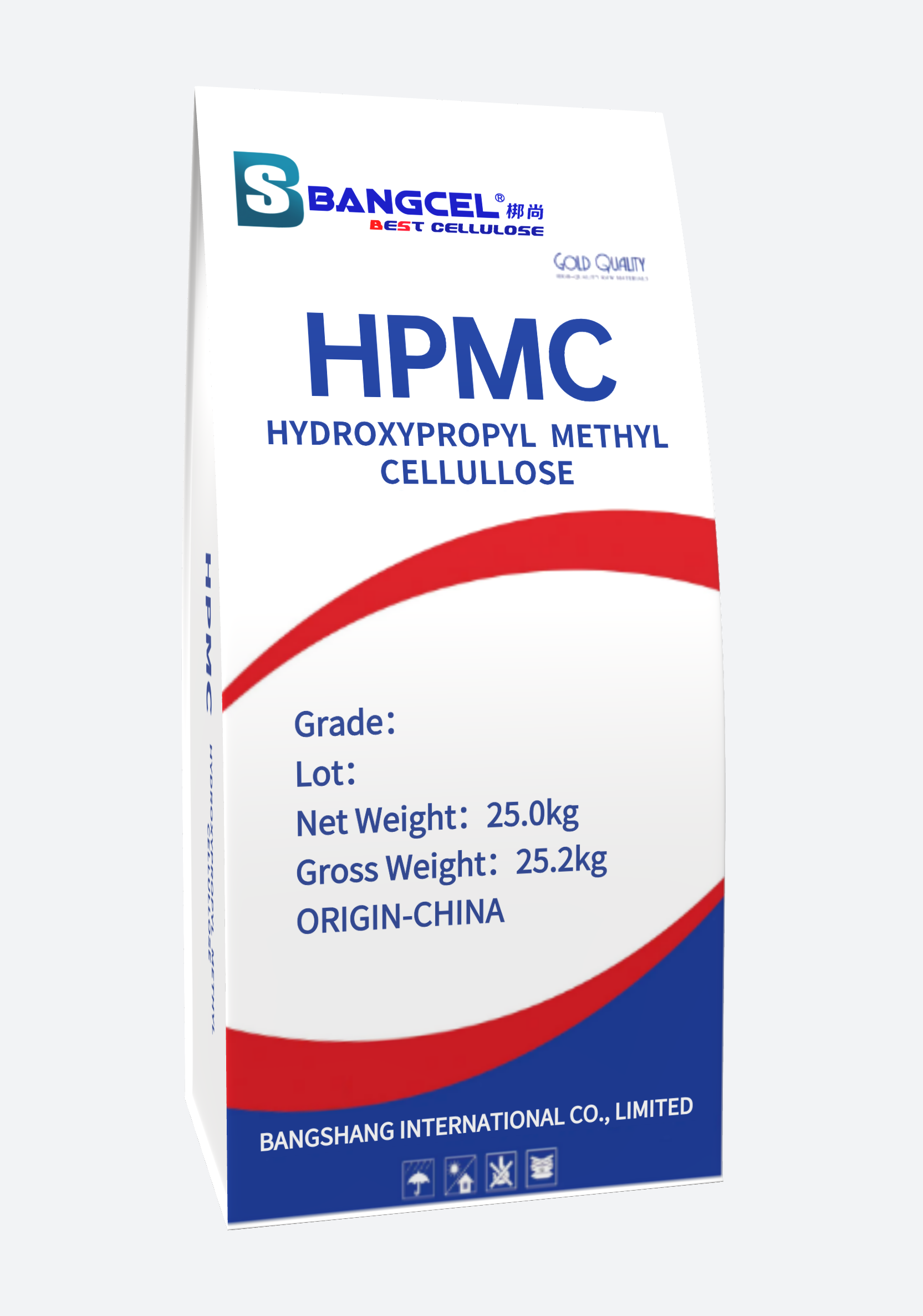
Custom packaging is part of the OEM/ODM scope: printed logo, packaging specification, shipping mark and label can all be adapted to a buyer's programme.
Choosing an HPMC supplier for one order takes a price and a sample. Committing to a long-term HPMC partner for construction and decoration production takes a different set of answers: which grades can be customised, how a sample is validated against a real local formulation, what minimum order quantity and lead time apply, how batch quality is controlled, and what technical support continues after the first container has shipped. This FAQ answers those questions in the order construction and decoration buyers usually ask them.
BANGCEL® is the HPMC and cellulose ether brand of BANG SHANG INTERNATIONAL CO., LIMITED, a manufacturer and global supplier of construction chemical additives established in 2007. The company operates an 80,000 m² production facility with 300 employees, a 26-person R&D team and an annual output of 35,000 tons, and supplies HPMC, MHEC, RDP, HEC and CMC to dry-mix mortar, coating and detergent manufacturers.
What a Long-Term HPMC Partnership Actually Covers
A long-term HPMC partnership is not a longer version of a purchase order. It is a set of four commitments that a buyer can check one by one:
- A grade tuned to the buyer's own formulation and local raw materials, not a catalogue grade picked from a table.
- A production and testing routine that keeps batch-to-batch results inside the agreed specification.
- Commercial terms — MOQ, payment, delivery and acceptance criteria — that make repeat orders predictable.
- Technical support that continues after delivery, including formula adjustment when raw materials or site conditions change.
BANGCEL® documents these four areas as product parameter customization, formula and grade customization, packaging customization and service customization. They are supported by customized technical support, quality traceability and an after-sales process built for recurring supply rather than one-off shipments.
Problem Definition: Where Spot Purchasing Breaks Down
The failure pattern in construction materials is predictable. A buyer validates a catalogue-grade HPMC in the laboratory, places an order, and then the same grade behaves differently on site because the local sand grading, cement source, gypsum or mixing water has changed. HPMC acts as a water-retention agent and thickener in cement-based systems, and construction applications have historically accounted for the largest share of HPMC demand (Grand View Research). Relatively small differences in viscosity, particle size or substitution degree can therefore appear as sagging in a ceramic tile adhesive, uneven water release in a plastering mortar, or inconsistent flow in a self-leveling compound.
A second gap appears on the commercial side. A spot supplier can quote a price, but a buyer preparing a distributor programme also needs custom logo printing, a defined packaging specification, a shipping mark and custom labels — the elements that turn a bulk chemical into a sellable product line. A third gap appears in continuity: when a formulation has to be adjusted mid-project, or when a tender requires documentation that a trading intermediary cannot produce, the cost of the original price advantage quickly disappears.
That is why experienced buyers stop asking only about price per ton and start asking partnership questions: what can be changed, how it is tested, how long it takes, and who answers the phone twelve months later.
Industry Background: Market Structure, Standards and Certificates
The global construction-grade HPMC market was valued at USD 1.82 billion in 2025, with cement-based mortars the largest single application at 38.4% of demand (Dataintelo). Construction applications as a whole have accounted for more than 45% of overall HPMC market revenue in recent years, driven by HPMC's role as a water-retention agent and thickener (Grand View Research). Industrial grades — the construction and detergent types relevant to this article — represented 47% of global HPMC demand in 2024 (Industry Research). Asia Pacific holds approximately 47.3% of the construction-grade market (Dataintelo).
Supply is concentrated at the top. Dow Chemical, Ashland and Shin-Etsu are identified as Tier 1 global leaders collectively controlling more than 50% of the HPMC market (Infinity Market Research). For most construction and decoration manufacturers, that concentration makes a qualified alternative source a practical risk-management decision. Tender requirements add a documentation layer: industrial-grade cellulose ethers such as HPMC are expected to meet ISO 14025:2006 for environmental product declarations in competitive global tenders (EPD International).
Against that background, the certificates that support day-to-day supply matter as much as the price list:
- ISO 9001:2015 quality management system certificate 86525Q1069R0M, issued by HQC, scope: cellulose ether and RDP powder.
- ISO 45001:2018 occupational health and safety certificate 86525S1067R0M, covering HPMC and cellulose ether manufacturing.
- ISO 14001:2015 environmental certificate 86525E1068R0M, issued for markets outside the EU.
All three certificates are valid from 2 September 2025 to 1 September 2028. The company profile additionally states CE certification and SGS testing, and Gold Supplier status on Alibaba International.
Custom HPMC Grades: Which Parameters a Partner Can Adjust
The documented customization scope for BANGCEL® HPMC covers five product parameters — viscosity, particle size, ash content, degree of substitution (DS/MS) and water retention rate — plus formula or grade customization, packaging customization and service customization. The table below separates the standard product specification from the parameters that are explicitly listed as customizable.
| Parameter | Documented value for BANGCEL® HPMC | Listed as customizable |
|---|---|---|
| Viscosity | 200–200,000 mPa·s | Yes |
| Degree of substitution (DS/MS) | Methoxyl group 24–30%; hydroxypropyl group 4–12% | Yes |
| Ash content | <5% | Yes |
| Particle size | Not fixed in the general specification | Yes |
| Water retention rate | Not fixed in the general specification | Yes |
| Moisture | <5% | — |
| pH | 6–8 | — |
| Product grades | HPMC100000, HPMC150000, HPMC200000 | Custom grades available |
Viscosity: from 200 to 200,000 mPa·s
The HPMC line is documented from 200 to 200,000 mPa·s and includes grades such as HPMC100000, HPMC150000 and HPMC200000. Viscosity is the parameter most often matched to the application: high-viscosity grades such as HPMC 200000 are requested where strong water retention is needed in cement-based tile adhesives and plastering mortars, while lower-viscosity selections are used where flow and levelling behaviour matter more, as in self-leveling mortar systems. Viscosity is also one of the parameters the manufacturer can adjust for a specific customer formulation rather than supplying only the standard range.
Degree of substitution (DS/MS): methoxyl and hydroxypropyl content
Documented values are a methoxyl group content of 24–30% and a hydroxypropyl group content of 4–12%. Degree of substitution is listed as a customizable parameter, which matters when a formulation has to perform in a specific cement, gypsum or alkaline environment where solubility and thermal behaviour differ from the reference system.
Particle size: matching dry-mix plant handling
Particle size is part of the customization scope. In dry-mix plants it affects how the powder dissolves, how much dust is generated during batching and how uniformly the additive blends with cement, sand and fillers — practical issues that buyers usually raise during the trial stage rather than after the first container.
Ash content, moisture and purity control
The product specification sets ash content below 5%, moisture below 5% and pH at 6–8, and ash content is additionally listed as a customizable parameter. In a two-year supply case with an Indian construction chemicals manufacturer, high purity and stable viscosity were the product highlights recorded by the customer. Buyers who have previously been affected by high-ash material typically treat these limits as a qualification gate rather than a marketing claim.
Water retention rate and application-oriented grades
Water retention rate is listed as a customizable parameter. The manufacturer tailors grades for tile adhesives, wall putty, cement-based mortars, EIFS/ETICS, gypsum-based products, self-leveling compounds, dry-mix mortar systems, water-based coatings and detergent formulations. Adjustments are made on the basis of the customer's formulation, raw materials and application conditions, which is the practical definition of an application-oriented grade: the HPMC is matched to the system it will be used in, not to a generic specification sheet.
Packaging and service customization
Beyond chemistry, the OEM/ODM scope includes custom logo printing, packaging specification, shipping mark and custom label, plus OEM, ODM, small batch customization and customized testing. For importers and distributors, these elements are usually the difference between buying a chemical and launching a branded product line.
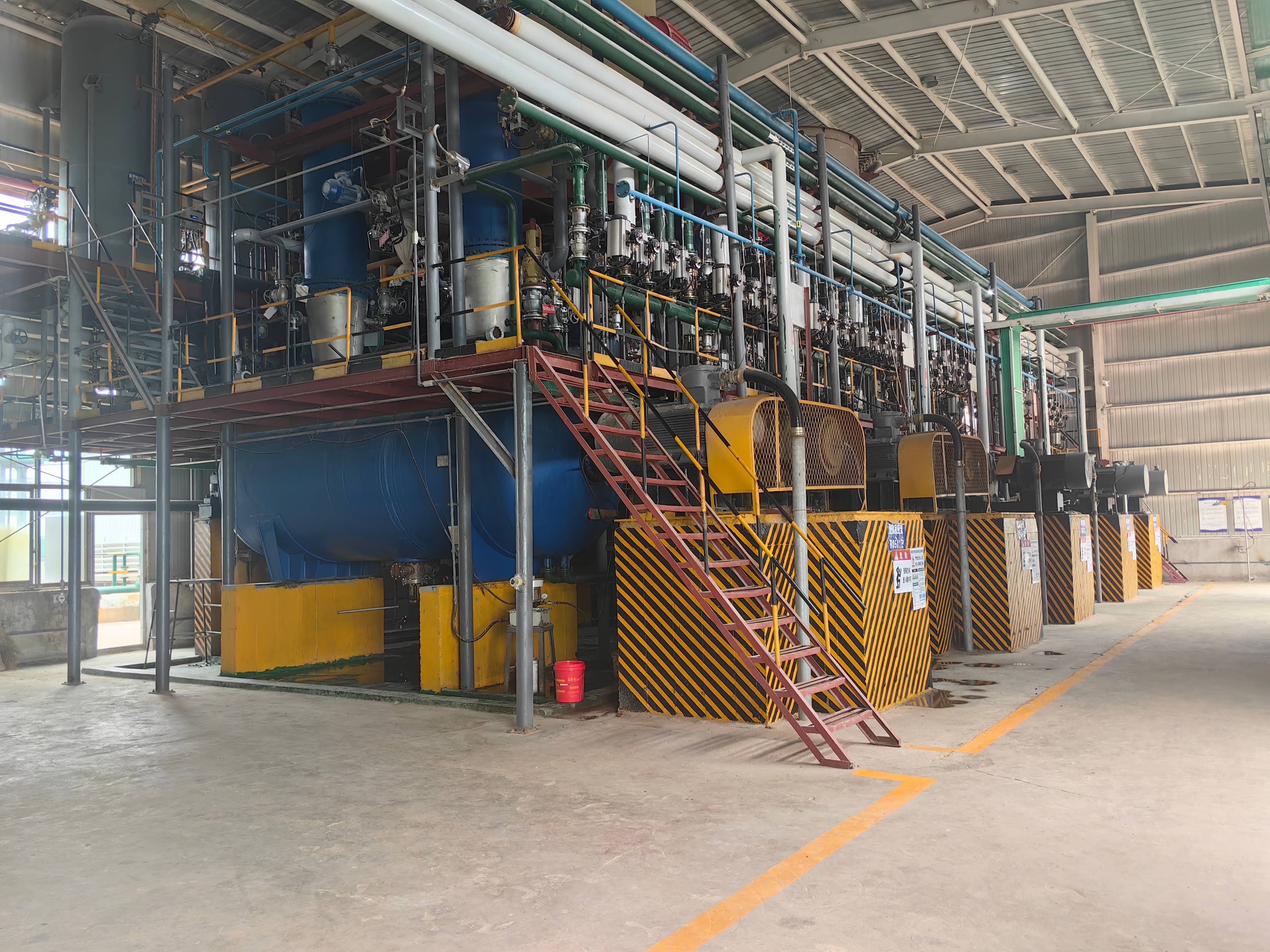
The etherification reaction stage. Custom viscosity, substitution degree and particle size are set at defined points in the process and verified again in the laboratory.
How a Custom Grade Is Built: Step-by-Step
A customized HPMC grade moves through a defined sequence. The order of these steps matters, because most failed specifications are caused by skipping the formulation review or by testing a sample against the wrong local raw materials.
- Application and formulation review. Pre-sales product recommendation and grade selection, technical consultation and formulation guidance. The starting point is the buyer's own mix design — tile adhesive, wall putty powder, plastering mortar, gypsum-based product, self-leveling mortar, external wall insulation system, water-based coating or detergent formulation.
- Parameter targeting. Viscosity, particle size, ash content, degree of substitution and water retention rate are agreed against the target performance, not against a generic grade name.
- Sample preparation and evaluation. Sample support for testing is provided so the buyer can run the grade in their own laboratory or pilot line.
- Small batch validation. Small batch customization and customized testing allow a pilot production run before a full order, which is where local sand, cement or gypsum effects usually surface.
- Commercial terms confirmed. MOQ 3 tons; delivery terms FOB or CIF; acceptance criteria based on pre-shipment test; payment terms of 30% TT in advance with 70% against a copy of the bill of lading.
- Production and batch control. Standardized production with strict batch control, 100% testing of each batch, a monthly capacity of 3,000 tons and a typical lead time of 7–14 days.
- Delivery, traceability and follow-up. Quality traceability links a delivered shipment back to its production batch, and customized technical support remains available for later formula adjustment.
Quality Risk Control Before, During and After Production
Quality risk in HPMC supply is controlled at three points, and a partnership is only as strong as the weakest of them.
Before production — raw material stage. Refined cotton arrives into dedicated storage bins and is handled through the raw material workshop and raw material warehouse. Raw material condition is the first variable that determines viscosity development and ash content in the finished ether, so incoming material control is part of the manufacturing routine rather than a purchasing formality.
During production — process monitoring. The plant operates a control room and a central control station that support monitoring of the reaction process, alongside the etherification, drying and crushing stages. Centralised monitoring keeps the reaction window stable between batches, which is what allows a custom grade to be reproduced after the sample has been approved.
After production — 100% testing. Every batch is 100% tested, and the laboratory inventory includes a gas chromatograph with hydrogen generator, viscometer tester, photometer, electronic moisture meter, whiteness meter, precision electronic scale and desktop drying oven. Batch testing covers the parameters that determine performance in dry-mix systems, including viscosity, moisture and ash content. Where a limitation exists, it should be stated plainly: instrumentation and testing discipline reduce batch-to-batch variation, but they cannot remove the effect of a buyer's local sand grading or cement source — that is why sample and small-batch validation remain part of the process.

The control room supports continuous monitoring of production parameters, which is the basis for reproducing an approved custom grade.
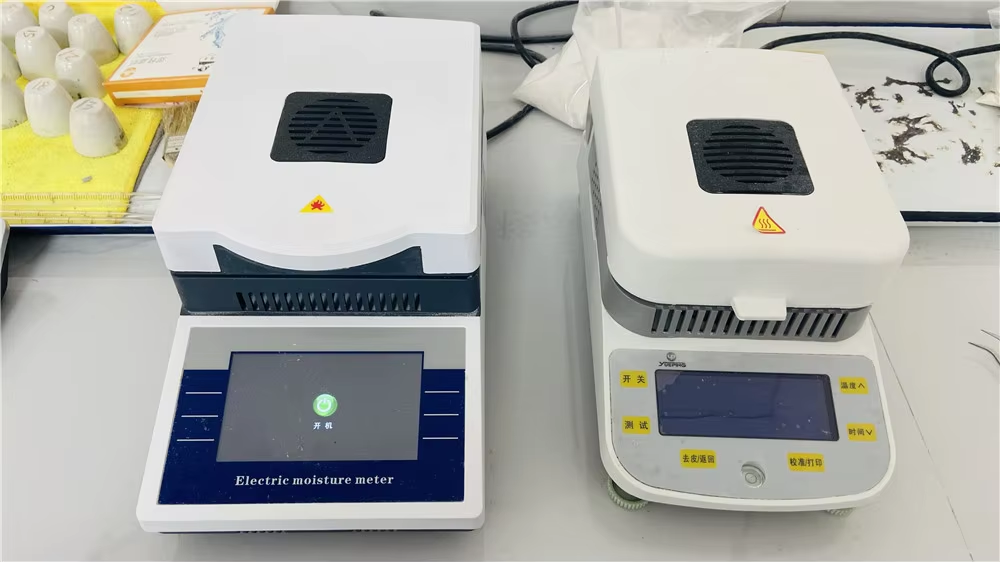
Moisture measurement is part of the 100% batch testing routine, alongside viscosity and ash content checks.
After-Sales Support: What Continues After Delivery
After-sales support is where a partnership is separated from a transaction. For BANGCEL® HPMC, the documented after-sales scope includes:
- Customized technical support for formulation questions after the material has arrived.
- Continuous formula adjustment and technical support when raw materials or application conditions change.
- Quality traceability and an efficient after-sales solution when an issue is raised on a delivered batch.
- Stable long-term supply with priority service for established customers.
- Additional support for authorized distributors, including the customization and commercial elements covered above.
In practice this means the buyer's technical contact does not reset after each order. A grade that was tuned in year one can be re-tuned in year two if the local sand changes, instead of forcing the buyer to run a full supplier search again.
Use Cases: What a Custom Grade Changed in Practice
A documented case involves a construction chemicals manufacturer in India producing dry mix mortar and water-based paint. The project supplied 20 metric tons of BANGCEL® HPMC over a two-year period. The recorded results were excellent water retention performance in dry mix mortar and water-based paint applications, with high purity and stable viscosity as the product highlights, and a customer review that specifically noted water retention and viscosity stability.
The same customization logic applies across construction and decoration applications, including ceramic tile adhesive, construction putty powder, plastering mortar, self-leveling mortar, gypsum-based systems and external wall insulation (EIFS/ETICS), where water retention and open time govern workability on site. The OEM/ODM platform also covers detergent formulations, where cellulose ether acts as a thickener in liquid and industrial detergent systems — a relevant extension for buyers sourcing for both construction and cleaning-product lines.
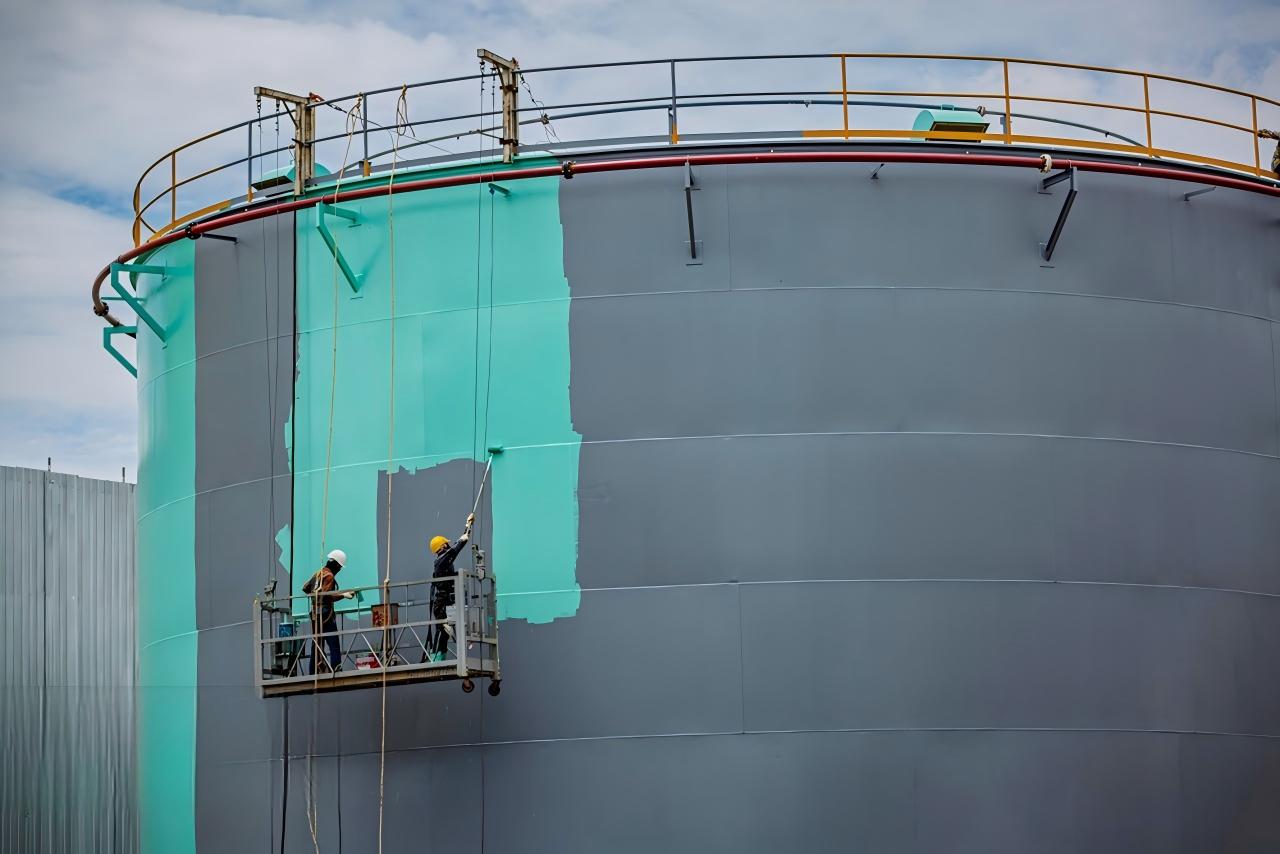
Water-based paint application: the recorded India case combined dry mix mortar and water-based paint production over two years.
Comparison Table: Specifications and Partnership Terms at a Glance
The first table compares documented customization categories; the second collects the commercial and supply terms that define a recurring supply relationship. Both tables use only values stated in the product specification, the manufacturer's capability documentation and the stated purchasing terms.
| Customization category | Documented options | Where it is applied |
|---|---|---|
| Product parameters | Viscosity, particle size, ash content, degree of substitution (DS/MS), water retention rate | Adjusted to the customer's formulation, raw materials and application conditions |
| Formula / grade | Custom formulation, custom grade, blending and compounding service | Tile adhesive, wall putty, cement-based mortar, EIFS/ETICS, gypsum-based products, self-leveling mortar, dry-mix mortar systems, water-based coatings, detergent formulations |
| Packaging | Custom logo printing, packaging specification, shipping mark, custom label | OEM/ODM and distributor supply programmes |
| Service | OEM, ODM, small batch customization, customized testing | New grade development, pilot orders and distributor onboarding |
| Quality control | 100% testing, quality traceability | Every production batch |
| Partnership item | Documented terms |
|---|---|
| Minimum order quantity | 3 tons |
| Monthly capacity | 3,000 tons |
| Annual output | 35,000 tons |
| Typical lead time | 7–14 days |
| Delivery terms | FOB / CIF |
| Payment terms | 30% TT in advance, 70% against copy of BL |
| Acceptance criteria | Pre-shipment test |
| Export coverage | Approximately 70% of output |
| After-sales | Customized technical support, quality traceability, continuous formula adjustment |
Frequently Asked Questions
1. Which certifications and documents support a long-term HPMC partnership for construction applications?
Three management system certificates cover BANGCEL® HPMC production: ISO 9001:2015 (certificate 86525Q1069R0M, issued by HQC, scope: cellulose ether and RDP powder), ISO 45001:2018 (certificate 86525S1067R0M, covering HPMC and cellulose ether manufacturing) and ISO 14001:2015 (certificate 86525E1068R0M). All three are valid from 2 September 2025 to 1 September 2028, and the environmental certificate is issued for markets outside the EU. The company profile additionally states CE certification and SGS testing. Buyers working on tenders that require ISO 14025:2006 environmental product declarations should confirm document availability during technical consultation, and pre-shipment testing is the stated acceptance criterion for each order.
2. Can viscosity, substitution degree and particle size be customised for a specific mortar or detergent formula?
Yes. The documented customization scope covers product parameters — viscosity, particle size, ash content, degree of substitution (DS/MS) and water retention rate — together with formula or grade customization (custom formulation, custom grade, blending and compounding). Grades can be tailored for tile adhesives, wall putty, cement-based mortars, EIFS/ETICS, gypsum-based products, self-leveling mortar, dry-mix mortar systems, water-based coatings and detergent formulations, with technical adjustments based on the customer's formulation, raw materials and application conditions.
3. What are the minimum order quantity, payment terms and delivery terms?
The minimum order quantity is 3 tons. Delivery terms are FOB or CIF, acceptance is based on pre-shipment test, and payment terms are 30% TT in advance with 70% against a copy of the bill of lading. These terms sit alongside a monthly capacity of 3,000 tons and an annual output of 35,000 tons, with a typical lead time of 7–14 days.
4. Can a custom grade be validated with a sample before committing to a long-term order?
Sample support for testing is part of the pre-sales process, and small batch customization plus customized testing are available for pilot production. The practical sequence is a technical consultation and formulation review, then a sample matched to the target viscosity, substitution degree and particle size, then a small-batch trial before the first full order. This is the stage at which differences caused by local sand, cement or gypsum are normally identified.
5. What lead time, supply continuity and after-sales support can a long-term partner expect?
Typical lead time is 7–14 days, supported by a monthly capacity of 3,000 tons and an annual output of 35,000 tons, with approximately 70% of output exported. Every batch is 100% tested, and quality traceability allows a shipment to be traced back to its production batch. After-sales support includes customized technical support, continuous formula adjustment when raw materials or application conditions change, and priority service for long-term customers, with additional support for authorized distributors. A partnership normally starts with a sample request against a specific formulation; the full product specification pack can be downloaded from the BANGCEL® brochure.
Conclusion and Next Step
A long-term HPMC partnership is verified through four checks rather than one price: a grade customised to your formulation and local raw materials, a documented production and testing routine with 100% batch testing and ISO 9001:2015 certificate 86525Q1069R0M behind it, commercial terms that make repeat orders predictable (MOQ 3 tons, FOB/CIF, pre-shipment test acceptance, 30% TT in advance and 70% against a copy of the bill of lading), and after-sales support that includes continuous formula adjustment. Viscosity, particle size, ash content, degree of substitution and water retention rate are all adjustable parameters, which is what makes a partnership grade different from a catalogue grade.
Next step: send your target formulation and the parameters that matter most — viscosity, DS/MS, particle size or water retention — and request a sample for testing. If the grade fits, the manufacturer will prepare the specification and commercial terms for a first order of 3 tons or more.
BANGCEL® — BANG SHANG INTERNATIONAL CO., LIMITED
Website: www.bangshanghpmc.com
Blog: blog.bangshanghpmc.com
Contact: Alex — email admin@sjz-bs.com, Tel / WhatsApp +86 13292884619
Address: The South of ZhongXing Road, Jinzhou, Shijiazhuang City, Hebei Province, China
Download the product brochure: BANGCEL® HPMC product brochure (PDF)
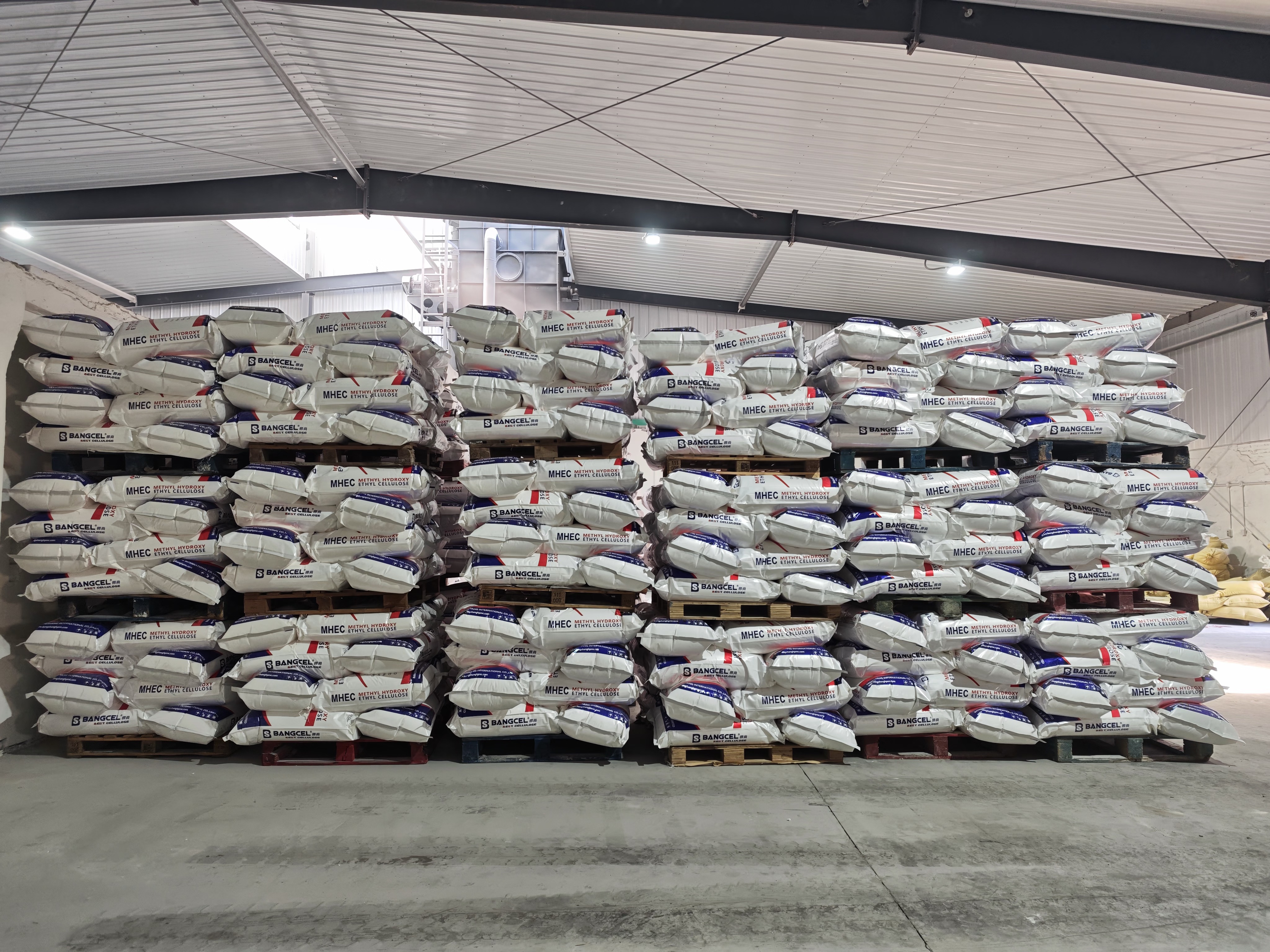
Finished goods warehousing supports recurring orders under a long-term supply arrangement.
Have Questions or Need More Details?
Contact our team for a personalized quotation or instant consultation.
Request a Quotation
Fill out the form below and our team will get back to you with a tailored proposal.
WhatsApp Direct Chat
Prefer to chat in real-time? Message us on WhatsApp for instant assistance & quick answers.
- Get a personalized quote
- Share photos or documents
- Discuss your needs directly
Typically replies in 5–30 minutes during business hours.