HPMC in Tile Adhesives and Plasters: An Application Guide for Builders
Selecting the right HPMC grade for a tile adhesive or a plaster comes down to four decisions: the viscosity of the grade, the water retention it must deliver under the real site conditions, the particle size the dry-mix line can handle, and how consistent the next twenty batches will be. This guide walks through those decisions application by application, and explains how BANGCEL® supports them with application-oriented grades, OEM & ODM customization of particle size and other parameters, and technical consultation.
Hydroxypropyl methyl cellulose (HPMC) is a cellulose ether used as a water-retention agent and thickener in cement-based and gypsum-based dry-mix mortars. In a ceramic tile adhesive it governs how long the adhesive stays open, how far a tile can be adjusted, and whether the tile beds without slipping. In a plaster or render it governs how long the mix stays workable, how strongly it bonds to the substrate, and whether the finished surface cracks. In both cases the additive is a small share of the formulation and a large share of its behaviour.
If you build, apply or produce dry-mix mortar at project scale, the useful question is not what HPMC is, but which grade — at which viscosity and particle size — for this substrate, this climate and this mixing line.
Why the Same HPMC Specification Performs Differently on Different Sites
HPMC is not one product. It is a family defined by viscosity, degree of substitution, particle size and purity limits, and two grades sold under the same description can behave differently in the same formulation. On real projects, the consequences appear in three recurring patterns.
Pattern 1 — Sagging and slip on vertical surfaces
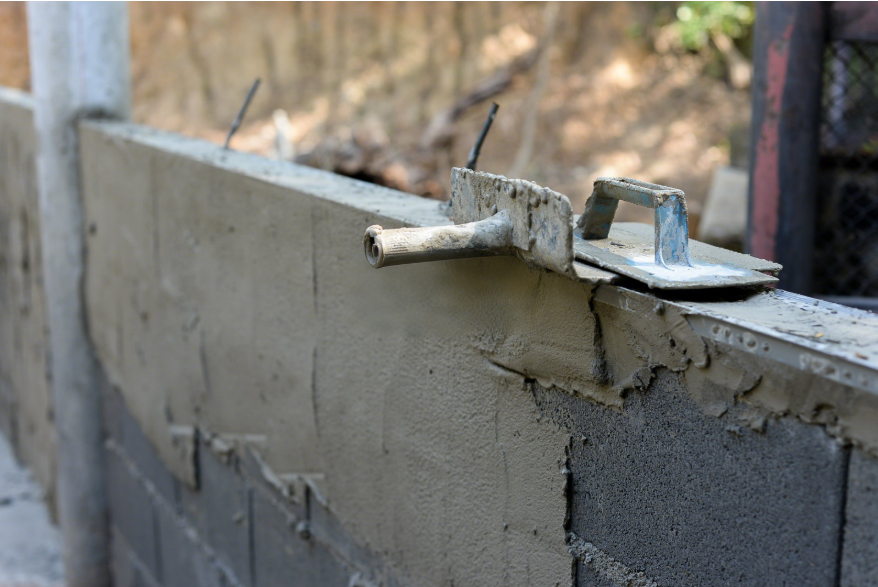
When a tile slides after bedding, or a render slumps down a wall, the mortar is losing water faster than the binder can set, or it does not hold enough structure for the weight it carries. Vertical work in warm, dry or windy conditions is the classic case: the substrate draws water, the mix stiffens unevenly, and adding water at the trowel reduces the structure of the mix further.
Pattern 2 — An open time that does not match the site
The working window of a cement- or gypsum-based mortar shortens as temperature rises and humidity falls. A grade chosen for a temperate indoor project is often too short-lived on an exposed façade, which pushes crews to re-mix, over-water, or place tiles before the adhesive is ready.
Pattern 3 — Batch-to-batch drift
Two deliveries can carry the same declared viscosity and still change the water demand of the mix if ash content, moisture or particle size distribution move between batches. In the BANGCEL® HPMC specification, ash content and moisture are each limited to below 5%, because these are among the parameters most likely to shift a formulation's water demand from one delivery to the next.
What this means for a project: grade selection, particle size and batch control are project decisions rather than catalogue decisions. A specification that is not tied to substrate, climate, mixing line and batch consistency will produce results that vary with the season.
The Construction Side of the HPMC Market
Construction is the dominant application for HPMC globally. Grand View Research reports that construction applications accounted for a revenue share of over 45% of the HPMC market in recent years, driven by the material's role as a water-retention agent and thickener. Dataintelo values the global construction-grade HPMC market at USD 1.82 billion in 2025, with cement-based mortars taking the largest application share at 38.4%.
The industrial segment — which includes both construction and detergent types — accounted for 47% of total global HPMC demand in 2024, according to Industry Research. Asia Pacific is the leading region for both production and consumption, holding approximately 47.3% of the global construction-grade market, which is why the majority of global supply is manufactured in the region.
Adoption inside mortar formulations is equally concentrated. Third-party research estimates that HPMC is the preferred additive in more than 70% of tile adhesive formulations and more than 65% of dry-mix mortar formulations, because of its water retention and anti-slip behaviour (Market Research Future; this estimate is flagged for verification). At the top of the supply chain, Dow Chemical, Ashland and Shin-Etsu are identified as Tier 1 global leaders collectively controlling over 50% of the HPMC market (Infinity Market Research).
Two consequences follow for project buyers. First, the specification vocabulary used across the industry originates with a small group of suppliers, so grade naming alone rarely tells you how a material will perform in your mix. Second, manufacturers outside that group are usually assessed on application support, customization flexibility and batch consistency — which is precisely where a project-oriented supplier has to prove itself.
Compliance runs alongside performance. Cellulose ethers supplied into construction dry-mix systems are expected to meet international and domestic standards such as EN, ASTM and GB, with eco-friendly, low-VOC and high-purity expectations attached to the specification. In competitive global tenders, industrial-grade cellulose ethers such as HPMC are also required to meet ISO 14025:2006 for environmental product declarations, according to EPD International.
Matching HPMC to Tile Adhesive and Plaster Applications
What a construction-grade HPMC has to deliver
Across tile adhesives, rendering mortars, gypsum plasters, self-levelling compounds and wall putty, the functional job description is consistent: deliver water retention, thickening, bonding strength and workability to dry-mix materials, and remove the common pain points of cracking, sagging and poor constructability. The application conditions are equally consistent — HPMC for construction is expected to operate in wide-area, all-weather environments, including low temperature, high humidity and dry climate conditions, and to perform continuously through the building's service life.
The BANGCEL® HPMC platform
BANGCEL® is the HPMC brand of BANG SHANG INTERNATIONAL CO.,LIMITED, a manufacturer and global supplier of construction chemical additives founded in 2007 and based in Shijiazhuang, Hebei Province, China. The company operates an 80,000 m² production site with around 300 employees, a 26-person R&D team, and an export ratio of roughly 70% of output. Its product range covers HPMC, MHEC, RDP, HEC and CMC, supplied into tile adhesives, wall putty, cement-based mortars, EIFS/ETICS, self-levelling compounds and dry-mix mortar systems.
The BANGCEL® HPMC product, Hydroxypropyl Methyl Cellulose, is offered under the grade designations HPMC100000, HPMC150000 and HPMC200000, within the following specification envelope:
| Specification parameter | BANGCEL® HPMC range | Why it matters at project level |
|---|---|---|
| Methoxyl group | 24–30% | Influences solubility behaviour and water retention in cement- and gypsum-based systems |
| Hydroxypropyl group | 4–12% | Affects gel temperature and the stability of the mix at elevated temperature |
| Viscosity | 200–200,000 mPa·s | The primary selection lever for water retention, thickening and anti-sag behaviour |
| Ash content | <5% | A high ash level changes water demand and reduces effective additive content per bag |
| Moisture | <5% | Moisture drift shifts batch weight and dosing accuracy in dry-mix lines |
| pH | 6–8 | Compatibility with the binder system and with other dry-mix additives |
| Grade designations | HPMC100000, HPMC150000, HPMC200000 | Reference points for matching a grade to the required viscosity band |
How application-oriented grades are configured
BANGCEL® grades are supplied as application-oriented products rather than as a single general-purpose powder. The manufacturer supports tile adhesives, wall putty, EIFS/ETICS, gypsum-based products, self-levelling mortar, water-based coatings and detergent formulations with tailor-made grades, and adjusts technical parameters based on the customer's formulation, raw materials and application conditions.
Under its OEM & ODM service, customization covers four layers:
- Product parameter customization: viscosity, particle size, ash content, degree of substitution (DS/MS) and water retention rate.
- Formula and grade customization: custom formulation, custom grade, and blending and compounding services.
- Packaging customization: custom logo printing, packaging specification, shipping mark and custom label.
- Service customization: OEM, ODM, small batch customization and customized testing.
Particle size is the customization variable builders most often overlook. The fineness of the powder affects how quickly the granules wet out and dissolve in the mixer, how much dust is generated at the batching hopper, and how evenly the additive disperses through a short dry-mix cycle. A grade that performs well in a slow laboratory mixer can behave differently in a high-shear production line, which is why particle size is specified against the mixing equipment rather than against a generic standard.

Technical consultation as part of the grade selection
Because the correct grade depends on the customer's own formulation, the selection process is supported rather than simply quoted. Before an order, the supplier provides product recommendation and grade selection, technical consultation and formulation guidance, and sample support for testing. After delivery, support continues with technical assistance and formula adjustment, backed by quality traceability — a requirement that matters when a mortar that performs well in the laboratory has to perform the same way on a site four months later.
Step-by-Step: Selecting and Validating an HPMC Grade for a Project
- Define the service environment. Establish whether the mortar will be used indoors or on an exposed façade, at low temperature, in high humidity or in a dry climate, and whether application is horizontal (floor, self-levelling) or vertical (wall tile, render). HPMC for construction is expected to operate across all-weather, wide-area conditions, but the grade that suits each condition differs.
- Define the mortar system. Identify the binder and the dry-mix family: cement-based tile adhesive, cement-based plastering mortar, gypsum-based plaster, self-levelling compound, repair mortar or wall putty. Each family places a different demand on water retention and thickening.
- Fix the functional target. Write down what the mix must do in practice: hold a tile without slip, remain adjustable for a defined open time, resist cracking on a given substrate, or stay workable long enough for the crew to finish a wall.
- Convert the target into a specification. Express the target in purchasable parameters — viscosity band, particle size, ash content, moisture, pH and degree of substitution — and check each against the BANGCEL® HPMC envelope of viscosity 200–200,000 mPa·s, ash below 5%, moisture below 5% and pH 6–8.
- Validate in your own formulation. Test the candidate grade with your own raw materials and your own dosing before committing to production volumes. Sample support and customized testing are part of the standard service scope, and pilot batches in production equipment reveal particle size issues that laboratory mixing does not.
- Lock batch control and supply terms. Confirm the testing regime, batch traceability and commercial terms. BANGCEL® HPMC is produced under 100% testing with a monthly capacity of 3,000 tons, a minimum order quantity of 3 tons and a lead time of 7–14 days, which allows a project to validate a small volume before scaling.
Use Cases: Where the Grade Choice Changes the Result
Ceramic tile adhesives
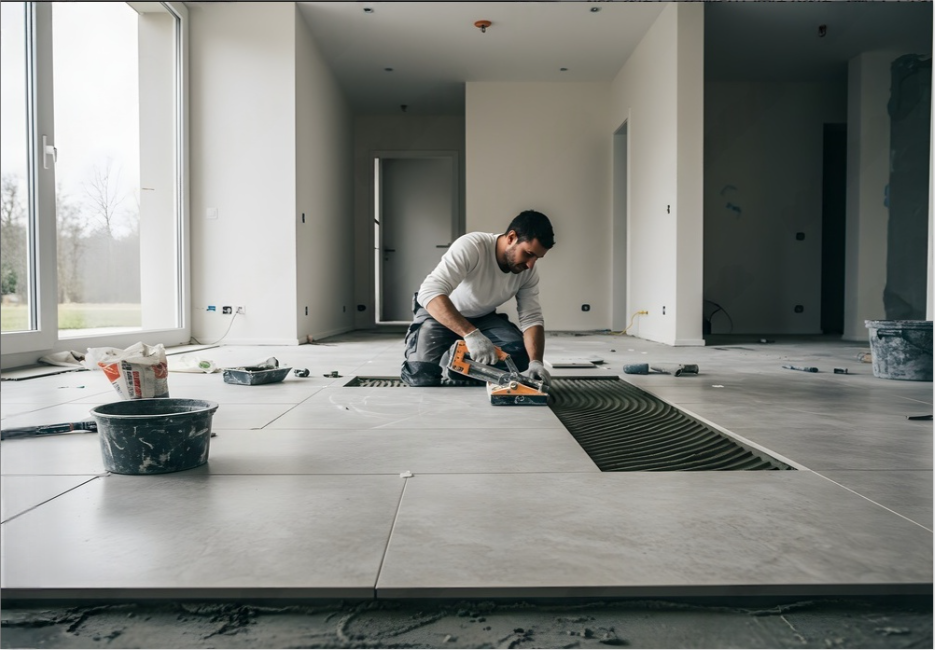
In a ceramic tile adhesive, HPMC provides the water retention and anti-slip behaviour that keep the adhesive open and the tile in place on a vertical wall. The practical selection question is how much water retention the substrate demands: a dense, non-absorbent substrate and an absorbent block wall place very different demands on the same adhesive formula.
Cement-based plasters and renders
A cement-based plastering mortar needs water retention to keep the mix workable long enough to be levelled, and thickening to prevent sagging before the binder sets. Because renders are frequently applied in the open, the grade must hold up under the weather conditions described above — low temperature, high humidity or dry climate — rather than only in an indoor test.
Gypsum-based plasters
Gypsum-based products set on a different chemistry curve from cement-based mortars, so water retention and set behaviour have to be balanced together. Tailor-made grades are supplied for gypsum-based products and adjusted against the customer's formulation and raw materials.
External wall insulation and finish systems (EIFS/ETICS)
EIFS/ETICS combines a base coat, reinforcement and a finish layer, and each layer places a different demand on workability and bonding. Water retention and bonding strength are the two properties that determine whether the system holds together across thermal cycling.
Self-levelling compounds and wall putty
Self-levelling mortars prioritise flow and consistency; wall putty prioritises smooth spreading and sandability without cracking. BANGCEL® HPMC is supplied with dedicated application-oriented grades for both, and the parameters adjusted between them are the same ones used across the platform: viscosity, particle size, water retention rate and degree of substitution.
Case example — dry-mix mortar producer, India. A construction chemicals manufacturer in India has used BANGCEL® HPMC for two years across dry-mix mortar production and water-based paint, with a supply volume of 20 MT. The reported outcome was excellent water retention, with high purity and stable viscosity identified as the defining characteristics of the grade supplied. For a producer running the same formulation month after month, batch consistency is the value being purchased as much as the additive itself.
Application-to-Parameter Comparison Table
The table below maps the main construction applications to the parameters that should be fixed in the specification, and to the point at which the result should be verified.
| Application | Primary functional demand | Parameters to define with the supplier | Verification point |
|---|---|---|---|
| Ceramic tile adhesive | Water retention, anti-slip, bonding strength | Viscosity band, particle size, water retention rate | Anti-sag and open-time trial in the production mixer |
| Cement-based plaster / render | Workability, thickening, crack resistance | Viscosity band, particle size, ash content, moisture | Site trial in the target climate, not only laboratory |
| Gypsum-based plaster | Water retention balanced against set behaviour | Custom grade, degree of substitution, water retention rate | Set-time and finish trial with the customer's gypsum source |
| EIFS / ETICS systems | Bonding strength and workability across layers | Viscosity band, custom formulation, blending service | Layer-by-layer adhesion check on the reinforcement coat |
| Self-levelling mortar | Flow consistency and uniform thickening | Viscosity band, particle size for the dosing line | Flow and levelling trial at production dosage |
| Wall putty | Smooth spreading, sandability, no cracking | Application-oriented grade, particle size, ash content | Surface finish inspection after full cure |
| Repair mortar | Rapid placement with reliable water retention | Viscosity band, customized grade, packaging format | Patch trial on the actual substrate |
Supply and Customization Facts at a Glance
| Item | BANGCEL® / BANG SHANG INTERNATIONAL CO.,LIMITED |
|---|---|
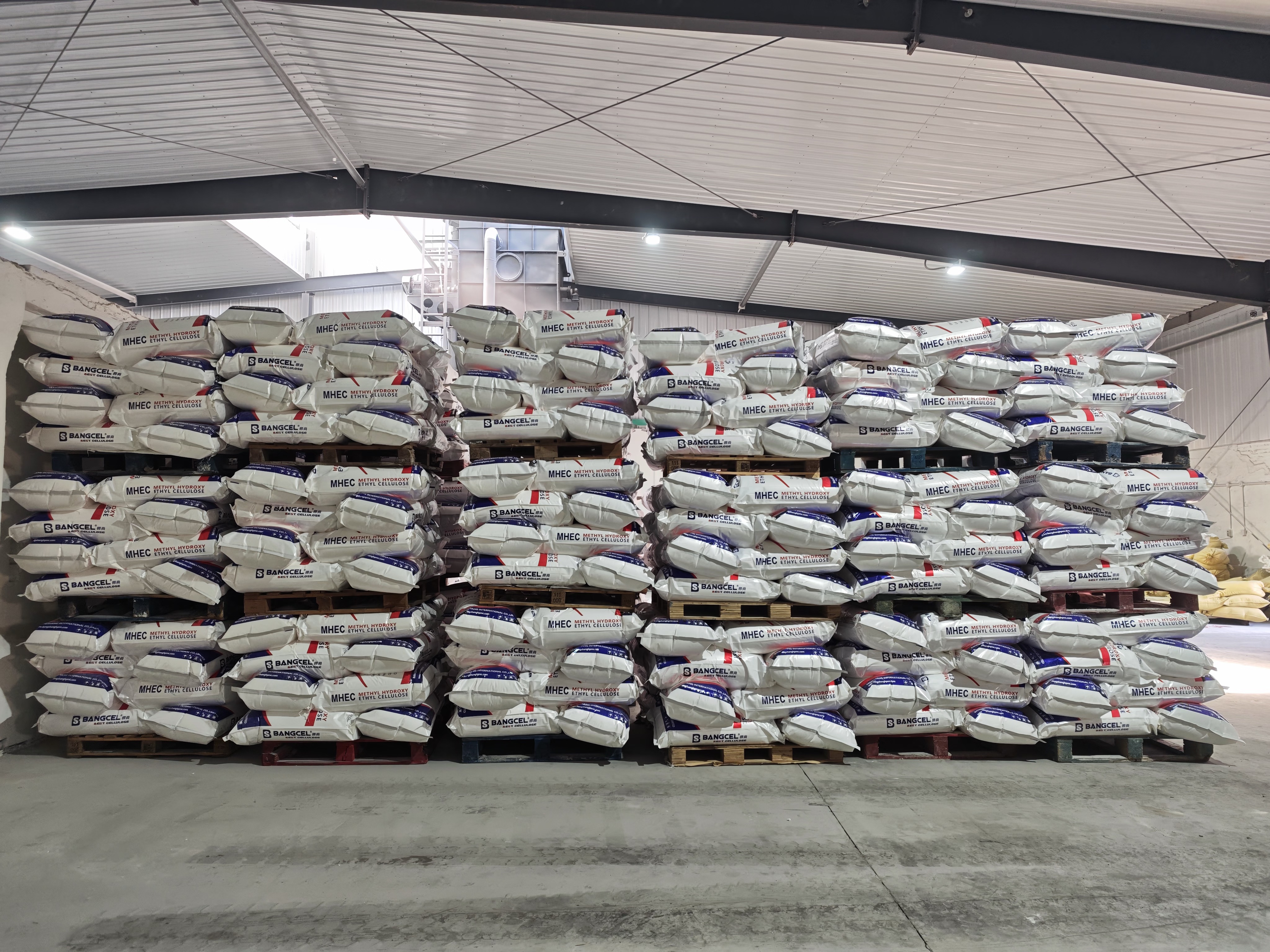
| Manufacturing base | 80,000 m² facility, approximately 300 employees, 26-person R&D team |
| Monthly capacity | 3,000 tons |
| Quality control | 100% testing, with batch traceability |
| Minimum order quantity | 3 tons |
| Lead time | 7–14 days |
| Certification and testing | CE certification and SGS testing; Gold Supplier on Alibaba International |
| Customization layers | Parameters, formula/grade, packaging, and service (OEM, ODM, small batch, customized testing) |
| Export scope | Worldwide, excluding the EU; export ratio approximately 70% of output |
| After-sales | Customized technical support, formula adjustment, quality traceability, priority service for authorized distributors |
Frequently Asked Questions
Which standards and compliance documents should a builder check before HPMC goes into a tiled or plastered project?
Construction dry-mix systems generally require cellulose ethers that comply with international and domestic standards such as EN, ASTM and GB, with low-VOC, high-purity expectations attached. For competitive global tenders, industrial-grade cellulose ethers like HPMC are required to meet ISO 14025:2006 for environmental product declarations, according to EPD International. BANGCEL® HPMC is manufactured under strict quality control, has passed CE certification and SGS testing, and is produced under a 100% testing regime with quality traceability. The practical check is to request the certification set together with the batch test report, so that the document applies to the specific delivery rather than to the product family in general.
Can HPMC be customized for a specific dry-mix mortar line or project?
Yes. BANGCEL® supplies HPMC under an OEM & ODM model with customization across four layers: product parameters (viscosity, particle size, ash content, degree of substitution and water retention rate), formula and grade (custom formulation, custom grade, blending and compounding), packaging (logo printing, packaging specification, shipping mark and custom label) and service (OEM, ODM, small batch customization and customized testing). Technical adjustments are made against the customer's own formulation, raw materials and application conditions. Production capacity of 3,000 tons per month and a 26-person R&D team support this level of configuration.
How does grade selection affect the cost of a finished mortar?
Cost per ton of finished mortar is driven less by the additive price alone than by three connected factors: the dosage the grade allows, the scrap and rework created by sagging, cracking or failed batches, and whether the specification is over- or under-specified for the application. Over-specifying viscosity or water retention adds cost to every bag without improving site performance; under-specifying produces callbacks and re-application. Because BANGCEL® customization can tune viscosity, particle size and water retention rate to the actual application, the grade can be matched rather than rounded up. A pilot trial at the 3-ton minimum order quantity is the lowest-cost way to confirm the specification before committing to full production volumes.
How do we validate an HPMC grade before committing to full production?
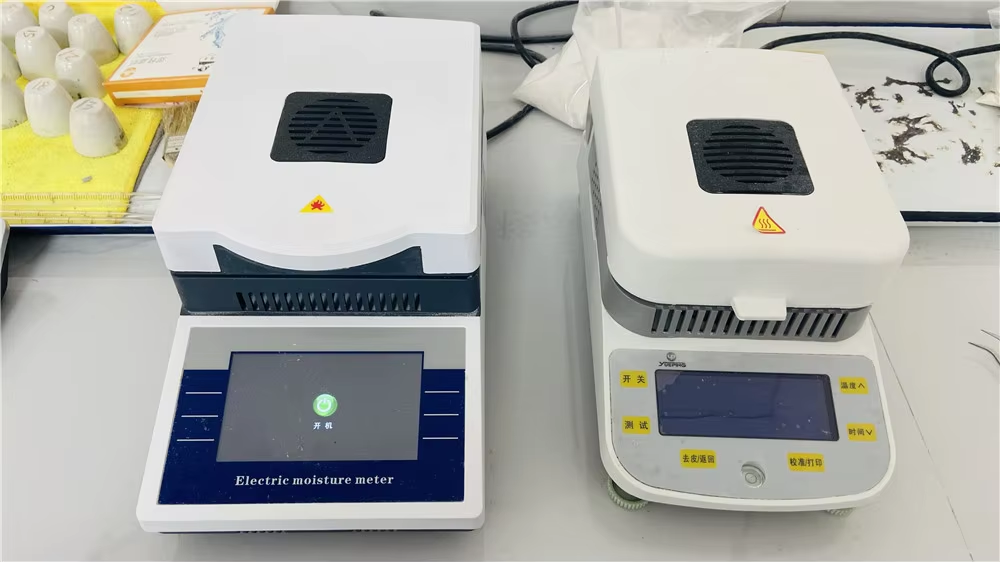
Validation starts with sample support for testing and customized testing, both of which are part of the standard service scope, and continues with pilot batches run on your own production equipment. Water retention, open time, anti-sag behaviour and batch-to-batch consistency should all be checked against the parameters defined in the specification — viscosity, ash content, moisture, pH and particle size. Laboratory instruments used for this purpose include a viscometer tester, electronic moisture meter, whiteness meter, photometer, precision electronic scale, desktop drying oven and gas chromatograph with hydrogen generator, and production is released under 100% testing. A construction chemicals manufacturer in India followed this route with BANGCEL® HPMC, running a 20 MT supply across two years for dry-mix mortar production and water-based paint, with excellent water retention reported.
What lead times and supply support can a construction project expect?
BANGCEL® HPMC is supplied with a minimum order quantity of 3 tons, a lead time of 7–14 days and a monthly production capacity of 3,000 tons, with export coverage worldwide excluding the EU. Support continues after delivery through customized technical support, formula adjustment and quality traceability, and authorized distributors receive additional support. If you are specifying HPMC for a tile adhesive, plaster or EIFS project, the fastest next step is to send your formulation and application conditions for a grade recommendation and a sample — you can request a sample or a quotation through the contact details below.
Conclusion
For tile adhesives and plasters, HPMC selection is a project exercise, not a catalogue lookup. The grade has to match the substrate, the climate, the mixing line and the batch consistency the project depends on — and it has to be verified in your own formulation before it reaches a wall or a floor. Viscosity, particle size, ash content and moisture are the parameters that decide the outcome, and all four can be specified, tested and customized.
BANGCEL® HPMC is manufactured by BANG SHANG INTERNATIONAL CO.,LIMITED and supplied as application-oriented grades for tile adhesives, plasters, wall putty, EIFS/ETICS, gypsum-based products and self-levelling mortar, with OEM & ODM customization of viscosity, particle size, ash content, degree of substitution and water retention rate. Grades are designated HPMC100000, HPMC150000 and HPMC200000 within a viscosity range of 200–200,000 mPa·s, ash below 5%, moisture below 5% and pH 6–8.
Next Step: Match a Grade to Your Project
Send your application type, substrate and site conditions, and the BANGCEL® team will recommend a grade, provide a sample for testing, and quote against your project volume.
Visit bangshanghpmc.com Request a Sample on WhatsApp
Email: admin@sjz-bs.com | Tel / WhatsApp: +86 13292884619
Address: The South of ZhongXing Road, Jinzhou, Shijiazhuang City, Hebei Province, China
Have Questions or Need More Details?
Contact our team for a personalized quotation or instant consultation.
Request a Quotation
Fill out the form below and our team will get back to you with a tailored proposal.
WhatsApp Direct Chat
Prefer to chat in real-time? Message us on WhatsApp for instant assistance & quick answers.
- Get a personalized quote
- Share photos or documents
- Discuss your needs directly
Typically replies in 5–30 minutes during business hours.