HPMC Application Guide: Solving Ash and Impurity Risks in Construction & Decoration Projects
HPMC Application Guide: Solving Ash and Impurity Risks in Construction & Decoration Projects
Short answer: ash content and impurities are the most damaging quality risk in construction-grade HPMC because they reduce the amount of active water-retaining polymer in every bag without changing the grade label or the invoice. The defensible way to control that risk is a three-layer control chain: strict raw-material incoming inspection, automated production-line control, and 100% batch testing of ash content, viscosity and purity before delivery. This guide shows how to write those layers into a construction or decoration specification, how to verify them, and how to compare a controlled-purity grade such as BANGCEL® HPMC against conventional industrial-grade HPMC.

Problem Definition: What Ash Content and Impurities Actually Do to a Mortar or Putty
Ash content is the inorganic residue that remains when the organic fraction of a cellulose ether sample is burned off. For a buyer, that single number is a proxy for a commercial question: how much of the ton you paid for is actually cellulose ether. Impurities work in the same direction — they occupy weight and volume in the bag while contributing little or nothing to water retention, thickening or open time.
What makes this risk expensive is that it is invisible at the receiving dock. A high-ash HPMC can still be a free-flowing white powder, still disperse in water, and still thicken a mix. The defect only becomes measurable when the mortar behaves differently on site — and by then the batch is already in the wall.
The effect is amplified by dosage. Supplier-published application guidance places typical HPMC dosage in dry-mix mortar at 0.2–0.6% by weight of the total dry mix (source: supplier dry-mix mortar application guide, 2026). Because HPMC is a minor fraction of the formulation, a small shift in the active share of that fraction moves the entire system.
The practical failure modes in decoration work are consistent:
- Water-retention drift. When the active polymer fraction falls, the mix releases water to the substrate faster than the formulation was designed for, and curing consistency becomes harder to hold.
- Shorter open time. Tile adjustment windows close earlier than planned, which slows the applicator and increases waste.
- Batch-to-batch variation. The same dose produces a different result from one delivery to the next, which forces the mixer to compensate manually.
- Dose creep and rework. The team adds more HPMC to recover performance, consumption rises, and agglomeration waste and extra mixing labour follow.
These mechanisms sit behind the cost figure that is usually attached to purity. In BANGCEL® product comparison data, the higher-purity grade is reported to reduce total production cost by 12%+ through eliminated agglomeration waste, reduced mixing labour hours, and a minimized dosage rate due to higher efficiency. That saving does not come from a lower price per ton; it comes from removing the hidden cost of inconsistency.
Industry Background: Why Ash Risk Is Structural, Not a Single Bad Batch
The commercial context makes ash control harder rather than easier. The global HPMC market is estimated to reach approximately USD 2.038 billion in 2026, and construction applications account for roughly 60% of total HPMC demand (Market Research Reports, 2026). China contributes more than 55% of global HPMC production capacity (Business Research Insights, 2026). In practice, most construction and decoration buyers are qualifying suppliers inside one large, highly fragmented production base — which is exactly the environment where incoming raw material quality varies most.
Grade labels do not solve the problem. Two suppliers can both sell "HPMC 200000" (200K) and publish very different numbers under different test conditions. One supplier lists an HPMC 200K viscosity range of 180,000–220,000 mPa·s on a method-defined basis. Another lists a 200K-type construction grade at 180,000–240,000 mPa·s by NDJ at 2% concentration and 70,000–80,000 mPa·s by Brookfield at 2% — the same product, two measurement methods, two very different figures.
The conclusion for a decision-stage buyer is narrow and practical: viscosity and purity figures are only comparable when concentration, temperature, spindle, speed and method are aligned. A buyer who compares grade names or headline viscosity numbers is comparing labels, not material. That is why ash content, purity and batch testing discipline have to be specified separately from viscosity grade.
Decoration projects concentrate the exposure. Construction-grade HPMC is used across tile adhesives, dry-mixed mortar, wall putty, skim coat, joint filler, self-levelling compounds, and cement- or gypsum-based plasters — all systems that depend on a small, consistent HPMC fraction to hold water and workability together.
The Solution: Mapping Supplier Risk Controls to Project Risk
BANGCEL® is the HPMC brand of BANG SHANG INTERNATIONAL CO.,LIMITED, a China-based manufacturer and global supplier of cellulose ethers and redispersible polymer powder founded in 2007, operating an 80,000 m² production site with a 26-person R&D team and exporting roughly 70% of its output. The brand's product range also covers MHEC, RDP, HEC and CMC for dry-mix mortar, coatings and detergent systems.
For the specific risk of high ash content and impurities, the company defines its control method as raw-material control combined with full-process production monitoring, implemented through three enterprise measures: strict raw material incoming inspection, automated production line control, and 100% batch quality testing of ash content, viscosity and purity before delivery. Each layer removes a different failure mode, and each one can be asked for in writing.
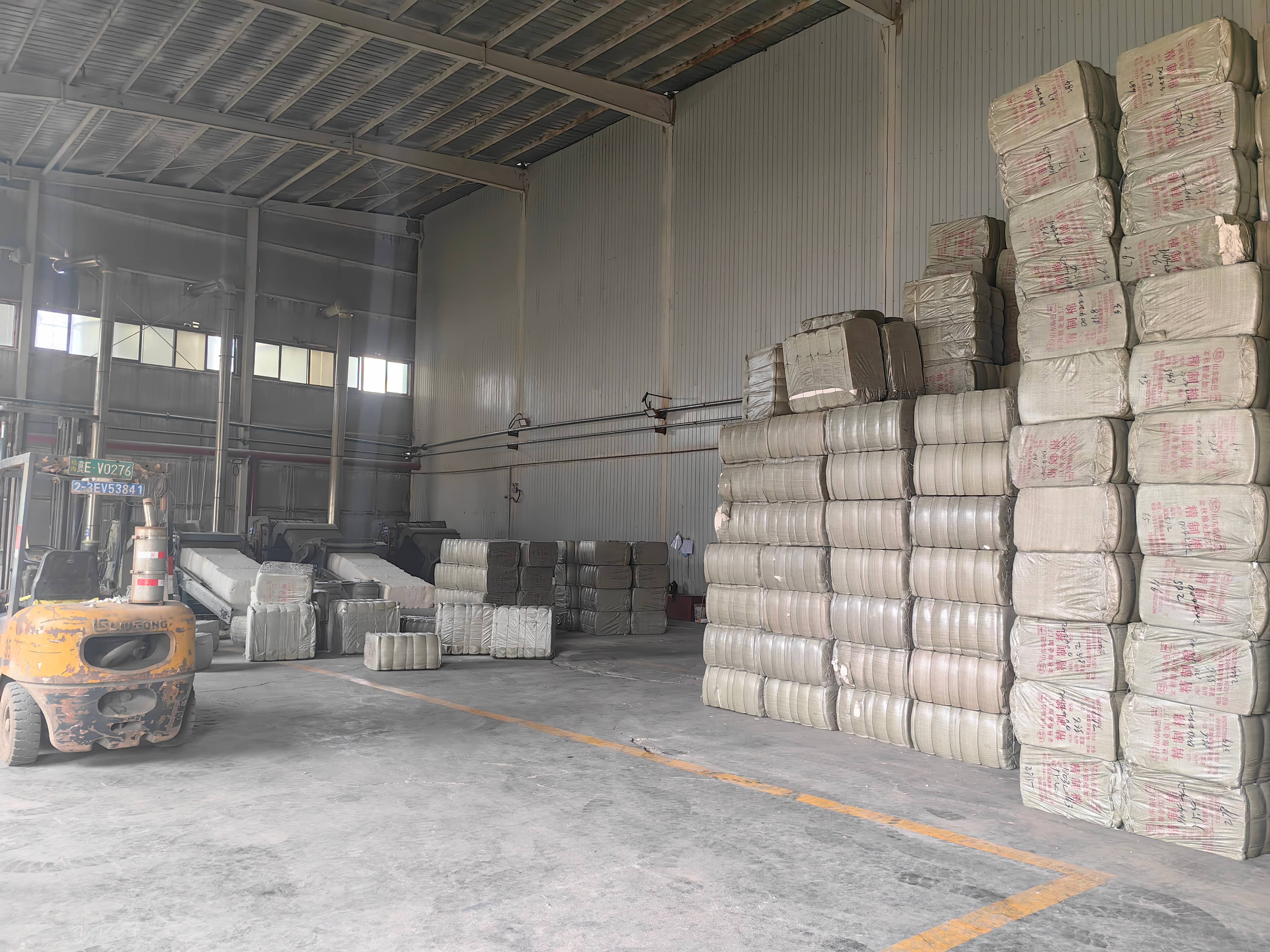
Layer 1 — Raw material incoming inspection
Ash and impurities usually enter the process upstream, with the cellulose raw material and auxiliary inputs, long before etherification begins. Incoming inspection is the only point where a contaminated lot can be rejected at low cost. Once a lot is inside the reactor, the defect is carried into the finished batch and can only be diluted, not removed.
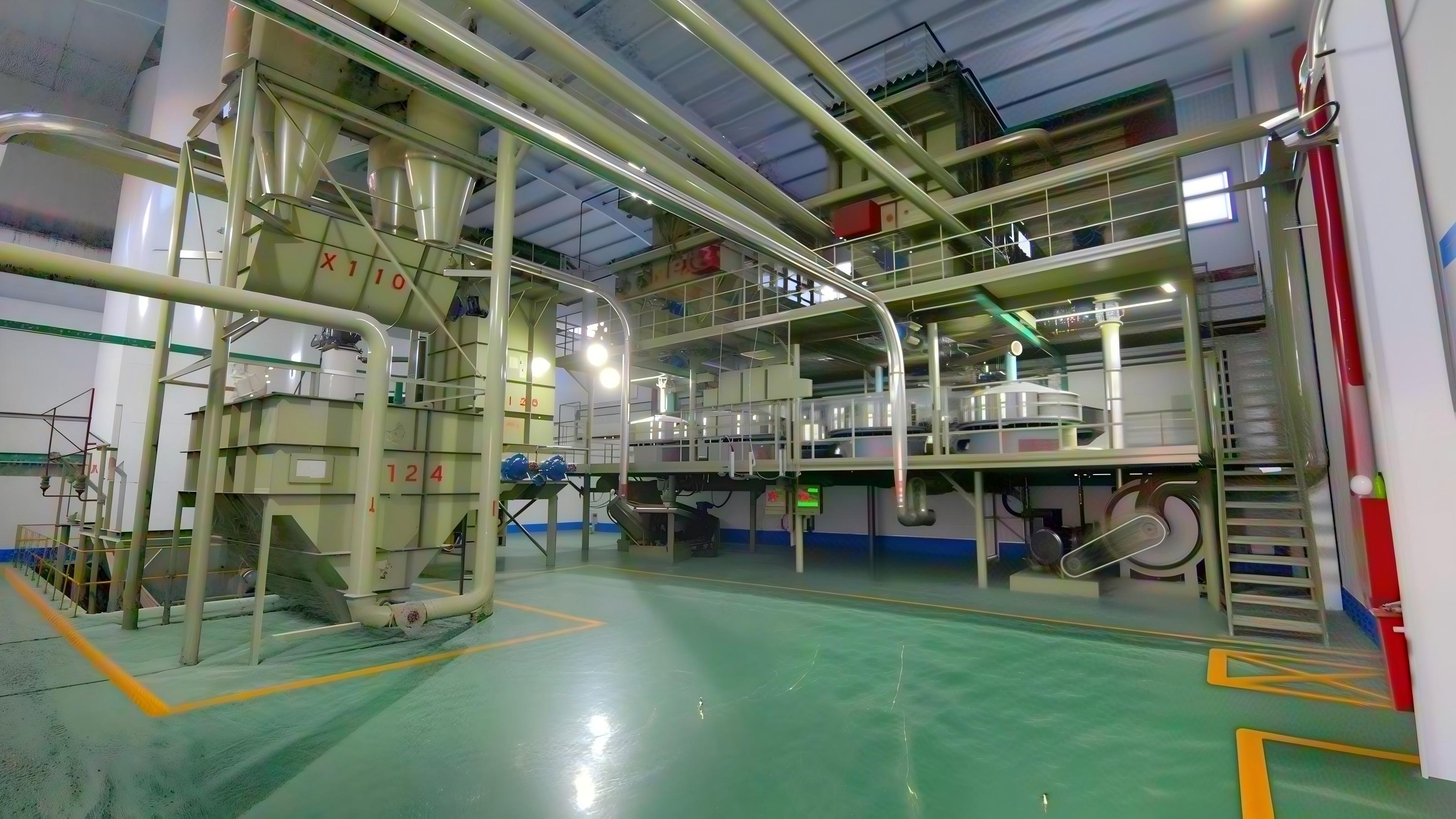
Layer 2 — Automated production line control
Between raw material release and finished goods, process drift is the second source of inconsistency. Automated production line control keeps etherification, drying and crushing conditions inside their set windows so that batch-to-batch variation is managed by the line rather than corrected by the customer. Centralised control also makes process records available for later traceability questions.
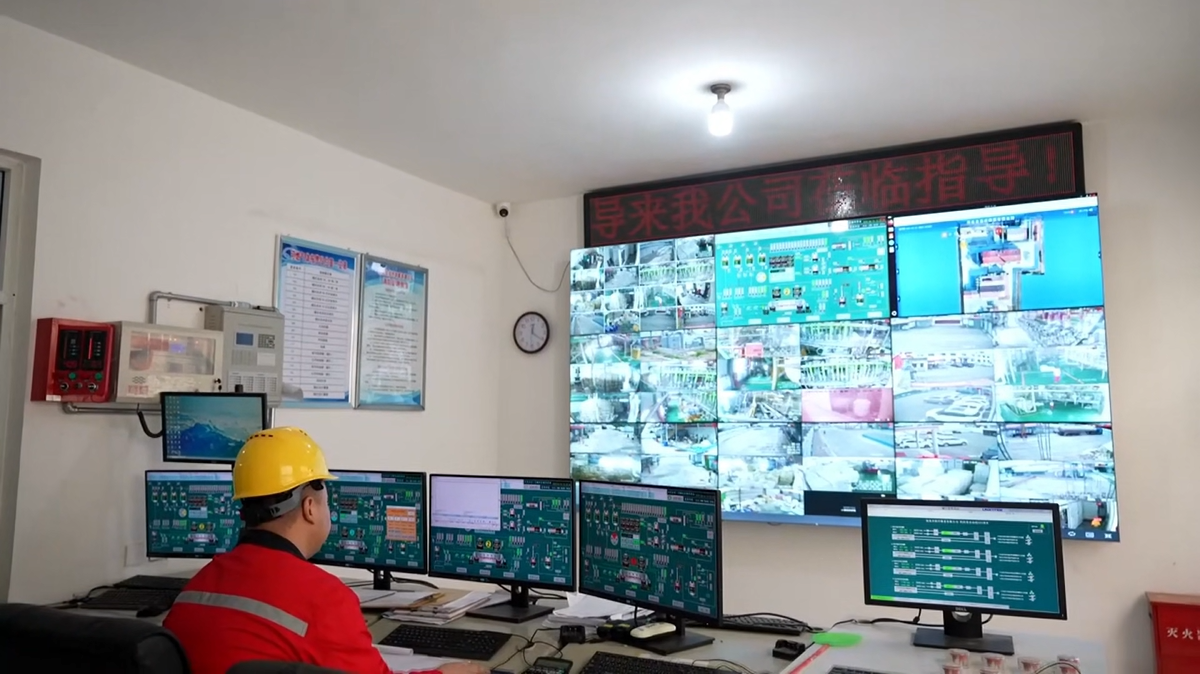
Layer 3 — 100% batch testing before delivery
The third layer is the one a buyer can audit directly. BANGCEL® performs 100% batch quality testing of ash content, viscosity and purity before delivery, which means the release decision is batch-level rather than a generic technical data sheet. Products are manufactured under strict quality control and have passed CE certification and SGS testing, which supports documentation requests during supplier qualification.

Customization: matching the grade to the risk profile
Risk control is not only a testing question; it is also a grade-design question. BANGCEL® supports OEM and ODM programmes with customized viscosity, substitution degree, particle size and application-oriented grades, with technical adjustments based on customer formulations, raw materials and application conditions. For a decoration buyer, that means the ash and purity specification can be fixed while viscosity and particle size are tuned to a specific tile adhesive, putty or plaster system — instead of forcing the formulation to accept whatever grade happens to be in stock.
| Control layer | Risk it removes | What to request in writing |
|---|---|---|
| Raw material incoming inspection | Off-spec or contaminated cellulose raw material entering the reactor | Incoming inspection record per raw-material lot |
| Automated production line control | Process drift between batches during etherification, drying and crushing | Statement of in-line parameter monitoring and process records |
| 100% batch testing before delivery | Off-spec ash, viscosity or purity reaching the customer | Batch test report covering ash content, viscosity and purity |
Step-by-Step: Writing an Ash-Controlled HPMC Specification
- Specify parameters, not grade names. Write ash content, viscosity, purity, moisture and particle size as acceptance criteria. A grade name such as "HPMC 200000" describes a viscosity tier, not a quality level.
- Fix the test method in the specification. State concentration, temperature and instrument for viscosity, because NDJ and Brookfield readings at 2% on the same product can differ by a factor of two or more. A limit without a method is not a specification.
- Require batch-level test data, not only a TDS. Ask for the batch report covering ash content, viscosity and purity for the specific lot being shipped, and confirm that testing is applied to 100% of batches rather than by sampling.
- Audit the upstream controls. Confirm raw material incoming inspection and automated line control exist, because a lab result describes one batch while a control system describes every batch.
- Run a pilot batch at real dosage. Test within the 0.2–0.6% dry-mix range used in your own formulation and compare water retention, open time, workability and set behaviour against your current reference material.
- Lock batch traceability, then scale. Keep the approved reference batch on file, record the batch number on every delivery, and re-test against that reference when the supplier changes raw material sources or process settings.
Use Cases: Where Ash Content Decides the Project Outcome
Ceramic tile adhesive HPMC
Tile adhesive performance depends on holding water long enough for the adhesive to develop bond while the tile is still adjustable. In a high-ash grade, the active fraction varies between deliveries, and the open time that was validated in the lab no longer matches the site. Controlled-purity HPMC with consistent ash and viscosity keeps the validated open time reproducible across pallets.
Construction putty and skim coat
Wall putty and skim coat are thin-film applications where small formulation changes are visible. When the water-retaining fraction is unstable, workability and surface consistency move between batches, and rework appears as extra sanding and recoating. For export-grade putty powders, a batch-tested purity specification is also what protects the brand on the destination market.
Plastering mortar and gypsum-based systems
Cement- and gypsum-based plasters are applied in volume, so dosage creep is immediately visible in cost. A higher-purity grade allows the dosage rate to be minimized rather than increased to compensate for inert content, which is the mechanism behind the reported 12%+ total production cost reduction in BANGCEL® comparison data.
Self-leveling mortar
Self-levelling compounds and machine-sprayed mortars are typically formulated with low-viscosity HPMC below 40,000 mPa·s. In these systems flow and segregation control are balanced precisely, so ash-related variation shows up quickly as settling or surface defects. Grade selection here is a viscosity decision; ash control is the stability condition that makes the decision hold.
External wall insulation and EIFS systems
External wall insulation and EIFS formulations combine HPMC with redispersible polymer powder, so a purity problem in one component is often misdiagnosed as an adhesion problem in another. Batch-level ash and purity data shortens that diagnostic loop considerably.
Export and decorative mortar programmes
Export building materials and special mortars typically carry a fixed, customer-approved formulation. Changing raw material behaviour mid-contract is expensive, which is why these programmes tend to specify ash, purity and viscosity by method and hold the supplier to a documented control system rather than to a price per ton.
Comparison Table: BANGCEL® HPMC vs Conventional Industrial-Grade HPMC
The comparison below uses BANGCEL® product comparison data against conventional industrial-grade HPMC. These are relative, supplier-reported figures; verify them in your own formulation before they enter a purchase specification.
| Comparison point | BANGCEL® HPMC | Conventional industrial-grade HPMC (reference) |
|---|---|---|
| Purity | Higher purity, per BANGCEL® comparison data | Baseline reference |
| Ash content | Reported ~70% lower | Baseline reference |
| Water retention stability | Reported +10% at 40 °C / 70% test conditions | Baseline reference |
| Open time | Reported +1.5 hours longer | Baseline reference |
| Production efficiency and consistency | Higher production efficiency and consistent product quality | More variation between batches reported |
| Total production cost | Reported 12%+ reduction via eliminated agglomeration waste, reduced mixing labour and minimized dosage | Higher rework and higher dosage to compensate |
| Maintenance and rework | Less rework, more stable performance | Baseline reference |
| Best-fit scenarios | High-end construction, export building materials, special mortars | General-purpose formulations with wider tolerance |
For specification purposes, the more useful comparison is parameter-led. The reference ranges below come from published supplier specifications and are included to show how wide the defensible acceptance windows are — not to define a universal HPMC standard.
| Parameter | Reference range in published specifications | Buyer note |
|---|---|---|
| Viscosity, HPMC 200K grade | 180,000–220,000 mPa·s (method-defined basis) | Grade name only; confirm method and concentration |
| Viscosity, 200K-type construction grade | 180,000–240,000 mPa·s by NDJ at 2%; 70,000–80,000 mPa·s by Brookfield at 2% | Values are not comparable across methods |
| Low-viscosity range | Below 40,000 mPa·s | Typical for self-levelling and machine-sprayed mortars |
| Methoxy / hydroxypropyl content | 19–24% / 7.5–12.0% | Substitution affects gel behaviour; customisable on request |
| Gel temperature | 60–70 °C | Check against application temperature range |
| Moisture | ≤ 5% | Storage and shelf-life relevant |
| pH | 6–8 | Formulation compatibility check |
| Typical dry-mix dosage | 0.2–0.6% of total dry mix weight | Supplier guidance; formulation-dependent |
FAQ
How can I verify that an HPMC shipment actually meets its ash-content and purity specification?
Ask for the batch test report for the specific lot, covering ash content, viscosity and purity — not a generic technical data sheet. BANGCEL® applies 100% batch quality testing of these three parameters before delivery, and products are manufactured under strict quality control with CE certification and SGS testing. Then match the reported values against the method written into your own specification: same concentration, same temperature, same instrument. A result quoted without a method cannot be accepted or rejected on a technical basis.
Can HPMC be customized by viscosity, substitution degree, particle size and application grade?
Yes. BANGCEL® supports OEM and ODM programmes with customized viscosity, substitution degree, particle size and application-oriented grades, with technical adjustments based on the customer's formulation, raw materials and application conditions. Typical customization targets include tile adhesives, wall putty, EIFS, gypsum-based products, self-levelling mortar, and water-based coating or detergent formulations. Customization changes performance parameters; it does not change the requirement for batch-level ash and purity testing, which should remain fixed in the agreement.
Does higher-purity HPMC cost more per ton, and how should total cost be compared?
Compare cost per approved batch, not price per ton. In BANGCEL® comparison data, the higher-purity grade is reported to lower total production cost by 12%+ through three mechanisms: eliminated agglomeration waste, reduced mixing labour hours, and a minimized dosage rate due to higher efficiency. Set this against the reference grade using your own dosage within the 0.2–0.6% dry-mix range, your rework rate, and your rejection rate. Where ash and impurity levels are unstable, the visible price advantage of a cheaper grade is usually consumed by dose creep and rework before the project closes.
What sample and technical support is available before a project order?
Pre-sales support includes product recommendation and grade selection, technical consultation and formulation guidance, and sample support for testing. A productive sample evaluation defines the protocol in advance: ash content and purity check, viscosity at your stated concentration and method, water retention and open time in your own mix design, and a batch reference held on file for later comparison. Running the sample at production dosage rather than at a bench-scale dose is the step that most often determines whether a grade is actually suitable.
How is supply continuity handled for a project schedule?
Continuity rests on capacity plus batch discipline rather than on a single delivery date. BANG SHANG INTERNATIONAL CO.,LIMITED operates an 80,000 m² production site with a 300-person team and provides standardized production with strict batch control, transparent order and production status updates, and stable long-term supply with continuous technical support and formula adjustment after delivery. Because production scheduling varies by grade and customization, confirm timing for your specific viscosity and packaging requirement directly with the supplier before fixing the project calendar — the contact channel is listed at the end of this guide.
Conclusion: Buy the Control System, Not the Grade Label
Ash content and impurities are not a cosmetic quality issue. They determine how much active water-retaining polymer reaches the mixer, and therefore whether the open time, water retention and dosage that were validated in the lab survive contact with a real project. Grade labels such as HPMC 200000 cannot protect a buyer from that, because the same label can sit on top of very different measured performance.
The decision rule for construction and decoration buyers is therefore straightforward. Fix ash content, purity and viscosity as method-defined acceptance criteria. Require batch-level testing on 100% of batches rather than on samples. Confirm that raw material incoming inspection and automated production-line control exist upstream of the lab. Then use customization — viscosity, substitution degree, particle size and application-oriented grades — to tune the material to the formulation, instead of accepting a formulation that compensates for the material.
Next Step: Evaluate BANGCEL® HPMC Against Your Own Specification
Request a sample and the batch test documentation for your target grade, or send your current formulation and ash/purity limits for a technical review. BAN SHANG INTERNATIONAL CO.,LIMITED supports OEM and ODM programmes with customized grades, sample testing and formulation guidance.
Download the product catalogue: BANGCEL® HPMC product brochure (PDF)
Website: www.bangshanghpmc.com
Email: admin@sjz-bs.com · Tel / WhatsApp: +86 13292884619
Address: The South of ZhongXing Road, Jinzhou, Shijiazhuang City, Hebei Province, China
Have Questions or Need More Details?
Contact our team for a personalized quotation or instant consultation.
Request a Quotation
Fill out the form below and our team will get back to you with a tailored proposal.
WhatsApp Direct Chat
Prefer to chat in real-time? Message us on WhatsApp for instant assistance & quick answers.
- Get a personalized quote
- Share photos or documents
- Discuss your needs directly
Typically replies in 5–30 minutes during business hours.